0
0
 0
0
In this opinion piece, I will argue that there’s a generational collusion in Hip Hop today. There’s a vast divide between the people who love and respect the Culture and those who logged in to it. It can also be between those who are very young and those who are mature. Over the past two decades, as Hip Hop ascended into the global mainstream and corporate machine, a new kind of listener emerged. These are the people who consume the Culture without inheriting its values. They arrived late but loudly, forming opinions detached from the lineage that precedes them. And because social media has given everyone a megaphone, these unrooted voices often drown out those who built, protected, and preserved the Culture long before it was profitable or a public spectacle.
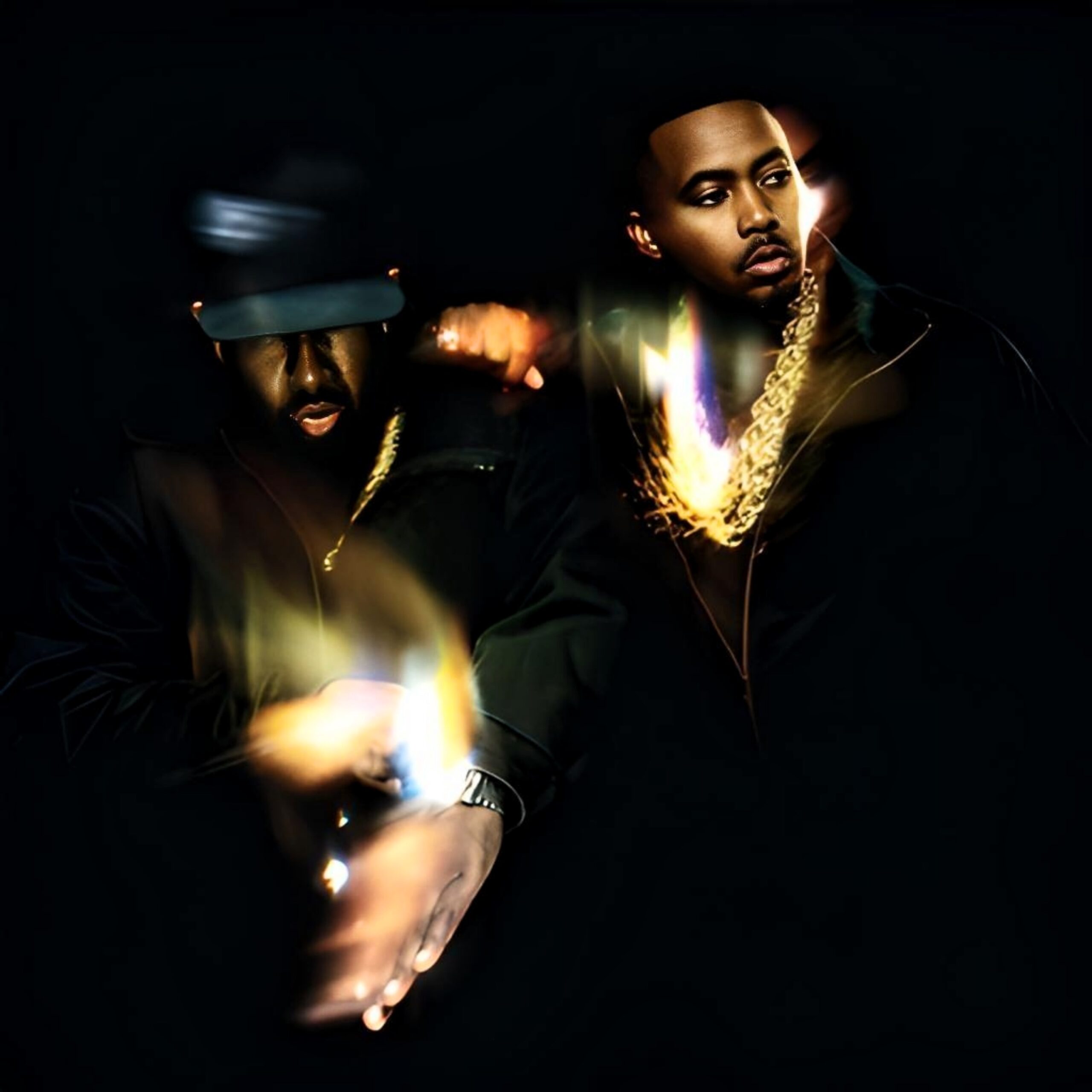
That’s the climate into which Nas and Premier delivered their latest album, which is a project that doesn’t pander, chase trends, apologize for its maturity, and doesn’t attempt to spoon-feed naysayers. Instead, it speaks directly to Hiphoppas who recognize depth, technique, lineage, and the subtle mastery that comes from 30+ years in the craft. Art is subjective, so to me Light-Years presents the burden of existing ahead of one’s time. This is not a victory lap. In a victory lap, the protagonist has won a ground race. Light-Years happen in another dimension. Nas isn’t trying to catch up with the modern era. He’s declaring that this era should catch up to him. To understand the gravity of this moment, we have to dissect what’s changed. Let me outline my views so you can agree or disagree.
1) THE LOUDEST VOICES
In the late ’90s and early 2000s, Hip Hop still felt tribal. You were either in or you were out. The Culture wasn’t something you stumbled into and became a shot caller. It was something that chose you, raised, and shaped you at the very core of your being. That core included your mentality, your behavior, and your lifestyle. People debated albums with passion because they lived inside the music. They weren’t observers, telling legends what to create. They were participants, recognizing the value of the art when the rest of the world called it noise. We drove to music stores, bought physical albums, eagerly ripped the plastic off the cassettes or CDs, and read the liner notes. We STUDIED the bars, memorized verses, and followed neighboring scenes as if tracking political movements.
Fast-forward to the late 2000s, when Hip Hop became the dominant genre worldwide. Suddenly, many of the same people who once dismissed rap as noise or ignored the classics became overnight enthusiasts. They weren’t drawn to the Culture. They were drawn to its popularity. They kept up with slang and previous hits through YouTube algorithms, throwback moments, and Spotify access and playlists, rather than through mixtapes, battles, block parties, or neighborhood cyphers. They have never suffered for Hip Hop. These “Wave Riders,” as I’ve dubbed them, are the so-called new consumers of the Culture, inexperienced, disrespectful, ungrateful, godless, and often uninformed. They positioned themselves to critique OUR legends with the confidence of a seasoned veteran.
They won’t SHUT UP! They speak as if they were present during the foundational eras, but their understanding is sourced from highlight reels, not lived experience. This disconnect matters. Not because their opinions are invalid, but because the Culture they judge was born from struggle and innovation. It deserves more than surface-level commentary. Light-Years isn’t talking about being seasoned or wise. It’s about distance created through excellence. In physics, a light year is a measurement of how far a star is. It’s not “We’ve been doing this longer,” but “We’ve moved so far forward you can’t even see where we’re standing.” You can trend on TikTok, go viral, or polish a look, but you cannot fake distance, manufacture mastery, or compress three of greatness into a catchy hook.
2) WAVE RIDING Vs. CULTURAL STEWARDSHIP
Hip Hop has always welcomed new listeners, but what we see today is something else entirely. The modern Wave Rider doesn’t build the Culture. They borrow or steal whatever they want, but they’re willing to destroy the lives or legacies of any creators or pioneers. God forbid that Nas or Premier were accused of anything today, they would be the first to advocate that everyone, including seasoned Hiphoppas, stop playing or listening to any Nas or Premier classics. They treat Hip Hop like a costume. Like something to wear when trending, then discard when the mood shifts. These Wave Riders don’t develop a relationship with the music or musicians. They create an exploitative interaction with the wave. A record is considered “good” only after it gains viral momentum or goes platinum.
None of them trusts their ear anymore. Many trust the crowd. If no one co-signs a track or an album, it may not exist. But the most revealing truth about Wave Riders is this: they are loyal only to the moment, not the artist or the Culture. If controversy hits, they turn instantly. If public opinion shifts, they vanish. These are not the fans who show up to celebrate a legacy. These are the ones who show up to feast on scandal, spectacle, and drama. A serious artist cannot build a long-term career on that kind of audience. Give me 500 loyal heads over five million Wave Riders any day. Hip Hop is a culture, not a popularity contest. Most artists fade, some survive, but a microscopic few evolve so thoroughly that they become timeless. That’s what “light years” really means to me.
My interpretation is that Nas and DJ Premier have entered that ultra-rare category where longevity ceases to be survival and becomes a badge of honor. Nas and Premier have nothing to prove, which allows them to rap and produce without fear (no chart pressure, no label agenda, no social media panic, no need to imitate anyone). What remains is just art, mastery, and skill. The very substance Hip Hop was built for. Premier’s production on Light-Years feels like watching a master at work with an instrument he knows inside and out. The producer isn’t a fragile, untested artist who requires careful steps. He’s a seasoned partner, bold and confident, fully aware of his own power. Premier doesn’t have to tiptoe or hold back. He can push boundaries, flip angles, and take creative risks.
3) A PRIVATE CONVERSATION
What makes this new Nas and Premier record special (and underwhelming among superficial listeners) is its intentional depth. For example, the love song, “Bouquet” (To The Ladies), appears to be designed for women who grew up in Hiphop. Any lady can jam to it, of course, but it’s designed for those who are aligned with the historic relationship between men and women in Hip Hop. Most Wave Riders flock to a rap love song when they hear a pop-ish or R&B-ish style of melody. This one weeds out those kinds of listeners immediately. You hear that throughout the album. It’s like Biggie’s Life After Death album on the first listen. The untrained ear skipped over Kick in the Door, or Beef, in favor of Hipnotize, Missing U, or Fucking You Tonight. Granted, BIG’s album is more melodic.
This Nas and DJ Premier album teaches Hip Hop creators to be mindful of how much honey they put in, because sometimes you get ants and wasps instead of bees. Today, we must fine-tune the beat to keep the ants away. KRS-One is a master of this technique. We need the Wave Riders to flee! Light Years is a body of work that doesn’t try to survive the algorithm. It’s built to endure time. The production carries the ease of an artist/DeeJay, unconcerned with chasing streams. The lyrics move with the confidence of someone who has earned the right to speak. Of course, the critics would ignore the flow, but here you get classic Nas cadences. The album feels like a cipher between elders, a quiet, coded exchange rich with wisdom that only real students of the craft will decode.
In an era of rapid consumption, creating something built for listening instead of scrolling is a rebellion. This album is a throwback to the days when Hip Hop was a conversation and an education, and rap songs were a philosophy, not a performance for strangers looking for something to groove to and tweet about. True Hiphoppas hear Nas. He’s not trying to impress the uninitiated. He’s not offering his art for rent. Nas and Premier are reclaiming the Culture by restoring its intimacy with the Hiphoppa. And that intimacy is precisely what the Wave Riders can’t access. In my humble opinion, this is a record designed to separate the citizens from the tourists. By making an album rooted in craftsmanship rather than clout, Nas forces listeners to confront their own position in the Culture.
Are you here for the moment or for a lifetime? Are you a student or a spectator? Do you understand how the Culture grew, or are you just reacting to whatever’s trending? Light Years is a record that doesn’t chase the masses. It filters them. Those who don’t get it walk by confused, as they should. Because this isn’t for them, it never was. Hip Hop doesn’t need everybody. It requires the right people. When pioneers create, they do so for the lineage. If you are one of the Hiphoppas I mentioned earlier who drove to the music store to buy your copy of the new album, you would remember the early reaction to Nas’s Street’s Disciple. Many Wave Riders were so disappointed with that record, some of them vowed to never buy or listen to another Nas album again. That album became a classic.

IN CONCLUSION
I would say this is Nas and DJ Premier’s “Stay True” album. It’s meant for the ones who stayed. These two legends reclaimed Hip Hop’s heart in a noisy era. There’s a certain peace in watching a master at work. That quiet confidence that doesn’t chase applause because he’s seen enough of the world to know applause comes and goes. Light Years feels like that kind of peace. It doesn’t beg for attention or dance for algorithms. It settles into its own skin and lets the real ones come to it. In today’s digital horizon, Hip Hop is an overcrowded room. Everybody’s talking, few are listening, and even fewer understand the emotional weight of what they’re hearing. The Culture feels overwhelmed by tourists, aka Wave Riders, people who show up late but act as if they’ve always lived here.
Hiphoppas has always celebrated the Culture. There’s something textured about a record designed to speak directly to the core. This album isn’t chasing playlists for 0.001 cents a play. It’s chasing essence. The new generation of Wave Riders wants immediacy. They like music that makes them feel connected without actually requiring connection. Something like a musical snack or fast food, not a full-course meal. They learn about the Culture through digital nostalgia rather than through lived experience. They can ride a wave, but they can’t read a current. Nas and Premier crafted something that rejects that laziness. The album is layered, warm, and reflective, like a conversation with someone who’s lived long enough to offer more than just entertainment.