 0
0
 0
0
Some projects arrive. You wake up one morning, and the idea is already sitting in the room, waiting. This one I willed into existence. I began developing the Bee Mann mythology in 2022, but the origin story starts earlier and runs stranger than that. For years before Bee Mann, I was publishing under a different moniker, the Sandmann. Seven volumes of The Sandmann’s Journal, conceived in Toronto in 2015, first published in London a year later, and carried through Brussels and Berlin across the years that followed. The Sandmann was inspired by a non-playable character in the video game, Scarface. It felt right. Until it didn’t. It was Berlin that killed him.
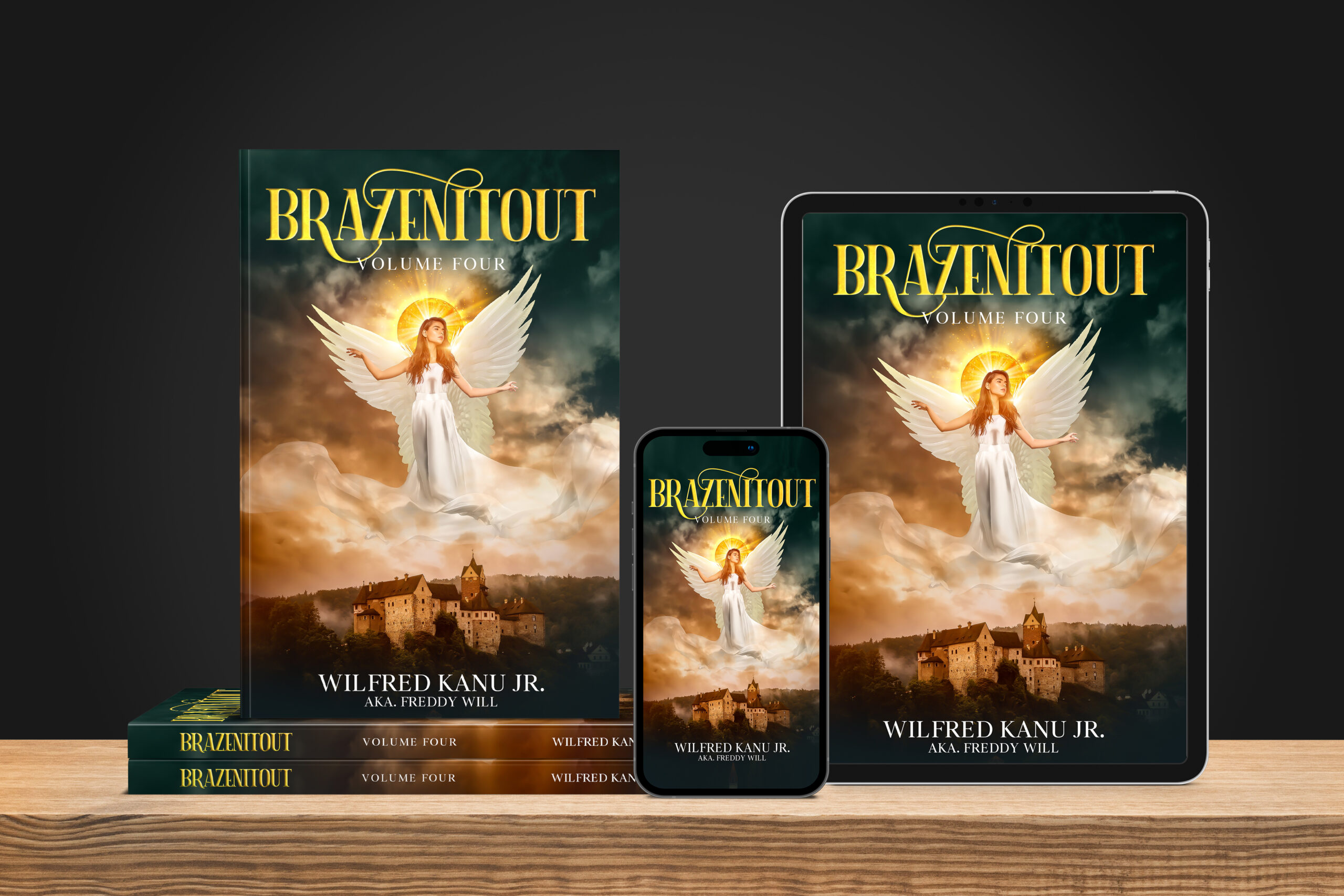
Living in Germany, I discovered that Sandman was already spoken for. “Der Sandmann,” a short story by E.T.A. Hoffmann, first published in 1816 as part of his collection Nachtstücke. It is one of the foundational texts of German Romantic horror. The story follows Nathanael, a young man terrorized since childhood by a figure who steals eyes, whose obsession with the mysterious Coppelius bleeds into madness and ends in his death. Freud analyzed it at length in his essay on the uncanny, Das Unheimliche, treating it as the exemplary text of psychological dread. Sandmann, in other words, already carried two centuries of German literary weight before I arrived with my journal. I made the only logical decision. I killed my Sandmann, republished the Journal as a four-volume paperback under the title Brazenitout, and started over with a new character that was entirely mine.
The Bee Mann was born from that clearing.
The concept grew from the biology of the bee itself: a creature that builds, that stings, that pollinates, that operates through intricate collective intelligence while remaining dangerous when threatened. An organism that produces something as rare and deliberate as honey. But the name carried a second register that only revealed itself fully in Berlin, because B is also the first letter in Berlin, so my Bee Mann is also the Berlin Man. A figure shaped by this city’s particular combination of reinvention and resilience, its history of collapse and reconstruction, its position as a crossroads where diaspora, art, migration, and nightlife have always moved together.
The deeper roots, though, reach all the way back to handwritten rhyme books from my high school years, pages filled before I owned a computer, lyrics that lived undisturbed in the dark of a notebook for over two decades. They were not forgotten. They were waiting for the right time and technology and the right opportunity to become something larger than themselves. That moment arrived. And when it did, it did not arrive quietly.

What the Project Is
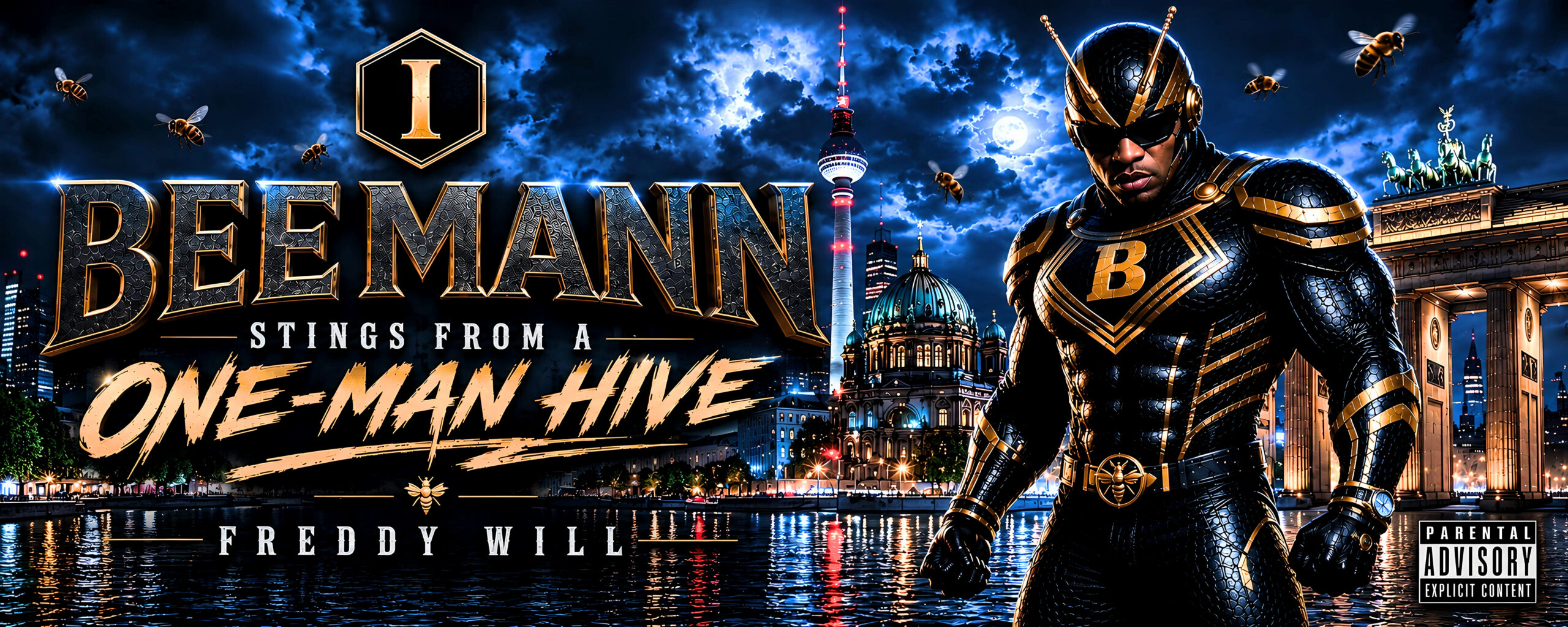
The full architecture of the “Bee Mann” mythology spans three books and three albums, 45 songs selected from over a hundred recorded, 25 annotated poems, an Afrofuturist universe built character by character, scene by scene, world by world. “Bee Mann: Stings of a One Mann Hive” is Book 1 and the double album that accompanies it. Every poem in that book has a corresponding recorded track. This means the book and the album are not companion pieces in the loose sense that most annotated releases are. They are the same work in two forms simultaneously. The reader who picks up the book can listen to every chapter as a song. The listener who plays the album can read the full mythology behind every track. Neither format is primary. Both are complete.
That is a rare achievement. Jay-Z’s “Decoded” annotated an existing catalog. The “Wu-Tang Manual” documented an existing mythology. “Bee Mann: Stings from a One Mann Hive” was built as both things at once, the book and the double album developing in parallel, the annotations written for lyrics that were being recorded at the same time the pages were being drafted. That is not the standard model. That is something new.
“Bee Mann II: Siege of Wannsee” deepens the mythology without music, by design.
The story in that volume demands the reader’s full attention, undistracted by the pull of a good beat. “Bee Mann III: Devils May Cry” closes the arc and arrives with 18 new songs written expressly as its soundtrack, music made from inside the story, not about it. Three books. Three albums. One fictional universe. And you. The audience.

At the Center: The Bee Mann
The Bee Mann is more than a superhero. He is the Berlin Man. A man shaped by reinvention, by survival after collapse, by culture, movement, migration, and the slow, difficult work of rebuilding. He bears the likeness of his creator. His biography mirrors mine in places. His home is Berlin, specifically Wannsee, where the amber windows blaze at sunset, and the hive endures. And yet, although he is Freddy Will, he is not me. He is the amplified version. The mythologized version. You are meant to feel that recognition and then have it slip, to understand that you are looking at something beyond autobiography. This is where fiction begins doing what autobiography cannot.
Bees are collective builders. Berliners are urban rebuilders. The Bee Mann is both. He is highly organized, communicating through rhythm and dance, pollinating ideas and culture, loyal to the hive, a builder and a protector, beauty and danger, honey and venom, intelligence and instinct operating simultaneously.
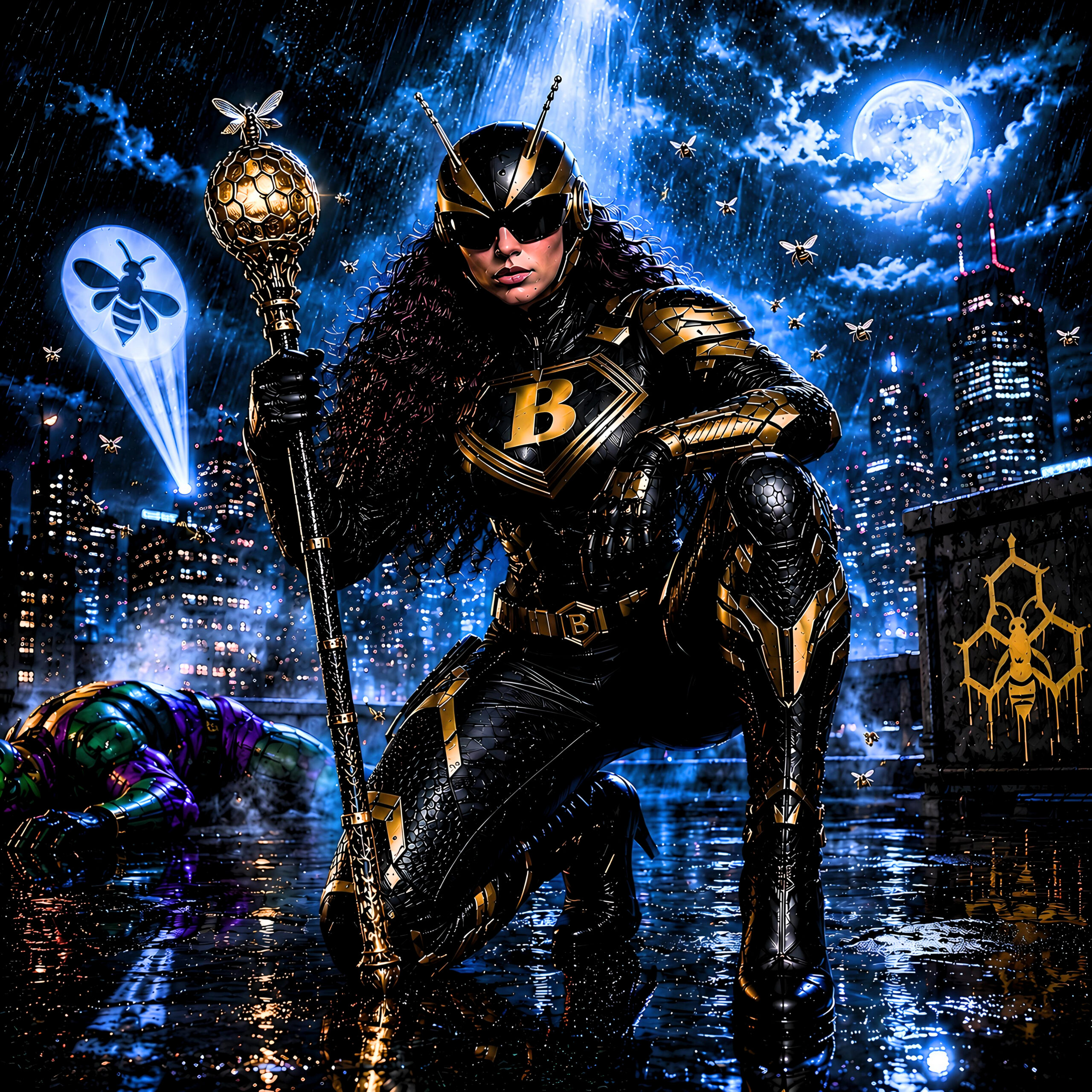
Beside him stands the Bee Woman, Amira, Colombian-born and raised in Germany, shaped by the same city, the same resilience. She did not inherit this world. She chose it. And in choosing it, she helped build it. The hive is not his alone. It never was. At the core of the mythology is a theme that sounds simple and runs very deep: power means nothing without purpose. And purpose begins at home. The Bee Mann builds. The Bee Woman protects.
The Music: A Document of Creative Risk
This is my first album of entirely new material since 2014. I approached it the way a griot approaches unfamiliar territory, with discipline, curiosity, and the willingness to sound different than expected. Disc One moves through Pop, Rock, and Amapiano braided into Hip Hop. It is where the dancing happens. Full stop. Disc Two settles into Jazz and what I call light Krio, a deliberate watering-down of Sierra Leone’s creole language, which weaves together English, German, French, and indigenous tongues, made accessible so that every English-speaking listener can follow the words without losing the flavor of the original. I did not want to hide the culture.
I wanted to translate it without erasing it.
Over the years I have developed various rap cadences, styles, and voice personas. This project gave me the room to test them all. Volume One is the party. Volume Two is the introspection, a flow drawn partly from UK grime energy, pushing my African accent deeper until it developed its own English that sits right on the border between Pidgin and Sierra Leonean Krio. Its own dialect. Its own frequency. I got to make a Jazz Grime album with some Krio.
The production model is itself a statement. I executive-produced by laying the foundations (drum patterns, baselines, the skeletal architecture of each track) then brought in musicians and singers from across the world through Fiverr to layer instruments, choruses, harmonies, call-and-response, and background vocals. I wrote every lyric and every melody. What the collaborators returned was the color on a canvas I had already stretched. The vocals were sculpted in ProTools alongside a hired engineer, and the final mastering was handled through eMaster, an AI-driven platform that moved the sound from roughly forty percent of its potential to full realization.
Making these albums was its own graduate-level undertaking. It involved coordinating background vocals through extended chains of communication across time zones, lyrics and reference tracks sent out, vocals returned, integrated into the mix. Late nights in the studio working through arrangements, mixing, and takes. The sustained, multi-disciplinary problem-solving that academic institutions call research and the music industry calls a session, but which is, at its core, the same thing: a person with a question they do not yet know the answer to, working until they find it.
The Collaboration: Human and Machine
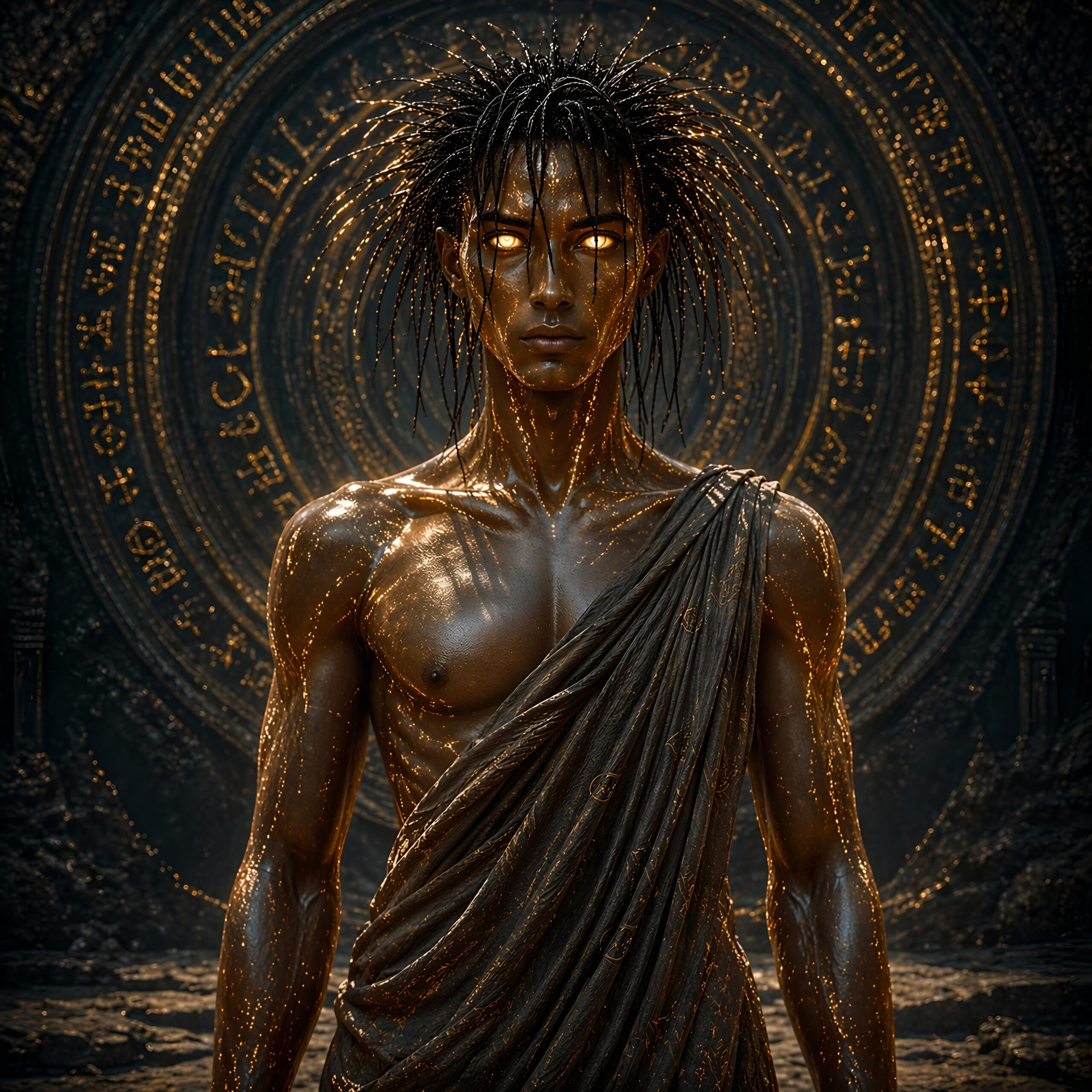
Artificial intelligence was not a shortcut in this project. It was a collaborator, and an honest one. ChatGPT helped conceptualize the albums arc and synchronize them with the books. It generated every photograph in the project, the characters, the environments, the covers, each face remembered and reconstructed on demand across hundreds of prompts. Amira’s face. My own face placed inside the mythology I created. That is something that would have been impossible a decade ago and barely possible even five years ago. The AI held the visual continuity of the universe in a way that no single human design team could have managed at this scale and this pace.
Claude assisted with structure and consistency across the manuscripts, catching blind spots, pointing out where a chapter’s logic drifted from the larger current of the work. Squibbler, PaperPal, Grammarly, and Natural Reader each played their role in the editorial and proofreading pipeline. Natural Reader read the books back to me out loud, which is one of the oldest editorial techniques there is, made newly precise by technology. None of this diminishes the human labor at the center of it. Every word, every concept, every thematic decision, every beat foundation, every lyrical line, those came from a man sitting with his thoughts and his history and his hunger to build something that lasts. The technology amplified what was already there. That is all technology can ever do.
What it enabled was scale. This project would have been extremely expensive and logistically near-impossible without AI assistance. With it, a mythology that once existed only as handwritten lines in a private notebook could become a fully realized Afrofuturist universe, photographed, scored, annotated, and published.
The Lineage: What This Project Is Doing
Every project I create is part entertainment and part thesis. Not in the casual sense of the word, but in the original academic sense: a sustained argument, built over months or years, drawing on research and lived experience and creative discipline, submitted to the world as a complete and defensible position on a subject worth taking seriously. My catalog reflects that. History. Politics. Cultural commentary. The African diaspora. Hip Hop as a literary and sociological force. Black identity in the 21st century. Race, power, and the asymmetric deployment of institutional machinery against Black excellence. These are not light subjects, and I have not treated them as.
But a career built entirely on rigor becomes its own kind of limitation. The scholar who never plays. The griot who only documents and never dances. I did not want to become that.
The “Bee Mann” project is my thesis on joy. It is playful in a way that my other work has not allowed itself to be. It ventures into poetry, not the formal academic treatment of poetry as a subject, but the actual writing of it, the lyric as the primary vehicle for argument and emotion simultaneously. It blends genres that my other series do not attempt: Hip Hop lyrics and scholarly annotations, superhero mythology and autobiographical memoir, cultural criticism and love story, Afrofuturist fiction and griot ceremony, all of it moving together in a single volume that refuses to be categorized by any one of those things alone.
It also reflects a truth about my life that the more formally serious books do not document as directly, that the man who writes the history books and the cultural criticism is also the man who feels, who yearns, who fears, who walks into recording studios at midnight and comes out with something that did not exist before he walked in. This project is Afrofuturist and Black speculative fiction with veins of artistic memoir running through it. It places a fictionalized version of my own likeness inside a universe I built from scratch, which is, in the oldest sense of the tradition, exactly what griots have always done. They placed themselves inside the story.
They made the personal mythic and the mythic personal. That is the lineage I am working in.
The Argument
These three books and the albums together constitute a single argument made in two registers simultaneously. The album argues it in sound. The book argues it on the page. The argument is this: the life of a Black Afropolitan man who crossed the Atlantic, built an independent career across three continents, published books, and established a publishing house in Berlin is not a background story. It is a mythology. It deserves the treatment that mythologies have always received. The poems, the annotations, the narratives, the prose, the superhero origin, the villains, the love story, the griot’s ceremonial account of everything life has cost and everything it has produced.
My career has always resembled a continuous university project. Not a single degree pursued toward a single credential, but the lifelong version of the academic enterprise: successive areas of inquiry, each one explored at full depth, each one producing a substantial original work. The “Bee Mann” project is the latest thesis in that sequence. It is also, I think, the most personal one, because it is the thesis on what the whole project has been about. Not the history. Not the politics. Not the cultural criticism, though all of those matter and all of them are present.
The thesis on the honey. The thesis on what you build when you refuse to stop building. The thesis on the family at the waterfront at sunset, with the amber windows blazing behind them, and the bees in the garden that arrived without being invited and never left.
Three and a half years. Five other simultaneous projects which you can explore on my website www.freddywill.de. More than a hundred songs recorded for forty-five. Handwritten notebooks become annotated poetry, become published mythology, become music. None of it accidental. All of it deliberate.
“Bee Mann: Stings from a One Mann Hive,” the book and the double album, are rolling out now through Badson Publishing.
The thesis has been submitted.
The hive is alive.
I hope it finds you at the right moment and stays with you long after that moment passes.