 0
0
 0
0
Every concept worth building starts with a seed.
Mine was the letter B and a bee.
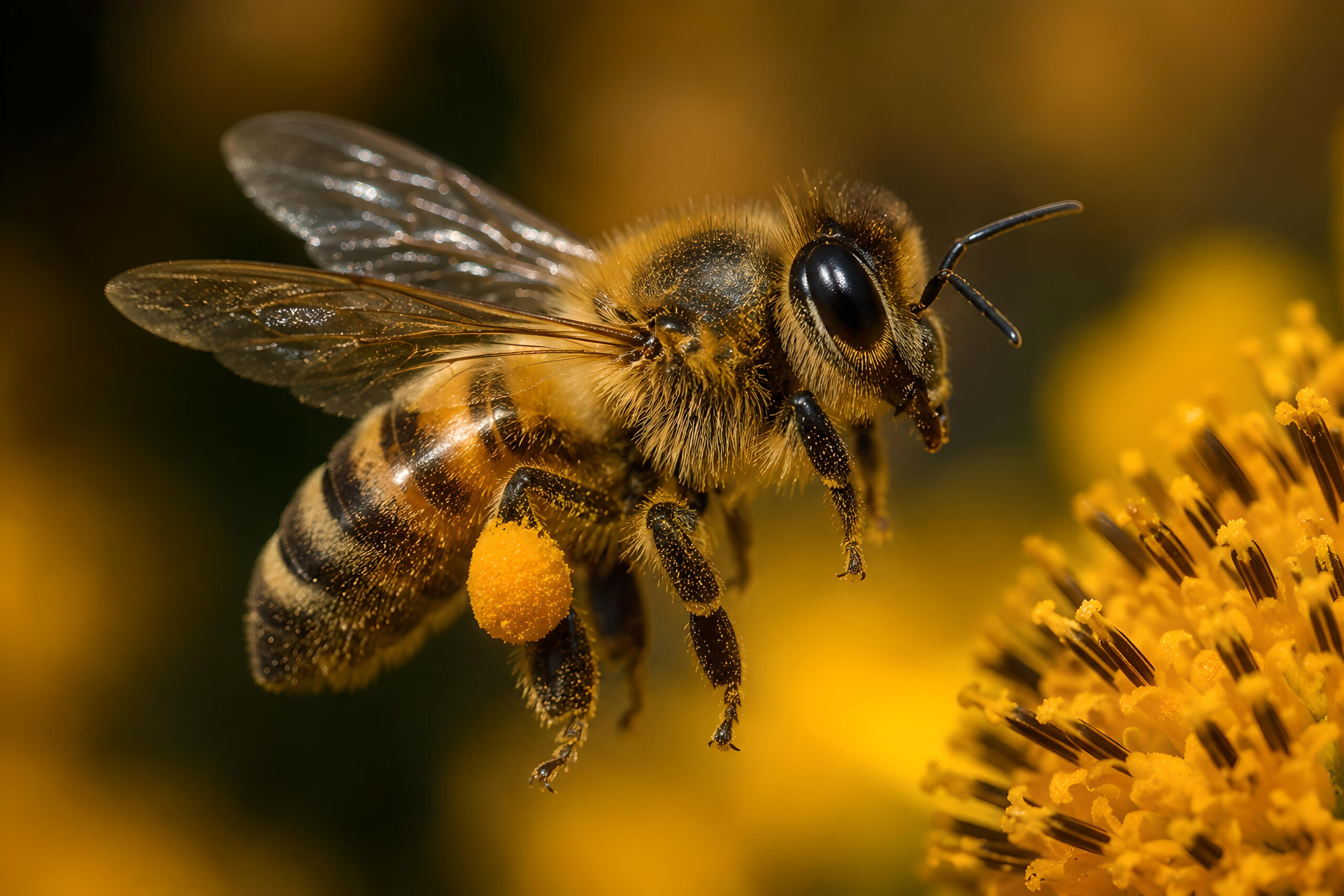 It’s NOT the insect alone, though the insect is enough. Loyal to its hive. Dangerous when provoked. Small but carrying a force disproportionate to its size. Disciplined. Smart. Organized. Precise. Driven by purpose. That nature alone can feed a lifetime of metaphors: grind and consequence, brotherhood and betrayal, wealth and sacrifice, the spiritual and the carnal, love as labor, ambition as devotion. A bumble does not wander. It works, it builds, it protects, and when it commits its final act of defense, it dies for it. The sting is not a threat. It is a covenant.
That commitment and that cost tell the whole story. I coaxed a hive awake so the concept could hum underneath every bar, every symphony, every beat. The goal was never to decorate an image. It was to turn an idea into a mythology, one built for the hip-hop world but rooted in something far older. I became the misinterpreted force. The leader of a swarm that arrives before anyone understands why. The thing they fear before they know what it is.
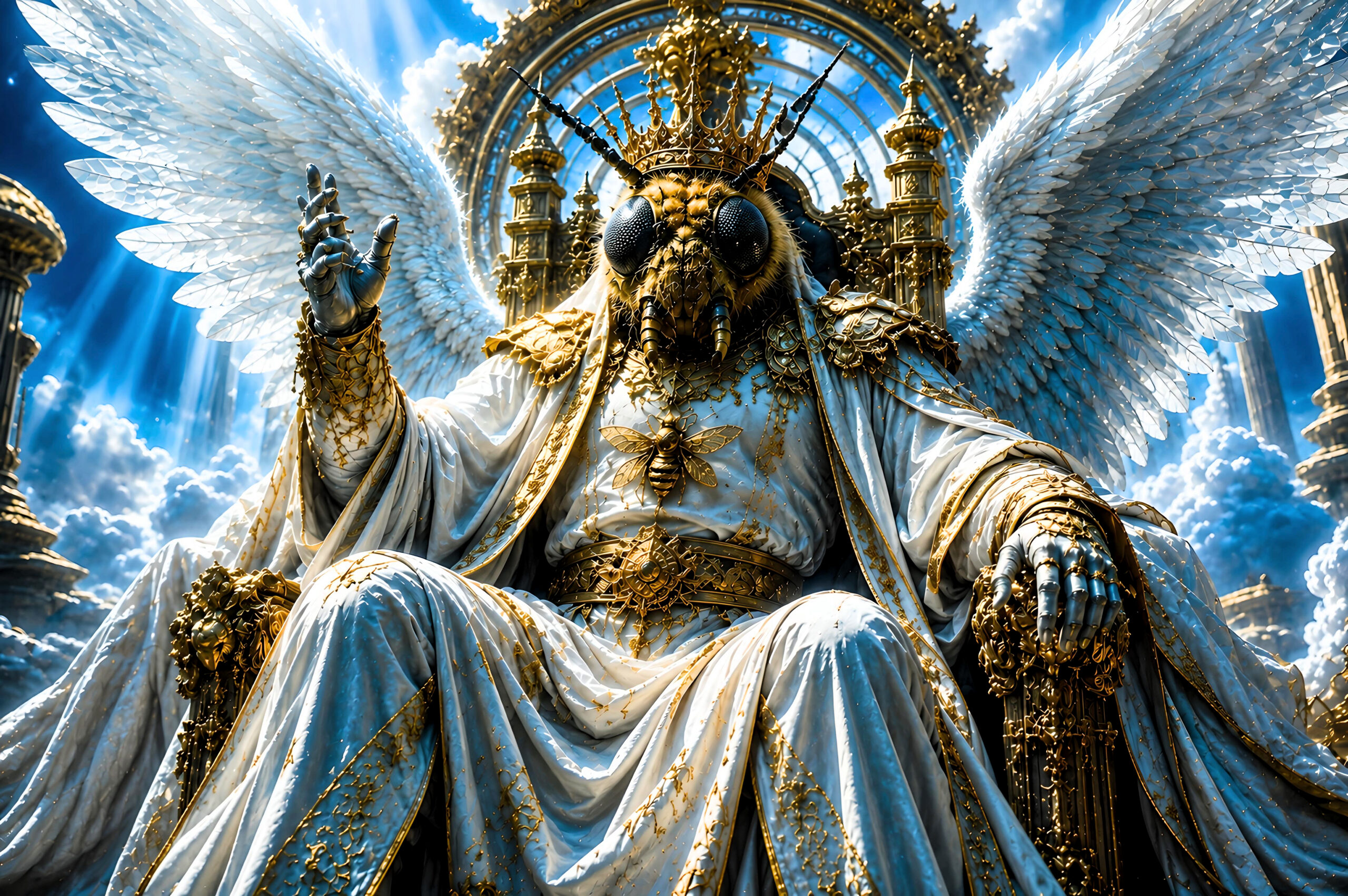
An age-old superstition runs farther than the creature’s bastardization. Beelzebub, not invoked here in any sense but in the symbolic, scholarly manner, derives from the ancient Philistine deity Baʿal Zebûb, Lord of the Flies, sometimes Lord of the Swarm. When early Hebrew writers encountered this god of their enemies, they did what empires always do to the symbols of those they oppose: they demonized him. They destroyed his image. I say that because if the “Lord of the Flies” refers to enemies who became fly food after losing a battle while trusting their god, then I would argue that every deity humans ever had has been a lord of flies at one point or another.
Over centuries, through the corridors of theology and folklore, Beelzebub absorbed the fear of swarming things, bees, wasps, hornets, locusts, creatures that move in masses, strike without warning, and overwhelm. That fear has lived on. It attached itself to the insect’s image. And in a cold world that has always turned the symbols of Black people, of immigrants, of the misunderstood, into weapons against them, that history felt personal. It felt personal because I have lived inside that operation, the misreading of a swarming thing as a threat, before anyone has bothered to understand what it is. My Bee Mann is not associated with Beelzebub; it is with the insect.
 I live in Berlin. I move through the world as a Black man, as a Sierra Leonean-American, as someone who identifies as Afropolitan, a figure that occupies multiple worlds without being wholly claimed by any. In certain spaces, that multiplicity is read as a threat. The way I carry myself, the way I build in silence, the way I refuse to collapse into the identities others have prepared for me, it unsettles some. I understand now that this is the bee’s inheritance: to be misread, to be feared for the swarm you represent, even when you are standing alone. My lived experience did not inspire this mythology. It confirmed it. And I am standing alone. That is the other heart of this work.
Bees win through unity. The hive is their power. But I do not have a hive around me, not in the conventional sense. No crew, no entourage, no swarm at my back. What I have is internal. Every skill I have sharpened over a lifetime, emcee, author, entrepreneur, father, faithful lover, survivor, is its own bee in my colony. Each one has its own discipline. Each one has its sting. Each one serves the whole. I am not one man wishing for a hive. I am one man who understood, somewhere along the way, that he had been building the hive inside himself all along.
One man. One hive. A whole swarm’s force.
This theme connects to One Man, a record from my debut album, the lone warrior who carries the weight of many: unknown ancestors, fallen homies, the pressures of work, the expectations of family, the cost of visibility. The hive is not around me. It lives in me. In Akan cosmology, the bee is a symbol of royalty and collective wisdom. In Yoruba tradition, honey is sacred to Oshún, the orisha of love and abundance. The hive was always African before it was anything else. A bee dies when it stings. That commitment is also a consequence. I have always known this.
I sting anyway.
This book and album are built to be felt in two registers simultaneously. Sweet, like honey. Painful, like an attack. That imagery runs through this work, honey as reward, the sting as consequence, pollen as inspiration, the queen as muse, the hive as origin and home. I do not hammer with a metaphor. I let the message pollinate. The scaffolding, the poetry list arc, the sonic palette, the visual world of gold and black and warm amber, emerged once the mythology was in place. That is how you know a concept is real: when the details arrive on their own.
This poetry and prose book exists because the album alone was not enough to hold everything I needed to say. Or rather: the album says it in one language, and this book says it in another. Together, they are the full hive. I recommend experiencing both, not as companion pieces, but as two chambers of the same comb.
If you are reading this before you listen, welcome.
If you are reading this after, you already know.
Either way, the swarm has found you.
Let the next curtain rise!
The griot steps forward, voice low.
The hum is already moving beneath the words.
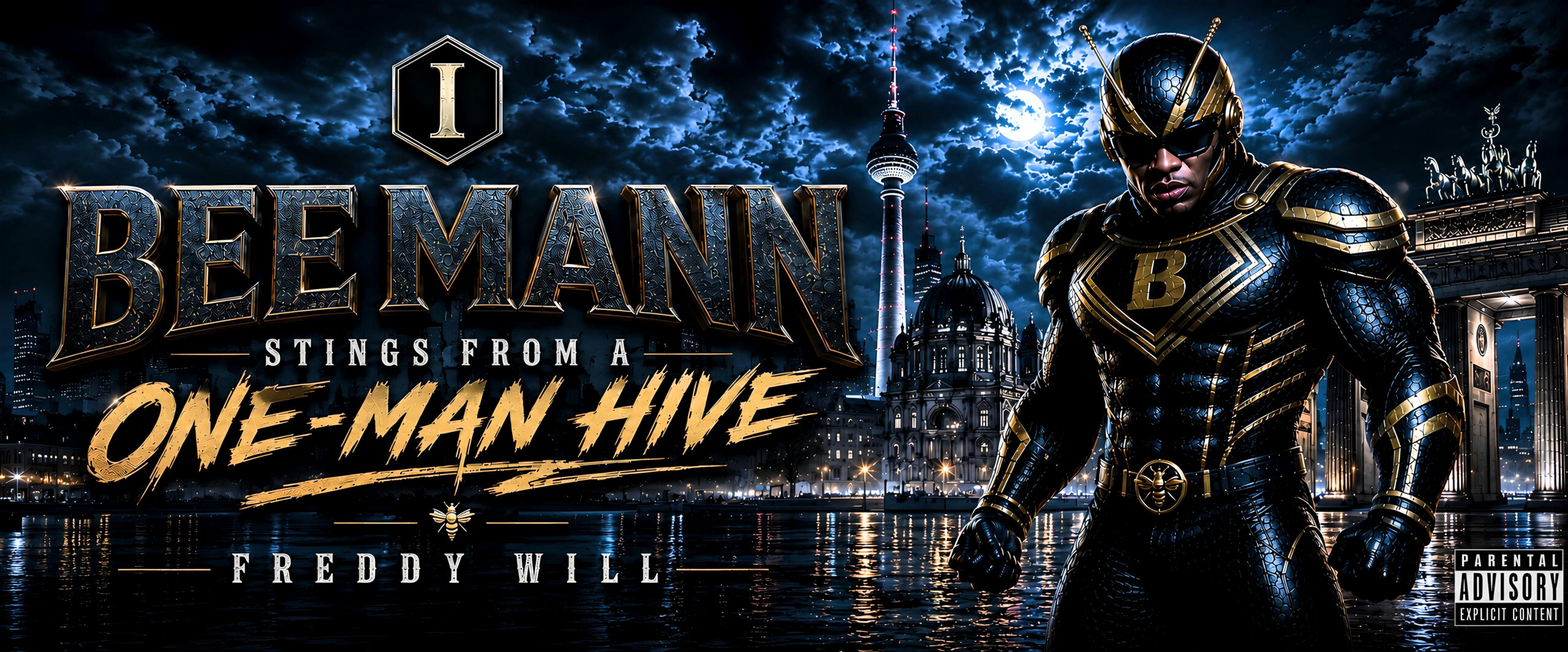
The main characters in this book are real and mythological at once. Neither cancels the other. Freddy Will is a living man, author, emcee, publisher, diplomat, and the artist behind the album these pages annotate. The Bee Mann is his mythological elevation: the interplanetary superhero who soars above Atlanta, lands in Times Square and Berlin, crosses dimensions, and commands the swarm. The Bee Mann was built from the image, likeness, and biography of Wilfred KANU, the man who writes as Wilfred Kanu Jr. and records as Freddy Will. They share the West African origin, the diaspora journey, the diplomatic credentials, the literary catalog, and the home in Berlin.
The creator and the creation are not the same person.
Yet both are equally powerful.
The “superhero” suit does not invent the man. It simply gives wings to what he already carried. And at the center of it all sits the Will family at Wannsee, Berlin, (Germany), the domestic hearth around which the entire mythology orbits. They are introduced here, before the poems begin, before the story is narrated, before the armor, the fire, the enemies, and the long road. Because the honey, as this book insists from its first page, was always for them.

Freddy Will
The Bee Mann (King of the Hive)
A Sierra Leonean-American. Born in West Africa, forged in New Jersey, USA, refined across three continents. Author of more than twenty books. Grammy-nominated artist. Founder of Badson Publishing in Berlin. Diplomat. Kung Fu practitioner. Father. The man who left the African continent broke at twenty and built a waterfront estate in Europe. In the suit, he is the Bee Mann, interplanetary guardian with six activated powers: physical supremacy, psychic foresight, swarm command, sonic vibrational force, dimensional flight, and hologenic communication through the Rolex. Without the suit, he is Freddy Will: the man in the armchair at midnight, the father helping with homework, the husband who argues in the living room, or in the bathroom, watches the Knicks, and hums in the kitchen when he thinks no one is listening. The “superhero” suit amplifies what was already there. It does not create it.

Amira Will
The Bee Woman (Queen of the Hive)
Colombian by blood, German by upbringing, Afropolitan by marriage and by the deliberate education that comes from choosing Freddy Will. Thirty-eight years, knowing who she is, and danger born from taekwondo training since the age of nine. She stands beside him in every arena, home, field, and every frequency between. When the mission requires two, she suits up without being asked, her B crest matching his, her wings flaring in unison. She carries the sacred feminine traditions of the Colombian diaspora, giving her a spiritual sensitivity that complements, organizes, and sometimes surpasses even the Bee Mann’s advanced psychic foresight.
She is also a passionate Colombian woman who demands daily romance, touch, and the warmth of a man who truly comes home. The hissy fits are real. The fire is real. The smile that rearranges every room she enters is real. Amira Will is the living center of the honeycomb. She does not stand alone. Before she became the Bee Woman, Amira Rodriguez moved with the Hornets, a powerful sisterhood of extraordinary women bound by discipline, intellect, and an unbreakable code of protection. Dr. Sofia Reyes (the Hornet Queen) and the others still answer when the frequency calls. The sisterhood is waking again. The hive is no longer only two. It is becoming many.

Jasmine Will
Eldest Daughter, Age 12, The Observer
Named for the flower that blooms where it should not survive. Twelve going on thirty, carrying her father’s sharpness of sight and her mother’s architectural precision. She attends an international school in Berlin-Zehlendorf, speaks four languages without any accent, and already writes stories that notice too much. She does not yet know she is a bee-in-formation. But her father sees the hum beginning to grow in her.
Some wings must be discovered from the inside.

Nia Will
Middle Daughter, Age 8, Bright Intention
Nia means purpose in Swahili, and she carries it like a blade of light. At eight, she has already decided she will become a doctor, master taekwondo like her mother, build robots, and visit every country her father sings about. She is the hive’s busiest worker, always moving around the house, always questioning, always producing.
Her laugh fills the Wannsee mansion like sunlight through amber.

Austin Will
Youngest Child, Only Son, Age 5, ATG
Named for greatness. Born on a Friday (Kofi in Akan tradition), he carries the same energy his father claimed for himself as a boy. He arrived with his father’s eyes, his mother’s chin, and an instinctive relationship with bees. They have never stung him. They circle him the same way they circle his father. He hums back when his father hums in the kitchen. Neither of them has explained it. They do not need to. He is the future of the hive, already encoded.

The Estate (Wannsee, Berlin)
The Will family home rests on the western shore of the Großer Wannsee, a sleek French neoclassical seven-bedroom mansion with baths and three kitchens, of white stone and slate, amber light glowing in every window at twilight. The estate has a gate at each cardinal point. A private dock stretches into the water. The grounds are formal by the lake, wilder behind, where wildflowers grow. Three beehives stand in that garden.
They were not placed there. They arrived. The neighborhood now calls it the house with the bees. The swarms that gather on the dock in warm weather no longer alarm anyone. The hive knows who belongs. The Rolex on Freddy Will’s wrist is no mere watch. It is a gift from Amira, the hive’s living communication device. The dangling earring Amira wears is its twin. Together, they form the most intimate thread in the mythology, allowing him to project her frequency and her to see him, no matter which dimension he walks in. The hive is not around him.
It lives in him.
And in Wannsee, it has a home.
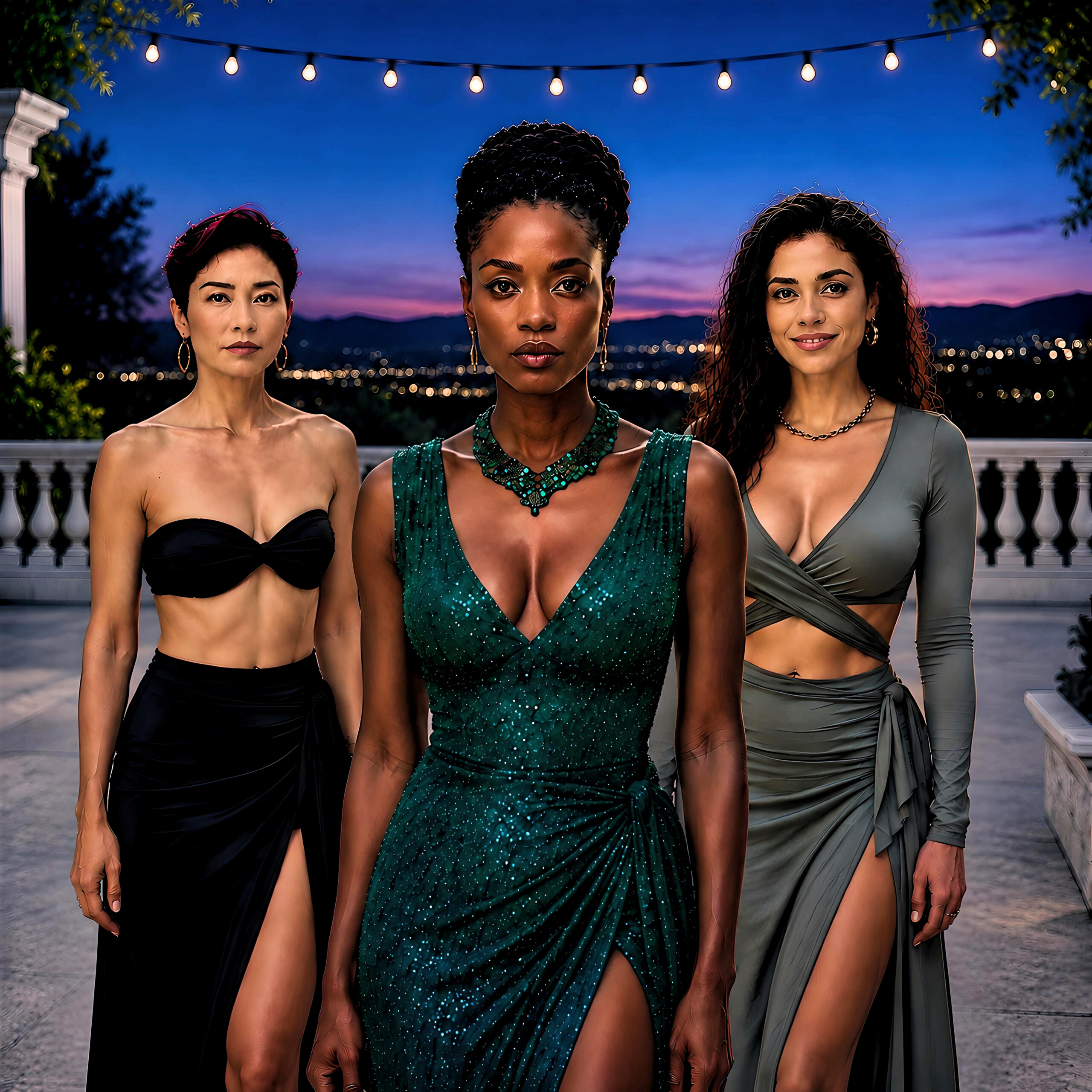
The Hornetss
Long before she became the Bee Woman, Amira Rodriguez moved with a different swarm. In her university years in Germany and her early diplomatic days in Belgium, she ran with the Hornet Sisterhood, a circle of extraordinary women bound by discipline, intellect, and an unspoken vow: protect what matters, sting what threatens it. They were not superheroes then. The Hornet Sisterhood was simply women who refused to be small.
At the center of that circle was Dr. Sofia Reyes, crisis negotiator, Muay Thai black belt, former UN peacekeeper, and the Black woman who would later be called the Hornet Queen. Sofia and Amira had not spoken in years. Life had pulled the Hornets in different directions. But frequencies that deep do not break cleanly. They always find each other again. It began with a message through the earring. Amira was in the Wannsee kitchen when the communicator activated. Not the Rolex this time. Her own device. A golden hornet projection appeared above her earring, small but vivid. Sofia’s face, sharp and warm at once, filled the space. “Amira Will,” Sofia said, voice calm but urgent. “The frequency is shifting. We felt it in Geneva. Something is hunting the hive.”
Amira’s hand tightened around her coffee cup. “How long have you known?”
“Long enough to reassemble the Hornets,” Sofia answered. “Three of us are already moving. The rest will answer when you call. But I wanted you to hear it from me first.”
Amira looked out at the garden where the three beehives stood quietly under the German sky. She thought of Freddy in the armor the night before, of Jasmine’s growing observation, Nia’s fire, and Austin already humming with the bees. She smiled, the dangerous, elegant smile that had made diplomats nervous for years.
“Tell the Hornets the Queen of the Hive says it’s time.”
Sofia’s projection grinned, golden eyes flashing. “About damn time. I’ll bring the precision. You bring the warmth. Together we’ll remind the parasites why they should stay afraid of women who love fiercely.” The projection faded. Amira stood in her kitchen, the sacred feminine frequency humming louder than it had in years. She touched the B pendant at her throat. The sisterhood was waking up. And the hive had just grown stronger.
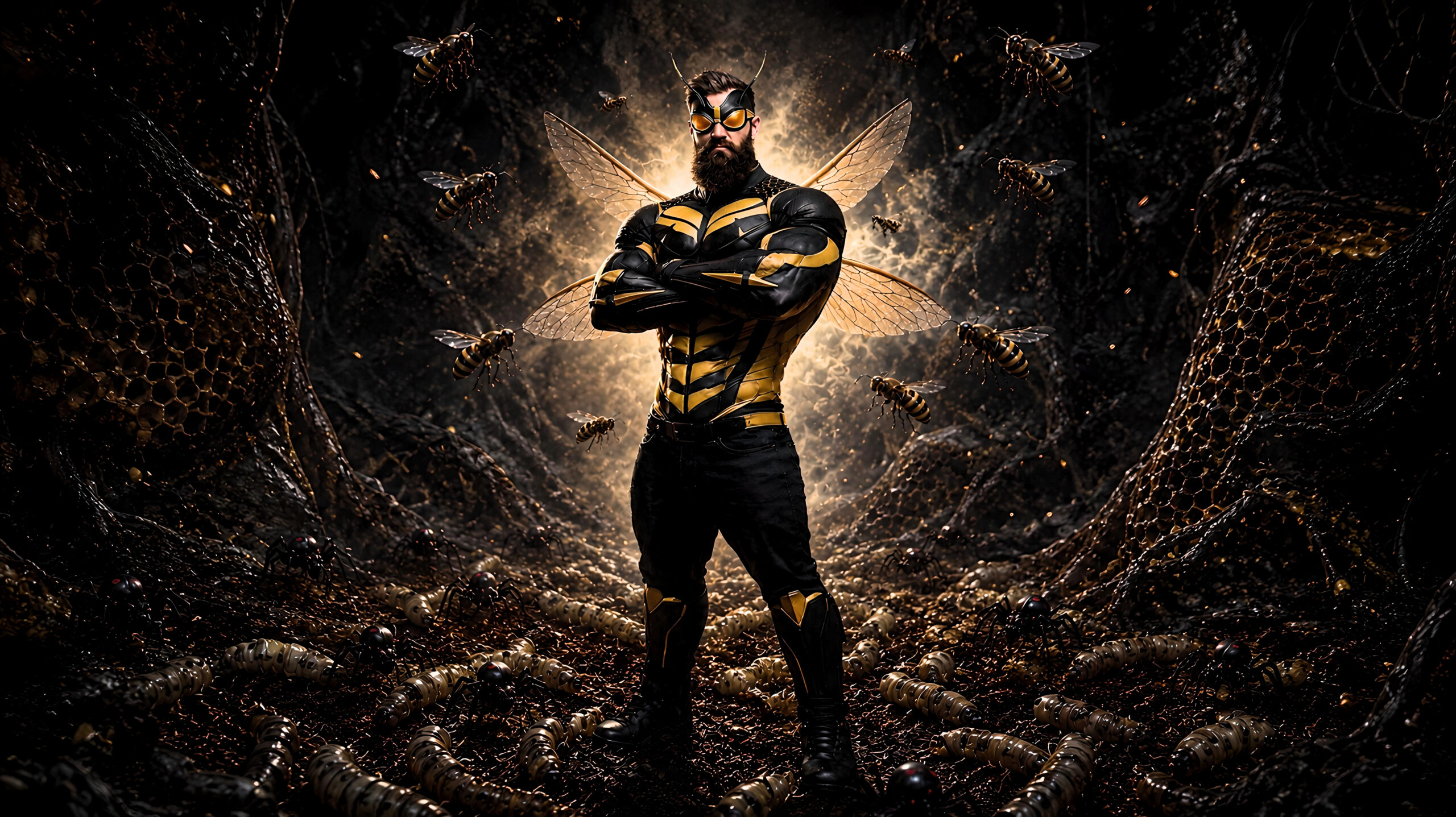
Wasp Mann
Archnemesis. Mimic Parasite. Frequency Thief.
Colony Collapse Architect. He is not the strongest enemy the Bee Mann will ever face. He is the most precisely engineered. The Wasp Mann does not seek to destroy the hero in open combat. He seeks something far more intimate: to make the Bee Mann doubt the honey he has produced. To turn every hard-won victory into an accident. To make the Wannsee estate feel like stolen ground instead of an earned sanctuary. To transform unashamed celebration into provocation. Against a man whose entire mythology rests on the refusal to apologize for creating what others cannot, the deadliest weapon is the one that turns production into guilt.
He wears the same black-and-gold. He moves with the same authority of belonging. He carries wings. Yet behind his hum lies only silence, an empty chamber the bees detect in the waggle dance long before psychic sight can name it. One hundred million years of hive memory already knows the difference between the frequency that builds and the one that steals. The bees know his frequency. He often mimics the frequeucy of a bee.
He surrounds himself with live wasps, black widow spiders, and dead caterpillars, the ecology of a predator that has learned to weaponize everything which feeds on the labor of others. He is drawn to the moment of the Bee Mann’s greatest victory, when the honey is richest, and the temptation to confuse the copy for the original is strongest. The same machinery that tried to contain the Bee Mann sometimes produces instruments instead of resistance. The Wasp Mann is what happens when that machinery wins. He is colony collapse made flesh, the cautionary road the Bee Mann refused to walk. The swarmy king of all parasites.
He has been defeated twice. Once, by the Bee Mann’s full power set unleashed at maximum range. Once by the Bee Woman’s queen’s sting, delivered with the scepter, the sacred feminine frequency, and one look that severs any blade. He retreated with torn wings and venom spilled uselessly into the void, laughing through gritted teeth. Parasites do not mourn lost hives. They calculate the return. He will return. He always returns. Stronger.
The honey the Wannsee hive has built is exactly what he craves and will never produce himself. But the hive will always know the difference. The bees felt the silence behind his hum before the Bee Mann arrived. They will feel it again. And the Bee Mann will come home. And the Bee Woman will stand at the threshold with the scepter ready. The honey will remain untouched in the comb. Because the hive is not a person. The hive is a resolve.
And no parasite has ever dissolved a resolve.
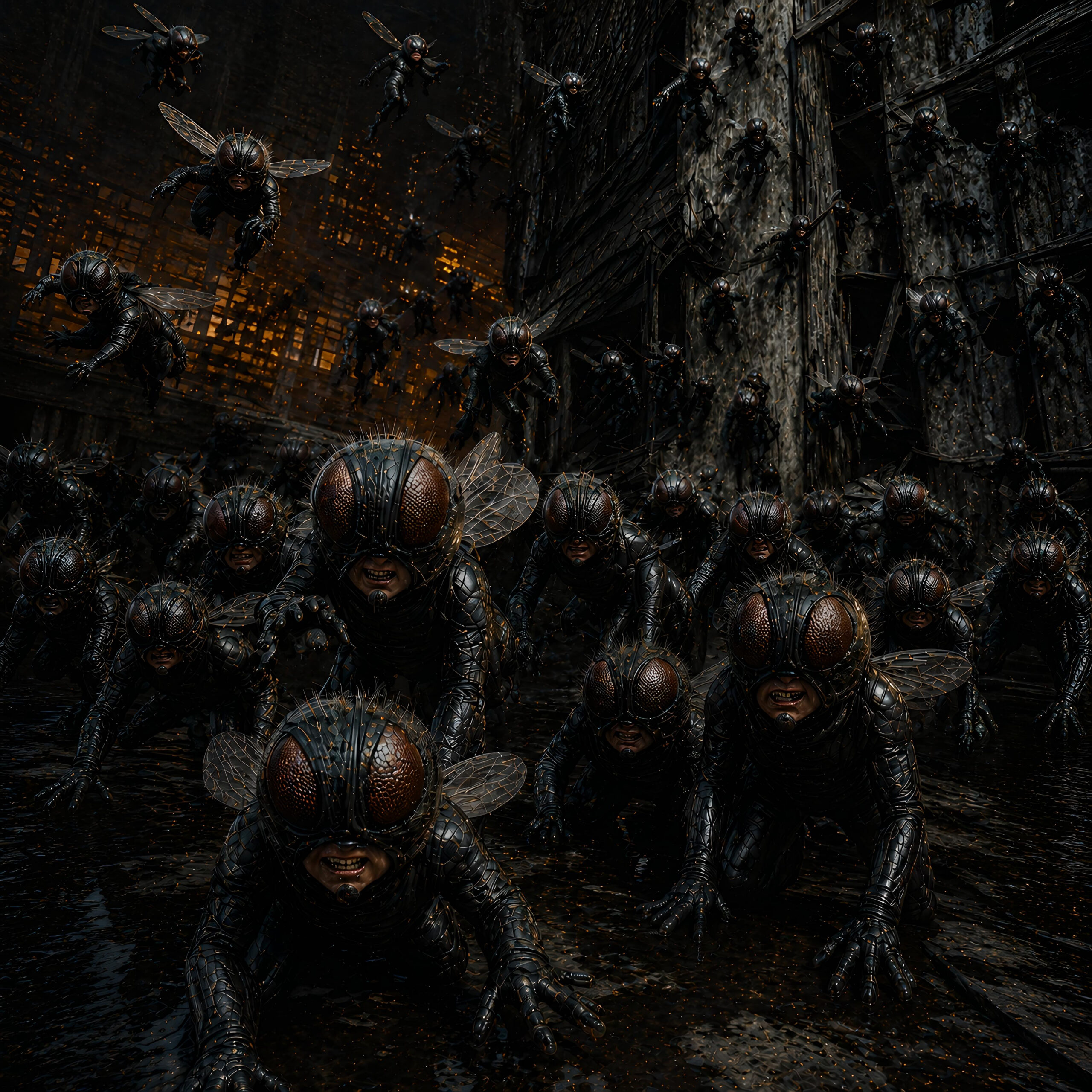
The Flies
They are not a single enemy. They are weather. The ambient hostility that gathers around every Black man who dares to build something worth protecting. Named in the Frontin’ annotation, they are the renamed, the swarm that appears wherever honey becomes visible. The Flies, also known as the haters, are not organized enough to be true enemies. They are numerous enough to feel like storm clouds. The Bee Mann moves through them without breaking stride. They are simply the cost of altitude. They follow the Wasp Mann. They thicken when the honey is richest. They are noise, not the real threat. The Wasp Mann is the threat. The Flies, his followers.
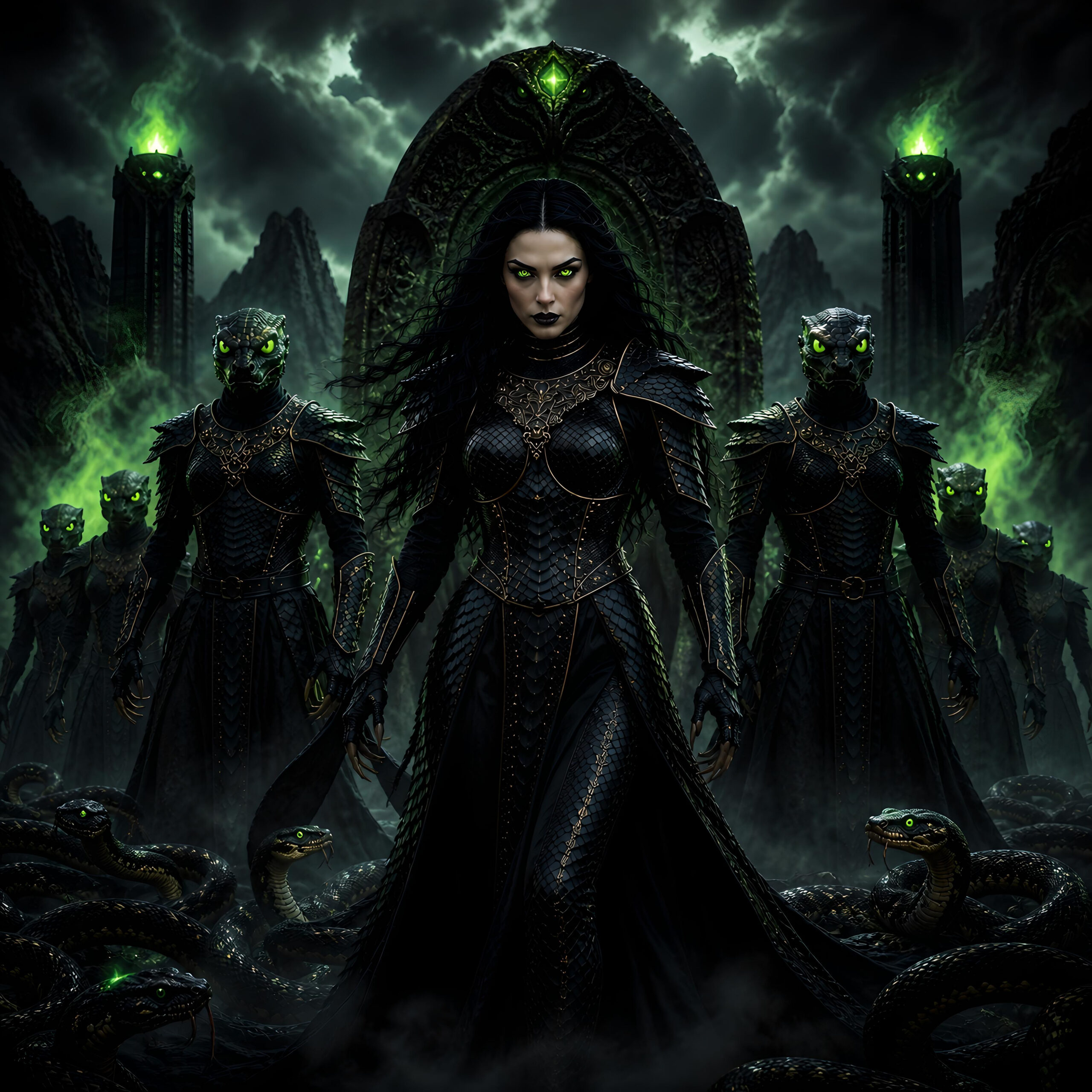
The Viper Clan
Strike Unit. Power Suppressors. Frequency Inverters.
They do not arrive alone. Six figures in living black snake-scale armor glide forward with glowing green slit eyes, venom-tipped claws, and live snakes coiling at their feet in frequency-distorted darkness. They do not run. They walk with the unhurried certainty of predators who have already calculated the outcome. The Bee Mann’s psychic sight, which reads intent before it materializes, finds nothing. They do not plan. They hunt. Their hunting instinct produces no frequency his powers can intercept. But the Bee Woman and the Hornets detect them.
At their center stands their leader, the Viper Queen. She is the deliberate dark mirror of the Bee Woman. Where Amira radiates sacred feminine frequency, warmth, and organizing love, the Viper Queen radiates inversion. Her venom does not simply poison. It perverts. It takes what the target produces and turns it against them. Against the queen’s sting, her frequency inversion is surgical: threat becomes safety, danger becomes warmth.
She is a formidable adversary.
The six soldiers flanking her each carry venom calibrated to one of the Bee Mann’s six powers. Together, they form a complete suppression system designed to strip him down to the man in the black tee, the survivor of wars who once had only instinct and refusal before the myth gave him wings. They did not assemble themselves. Predators of this precision require a strategist. And the Wasp Mann, licking his wounds after Poem 21, has had time to think.
The hive has been warned.
The Music (Double album)
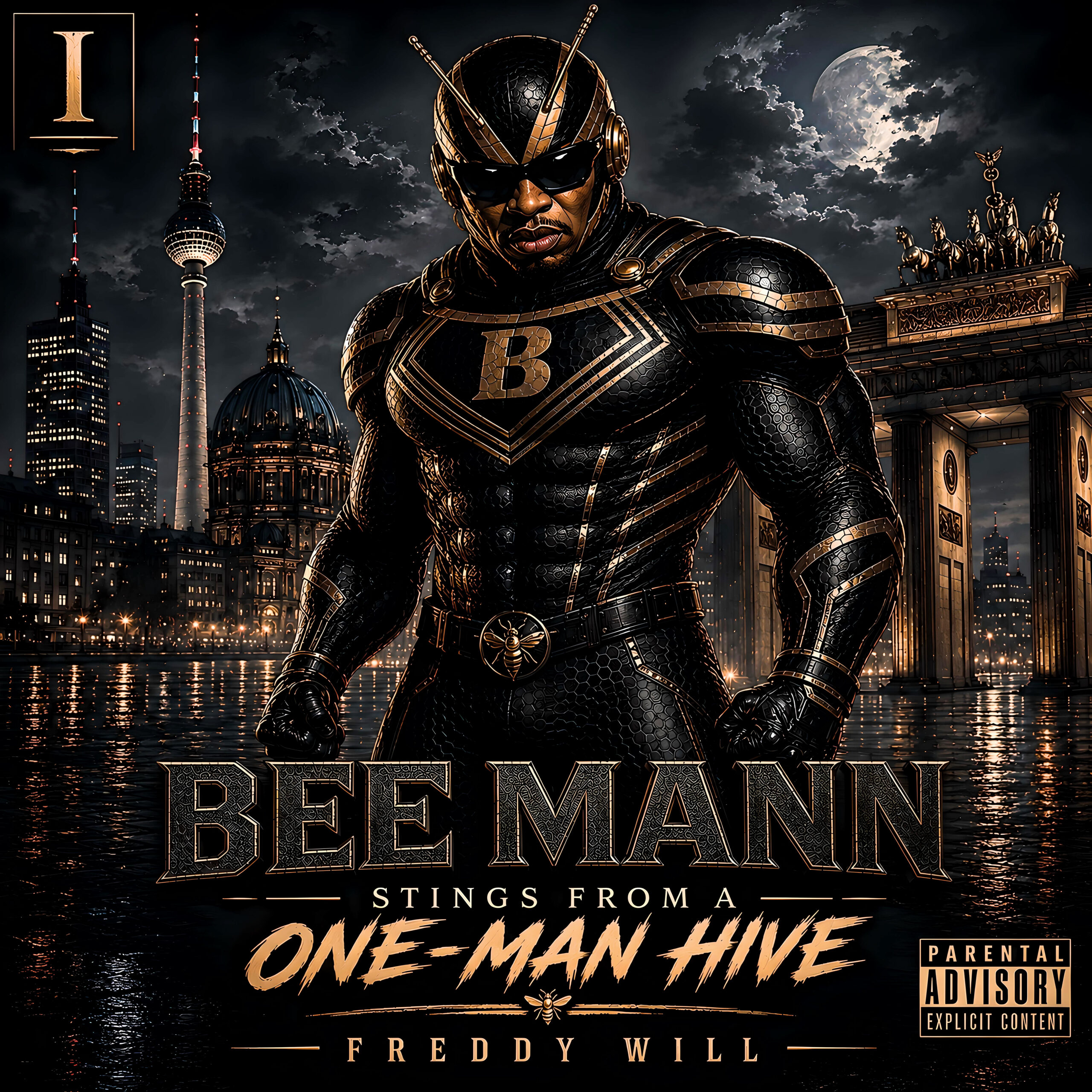
Bee Mann: Stings From a One-Man Hive is a two-part hip-hop studio album by Freddy Will, produced by Swift Nights Music Society, based in Tallinn, Estonia, and Berlin, Germany. It is my first full studio release in over a decade, a twenty-five-track body of work that moves through origin and legacy, carrying a complete mythological framework beneath every bar, beat, and musical transition.
The poems you are reading in this volume are the lyrics of that album, lineated and presented to the reader as the poetry they always were. Every verse, hook, bridge, and spoken interlude has been formatted for the page rather than the speaker, not transcribed, but restored to the form they inhabited before the music gave them sound.
Hip-hop art has always been poetry. This book makes that argument visible.
Each poem is followed by an annotation written in two voices: first person, when the author speaks as the artist documenting his creative process and lived experience, and third person, when the mythology of the Bee Mann, the superhero figure at the center of the albums’s cosmology, is examined from the outside, with the analytical distance one brings to a Marvel character or a classical hero. The result is this book that is simultaneously my artistic statement, a cultural document, a fictional mythological epic, and a love letter to a family.
The album says it in one language, and this book says it in another. Together, they are the full hive.
The avid reader is strongly encouraged to experience both works (the ALBUM and the BOOK) together, not as supplement and source, but as two chambers of the same honeycomb. Neither is complete without the other. The album carries frequencies that the page cannot reproduce. The book carries the depth that the music can only gesture toward. In the space between them, the mythology lives.
Three sizeable interstitial essays appear between distinct moments. These are original prose pieces written for this book rather than derived from the album, scholarly and griot-register passages that examine the mythology’s cultural foundations: the ancient theology of Beelzebub and the symbolism of the swarm. The asymmetry of accusation culture and its relentless deployment against Black male excellence. And the sacred feminine, alongside the phenomenon of narcofeminism. They are the scaffolding that holds the first book.
One chapter, Witchcraft N’ Cocaine, is also original to this book: a poem written for the page, in the classical griot register, that appears on the album as Cocaine Witch. It honors the sacred feminine that the surrounding prose examines, and gives the Bee Woman, Amira Will, her mythology.
The Too Many Enemies chapter contains a poem also originally written for this book, a formal verse inventory of the forces arrayed against the Bee Mann, which closes with the mythology’s defining couplet. It is placed as the penultimate chapter because it names every threat the preceding chapters have been navigating, and dismisses them all in two lines.
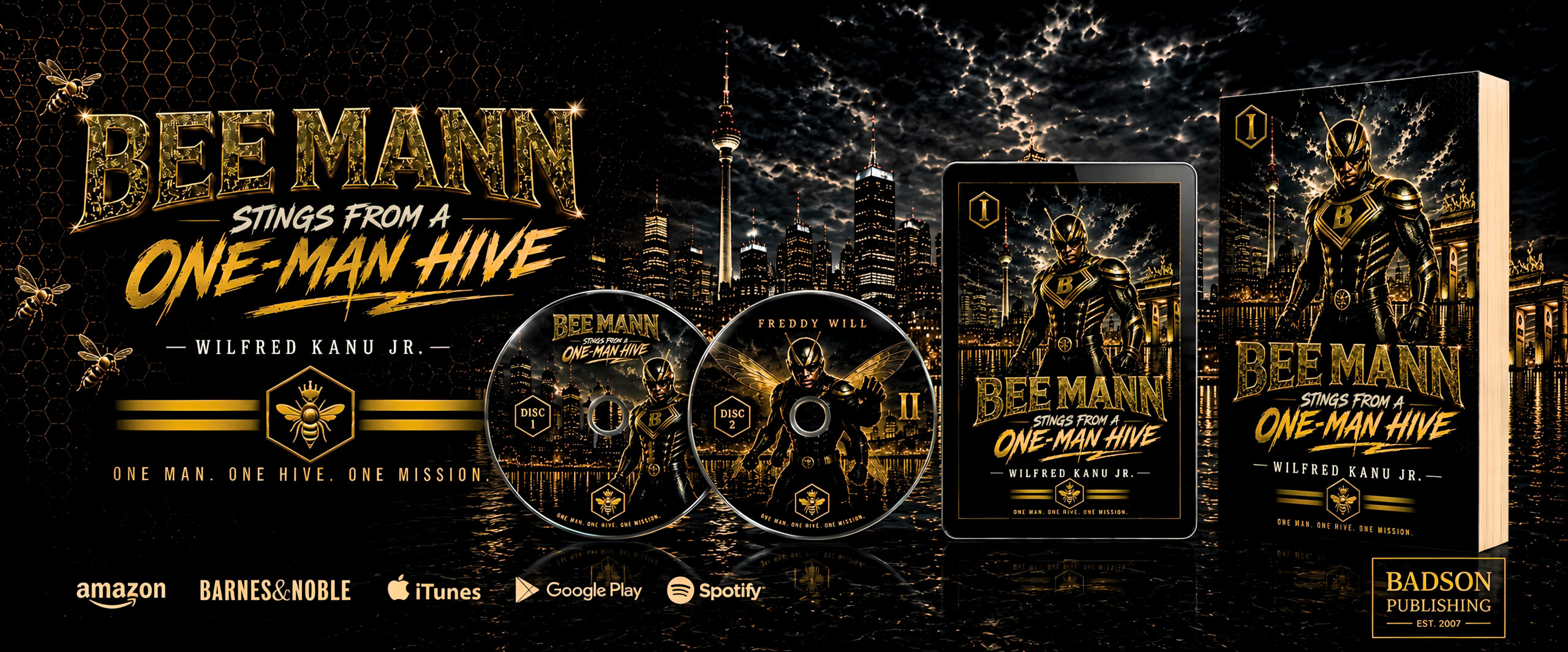
Bee Mann: Stings from a One Man Hive I & II
Disc 1
The Hum
City Kid
Suddenly
Frontin’
Mansplainin’
Hissy Fit
Clutch
Accuse Me, I’m Dope
Afropolitan
Beestings
Killer Instinct
Berlin, Berlin, Berlin
Disc 2
Bee Mann
Cocaine Witch
Europa
Toxic
PantyDown
Road Wins
Giant
Wasp Mann
The Queen’s Sting
Ill Intuition
Shit Could Wing Left
Too Many Enemies
HoneyComb
Executive Producer: Wilfred “Freddy Will” Kanu Jr.
The Book (Bee Mann: Stings from a One Man Hive I)
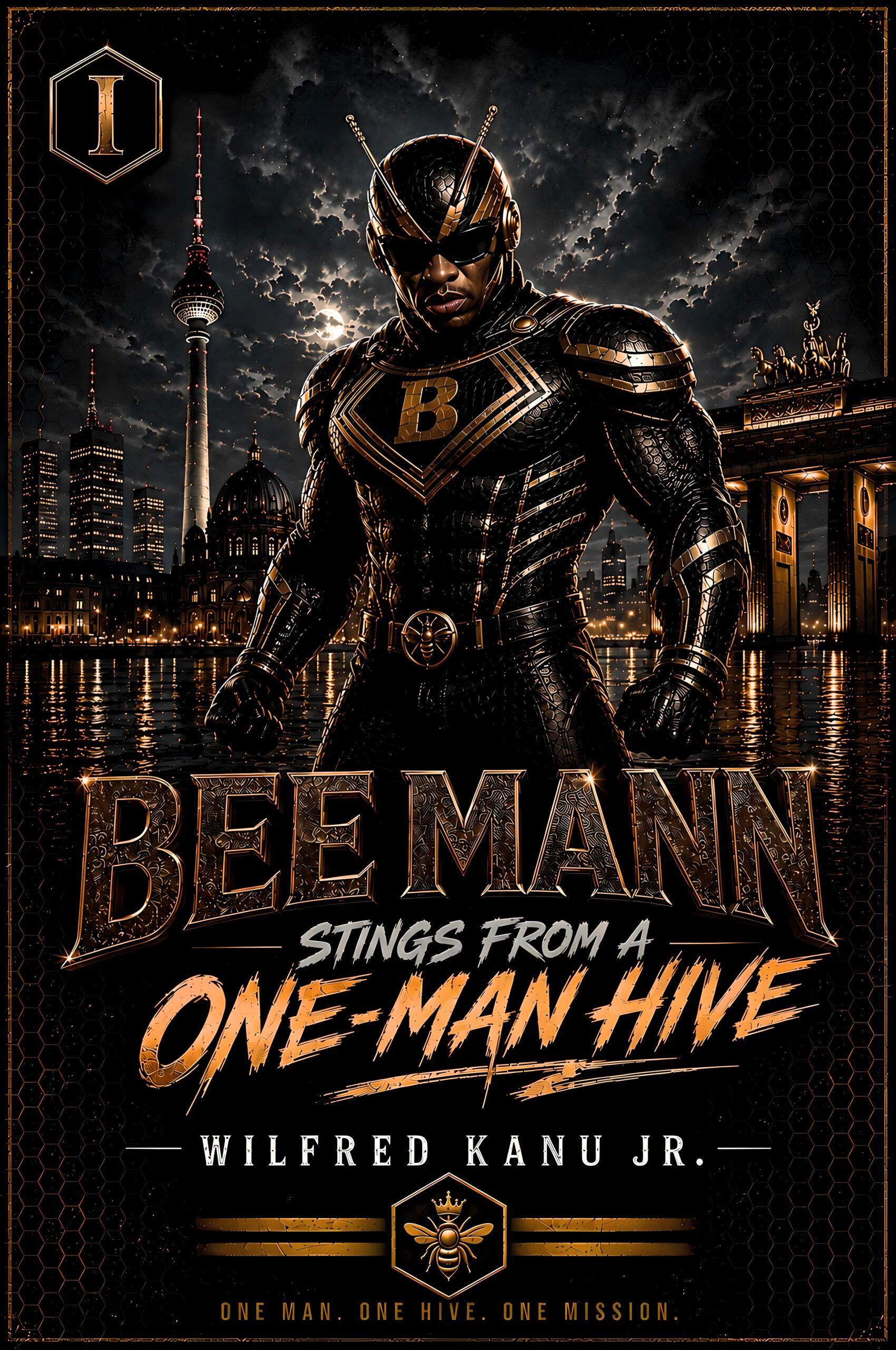
This book, Bee Mann: Stings from a One-Man Hive, occupies four genres simultaneously. Each one is present. None of them is a disguise for the others. The reader approaching this book as a poetry collection will find exactly that. The reader who comes as a student of Black speculative fiction will also find exactly that. The same is true for the reader approaching it as cultural criticism, or as the artistic memoir of one of the most distinctly positioned voices in contemporary Afropolitan literature. This book does not choose between these identities. It’s all of them at once, the way the bee is simultaneously architect, warrior, forager, and dancer, and is none exclusively.
I. Poetry
This is the book’s primary classification and its first identity. The texts at the center of each chapter are poems derived from lyrics, written to be rapped, produced as music, recorded, and released on the album with a title similar to the book. But hip-hop has always been poetry. The lineation, the internal rhyme, the compression of image and argument into the smallest possible unit of language, the griot tradition of spoken truth carried across communities that cannot always access the written word, all of these are the properties of poetry.
And all of them are present in these pages.
The decision to present these lyrics as poems on the page, lineated, stripped of their sonic context, placed in conversation with prose annotations that treat them as literary texts, is not a promotional gesture. It’s an argument. The argument is that these works deserve the full apparatus of literary reading: close attention, contextual annotation, mythological framework, and the respect that the page extends to texts it takes seriously. Hip-hop has long been the most vital form of poetry, even today. This book extends the page without apology.
The two poems originally written for this book, Witchcraft N’ Cocaine and Too Many Enemies, were composed in the classical stanzaic tradition, in rhyming couplets and quatrains that honor the griot’s formality while remaining fully legible to the contemporary reader. They represent the album’s mythology extended into territory the music alone could not reach.
II. Afrofuturism & Black Speculative Literature
The Bee Mann is a superhero. This is not a metaphor. He soars over Atlanta at sunset with gold sparks trailing behind him. He lands in Times Square and points at the world. He crosses through the multiverse, dimensional membranes into spaces governed by different physical laws. He commands the global swarm without speaking. He reads the probability weight of outcomes before they materialize. He has entered and survived the Null Plane, a dimension of pure silence from which no one returns unchanged. He travels across the Multiverse.
In placing a Black Afropolitan man at the center of a complete superhero mythology, with a fully developed power set, a domestic life, a partner in the field, an origin story rooted in West African mythology, and a rogues’ gallery that includes systemic racism, industry machinery, interacial, and the coordinated envy of too many enemies, this book situates itself in the tradition of Afrofuturism: the literary and artistic movement that has always insisted on the full presence of Black imagination in speculative and fantastical spaces.
The Bee Mann is not a derivative of existing superheros, though this book acknowledges and celebrates the Marvel framework as a structural reference point. He is an original figure, built from the biography of a man whose powers are traceable to the bee’s biological reality and the ancestral traditions of West African spiritual life. He is the product of Sierra Leone, New Jersey, Toronto, Berlin, and the frequency that runs through Freddy Will’s life, whether the armor is on or off. The mythology was not invented for the album. The album revealed what was already there.
The suit amplifies what is already there.
It does not create anything that the man in the black tee already carries.
III. Cultural Criticism
Two interstitial essays interrupt the poem-and-annotation sequence between movements. They are not decorative. They are the book’s intellectual structure, and they make serious arguments that stand independent of the story surrounding them. Someone said, they are food for thought.
The first, The Asymmetry, is a cultural and political analysis of accusation culture as it has been deployed against Black male artists and entertainers, with the Epstein files as the sharpest available evidence of the differential application of public disgrace across racial lines. It’s written with the precision of a man who has observed this machinery from close range and is documenting what he sees.
The second, Witchcraft N’ Cocaine, is both a cultural essay and an original poem: a griot-register examination of the sacred feminine traditions of the African diaspora, the phenomenon of narcofeminism as documented by scholars including Judy Chang and the contributors to the 2023 Sociological Review collection, and the ways in which genuine spiritual tradition has been distorted into a tool of manipulation in elite cultural spaces. It honors what is sacred before it names what is corrupt. The true essence of cultural criticism.
IV. Artistic Memoir
Every annotation in this book is, among other things, a document of a life. The civil wars survived in Liberia and Sierra Leone. The departure from the continent broke at twenty. The Canadian years, the Grammy nomination, the diplomatic stint in Belgium, the move to Germany, the publishing house built from nothing, the twenty books, the cherished estate in Germany, the children. These are not background details. They are the source material from which the mythology was distilled.
The annotations deliberately move between first and third person. When the author speaks as Freddy Will, the man who started rapping at ten in Liberia, who was diagnosed with Type 2 diabetes and changed how he ate and now jogs where he once crawled, who argues with his wife in the living room and watches the Knicks and hums in the kitchen, that is autobiography. When the annotations shift to third person to examine Bee Mann as a mythological figure, that is the author reading his own life through a mythological lens. Both perspectives are true.
The memoir and the myth are not in competition. The memoir is the raw material. The myth is what the raw material revealed when enough time was applied. The bee does not choose to become what it is. It simply builds, and what it builds eventually shows you what it was always going to be.
The marketing handle, for those who need one:
Bee Mann is what happens when a hip-hop album becomes a mythological epic, an annotated poetry collection, an Afrofuturist superhero origin story, and a love letter to a family — simultaneously and without apology.
It’s listed under Poetry.
The rest is for the reader to discover.