 0
0
 0
0
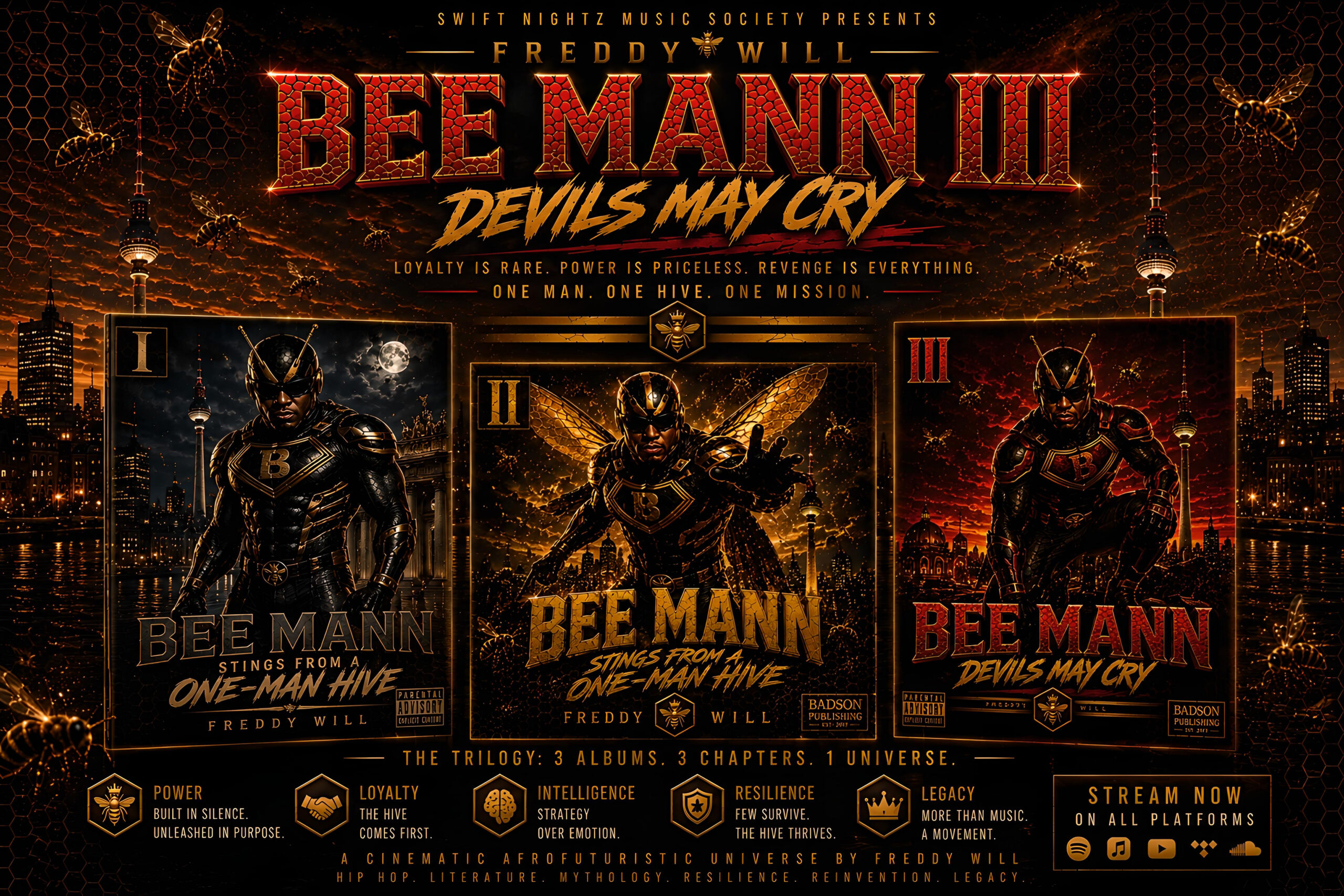
The music dropped on May 10th. My introductory for the Bee Mann trilogy. Essentially, Bee Mann: Stings from a One-Man Hive trilogy is many things at once: Afrofuturist fiction, annotated Hip Hop poetry, cultural criticism, and artistic memoir. But underneath all of it, there is music. Three albums. Fifty-three songs. Each one is a chapter in a mythology that has been building for years. Here is your guide to what you’re hearing, and why it matters
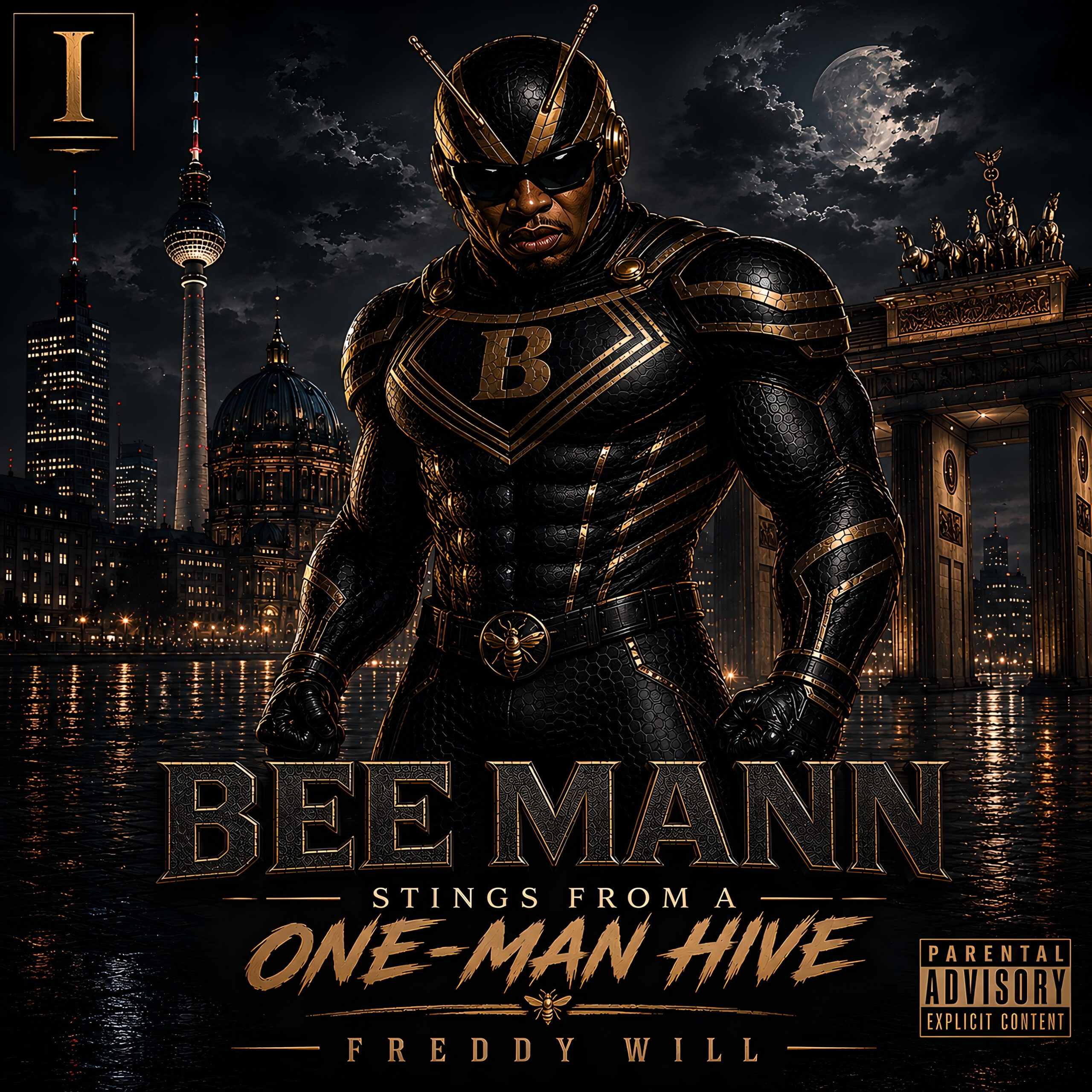 Album I: Stings from a One-Man Hive
The Identity Album
The first album is personal. This is the world before the armor goes on — Berlin streets, migrant identity, industry politics, and the slow crystallization of a man who knows exactly who he is and refuses to behave otherwise. Music-wise, I wanted to challenge myself by creating songs in the popular styles between 2015 and 2025.
The Hum opens everything with atmosphere, the frequency of the Hive before a single rhyme is spoken. City Kid follows immediately with no apology, raw, unfiltered, and rooted in the streets of Berlin, Brussels, Toronto, or Freetown. Suddenly captures the precise moment life changes direction without asking permission.
The middle of the album sharpens into critique. Frontin’ dismantles fake personas and industry pretense. Mansplainin’goes directly at toxic masculinity. Hissy Fit exposes emotional manipulation dressed as passion.
Then the album pivots to confidence.
Clutch is about performing when everything is on the line. Accuse Me, I’m Dope is exactly what it sounds like, a fully loaded flex with nothing to prove and everything to say. Afropolitan is the album’s philosophical centerpiece, a celebration of the identity that belongs everywhere and nowhere simultaneously.
The album closes with Beestings, Killer Instincts, and Berlin, Berlin, Berlin — an ode to the city that both reinvented and reshaped him. 🐝 🐝 🐝 You could pull any song off this album and make it the single. On Disc 1, I went with “City Kid,” “Frontin,” and “Afropolitan.” The people? They kept coming back to “Clutch” and “Accuse Me, I’m Dope.” If you know me, you know Rock & Roll lives in me, and those two songs, I went deep into that bag.
The Hum – The Awakening. An atmospheric introduction to the frequency of the Hive.
City Kid – Reflecting on the streets as a man in his late 40s, raw and unfiltered.
Suddenly – The shocking moment life changes direction.
Frontin’ – Calling out fake personas and industry pretense.
Mansplainin’ – A sharp critique of toxic masculinity and condescension.
Hissy Fit – Exposing dramatic overreactions and emotional manipulation.
Clutch – Performing under pressure when everything is on the line.
Accuse Me, I’m Dope – Cocky, self-assured flexing of talent and originality.
Afropolitan – Celebrating the migrant identity that belongs everywhere and nowhere.
Beestings – The painful but necessary truth that comes with growth.
Killer Instincts – Survival instincts and competitive drive.
Berlin, Berlin, Berlin – Ode to the city that raised and reshaped him.
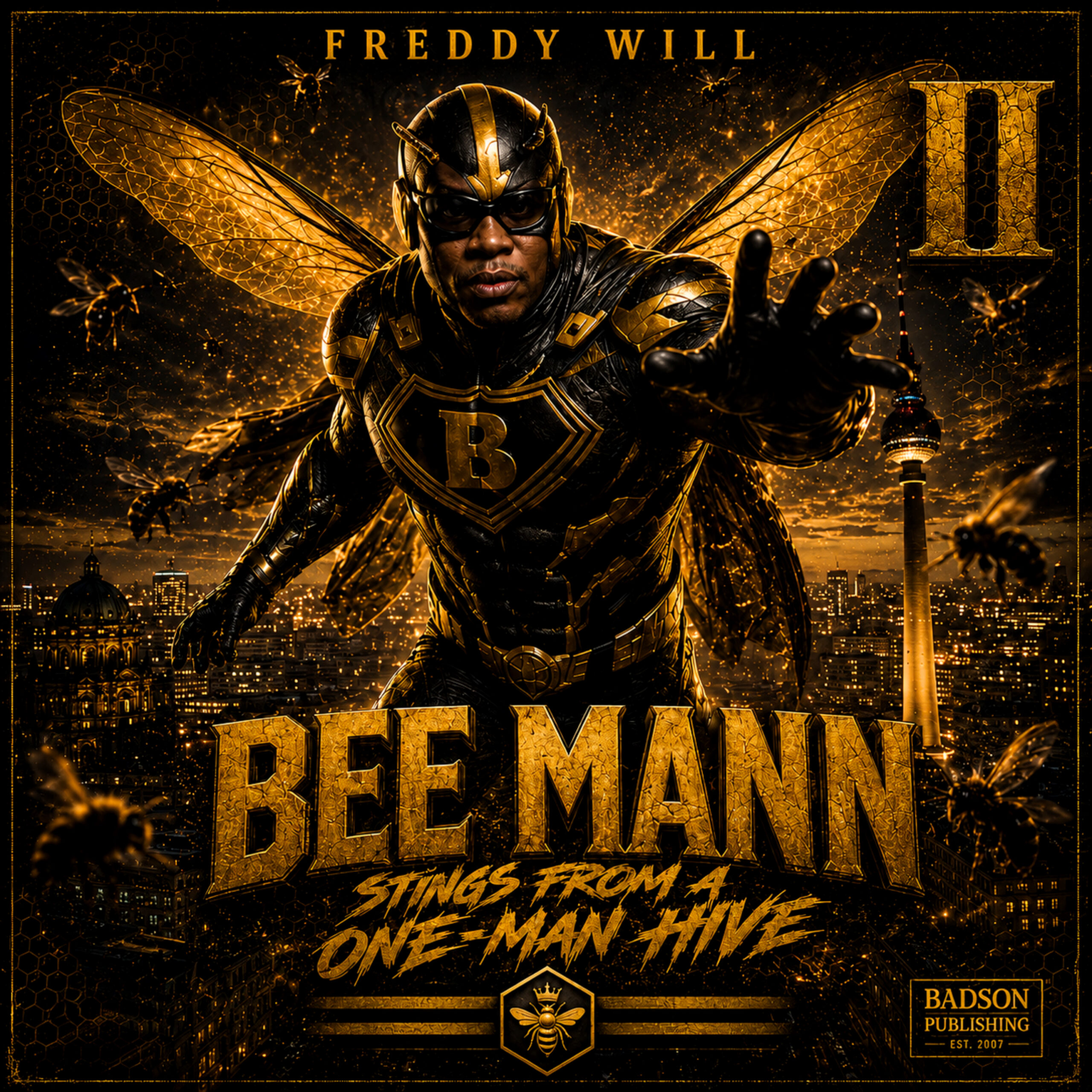
Album II: Stings from a One-Man Hive
The War Album
The second album is where the mythology fully ignites. The personal becomes mythological. The city becomes a battlefield. And the Hive is no longer just a metaphor. The sound is Jazz and Grime with an accent.
Bee Mann opens with the hero’s origin, deliberate and unhurried. Then Cocaine Witch arrives — dark forces, seductive corruption, the sacred feminine examined without flinching. Europa navigates culture shock and identity displacement across a continent that never quite makes room for people of African descent.
The album’s emotional core runs through Toxic, PantyDown, and Road Wins — poisonous environments, raw relational honesty, and the victories that only struggle can produce. Giant is the sound of facing overwhelming odds and refusing to flinch. It pays heavy tribute to Amira Will, The Bee Woman.
The mythology then takes center stage. Wasp Mann introduces the antagonist with all the weight that is required. The Queen Stings announces Bee Woman’s power and her role as sovereign protector of the Hive. Ill Intuition and Shit Could Wing Left capture the chaos and instinct of open conflict.
Too Many Enemies counts the cost of visibility and success with clear eyes. And HoneyComb closes the album on structure and sweetness, the Hive intact, after everything. On Disc 2, I’m partial to Cocaine Witch, Europa, and PantyDown. But the people always have other plans. 😄 Once both discs are out, we slide the first book out.
The full vision. Stay close. 🔥
Bee Mann – Introducing the hero and his origin.
Cocaine Witch – Dark forces and seductive corruption.
Europa – Navigating identity and culture erasure in Europe.
Toxic – Poisonous relationships and environments.
PantyDown – Raw, sensual honesty in relationships.
Road Wins – Celebrating victories earned through struggle.
Giant – Facing overwhelming odds with courage.
Wasp Mann – Introducing the main antagonist.
The Queen Stings – Bee Woman’s power and protective force.
Ill Intuition – Trusting inner knowing during danger.
Shit Could Wing Left – The unpredictability of conflict.
Too Many Enemies – The cost of visibility and success.
HoneyComb – The sweetness and structure of the Hive.
Disc 2 is a completely different animal. What I created here will one day have a name: Jazz Grime. Or Grime music with Jazz. I leaned into my Sierra Leone accent, softened the Krio just enough for every English speaker to follow, and took everybody to Church. Both albums align with Book 1. 🐝 🐝 🐝
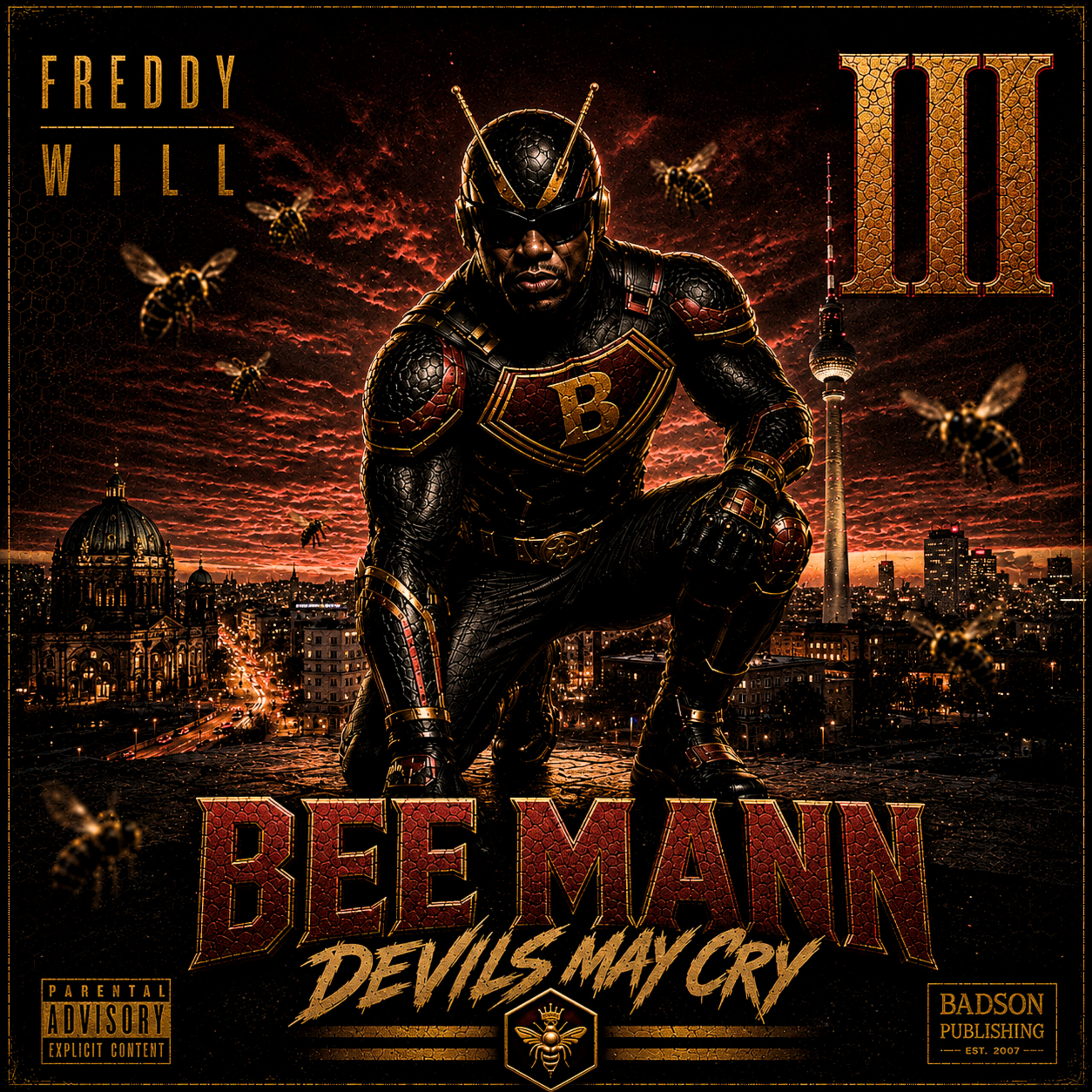
Album III: Devils May Cry
The Resolution Album
The third album is the fullest. Twenty tracks. A complete arc with romantic depth and ancestral reckoning to Afrofuturist sunrise. This is the soundtrack to Book 2, the final battle, and everything that follows it.
Falling is one of many deep romantic love songs between Bee Mann and Bee Woman, a grounding during the storm. The love in that relationship is the anchor. My People roots the story in ancestral pride. Devils May Cry brings personal humility and inner reflection, the warrior examining himself honestly. Gatekeeper Diaries takes direct aim at cultural suppression and industry machinery. Hell to Pay is Wasp Mann’s war declaration. Protect Us follows Amira defending the estate and Austin during the siege. Sisterhood marks the arrival of the Hornets, the cavalry, the community, the feminine force that holds the Hive together when the King is presumed lost.
Membrane serves as an atmospheric interlude during the dimensional crossing. Taking Risks follows Bee Mann through Aura Prime. 27 Days is the battle, extended, brutal, and inevitable. Cold Venom delivers the defeat of the Viper Queen. Waggle Dance is the victory celebration, sensual and combative in equal measure.
The album then exhales. Etha is intimate healing. Empty His Balls arrives with clever, erotic wisdom. Now I Know captures the Kha’Zari moment of betrayal and realization. You Go, I Go carries the loyalty of Ruth and Naomi into the mythology, one of the most ancient bonds scripture documents. Whatever It Takes draws on ancestral strength. The album opens with its most ambitious sequence: Nathan, a spoken word reading of 2 Samuel 12:1–12, followed by Nathan’s Rebuke, a prophetic condemnation of the colonizer mindset in full griot register. And finally, New Sun Rising, the grand Afrofuturist. A new beginning. The sun that the Kha’Zari were desperate to find.
Nathan – Spoken word reading of 2 Samuel 12:1-12.
Nathan’s Rebuke – Prophetic condemnation of the colonizer mindset.
Devils May Cry – Personal humility and inner reflection.
Gatekeeper Diaries – Fighting cultural suppression and industry gatekeeping.
Hell to Pay – The Wasp Mann’s betrayal and war declaration.
Protect Us – Amira is defending the estate and Austin during the siege.
Sisterhood – The Hornets arrive to support the Hive.
Membrane – Atmospheric interlude during the dimensional crossing.
Taking Risks – Bee Mann’s journey through Aura Prime.
27 Days – The intense battle between Bee Mann and Wasp Mann.
Cold Venom – The dramatic defeat of the Viper Queen.
Waggle Dance – Sensual, combative victory celebration.
Etha – Intimate healing and pampering after survival.
Empty His Balls – Clever, erotic wisdom on pleasing a king.
Now I Know – The Kha’Zari realization of betrayal.
You Go, I Go – Ultimate loyalty (Ruth & Naomi parallel).
Whatever It Takes – Ancestral strength and determination.
Falling – Deep romantic love between Bee Mann and Bee Woman.
My People – Ancestral pride and cultural foundation.
The Null Plane – Overcoming silence and building the archive.
New Sun Rising – Grand Afrofuturist finale and new beginning.
Book 3 is where everything escalates. 🐝⚡ After a stunning defeat, Wasp Mann vanishes. He retreats into the Third Dimension, another realm I built from the ground up, unreachable without an invitation. Its sun is fading. Its people, the Kha’Zari, are desperate to relocate before everything goes dark. It’s a volcanic world like hell itself.
Wasp Mann arrives with a powerful device and a proposal. But a parasite doesn’t negotiate. It infiltrates. He uses the Kha’Zari to stage the battle of the century against the Bee Mann. Earth. Aura Prime. The Sixth dimension. Neither is spared. Then the Kha’Zari figure out they’ve been played. What follows is a betrayal that forces the final standoff. The kind you can’t walk back from. Bee Mann is tested with Wasp Mann’s theory.
Book 3 (Bee Mann III: Devils May Cry) comes with Disc 3, featuring roughly 20 MORE songs designed to serve as the soundtrack to this action novel. The music and the story move together.
The ending leaves the door open. Book 4 exists on the horizon when the time is right. And here’s the part I’m most excited to tell you. If everything goes well, all three albums and all three books will land before the end of 2026. 🔥
The full mythology. One year. Stay locked in. 🐝👑