 0
0
 0
0
There’s a question that opens the song and the poem this blog is named after, and it’s the only question that actually matters before any of the rest of this gets told. How did I make it this far down these long roads? Not a rhetorical flex. A real question, asked by a man who has a genuine reason to be surprised he’s still standing.
I was that little boy, stomach touching his ribs. Mama crying, daddy missing, nobody in the room teaching me what love was supposed to feel like. Abused. Left alone with more silence than a child should ever have to sit inside. The pain told me a story back then, and the story was that I shouldn’t have made it. I did anyway. Everything below this line is what “anyway” looks like when you keep choosing it for almost fifty years straight.
I write a certain kind of blog more than any other. The kind that stands in the present and points backward. Far enough to make providence do the talking. The last time I wrote one, I set it to the early 2000s, turtleneck, glasses, khakis, loafers, driving to Barnes & Noble, in my Ford Explorer, the way other men drove to a bar. I’d grab a black coffee, find a seat, and sit with a book as if it owed me something. That ambiance was warm in a way retail rarely is anymore. The kind where a stranger could look up from her own book and start a conversation that ended in dinner dates and Comfort Suite getaways full of romance and no shortage of adventure sprinkled with sexual bliss.

I wrote that blog to mark something real: that man in that chair is now an author with more than ten titles sitting on that same chain’s shelves. From the block to the bookstores, and they’re reciting my lines.
Somebody didn’t like that I said so.
Not long after that blog went up, delistings started happening. Books that had been live on Barnes & Noble’s platform for months. Gone. No notice, no violation, no conversation, just gone. The way something disappears when someone decides it should. I’ve watched pieces of this pattern for over twenty years now, across four countries, always seeming to arrive right behind something I was proud of. I don’t know this malicious stalker’s face. I know their rhythm. There’s a character in The Bodyguard (Whitney Houston, Kevin Costner). People forget his name, but never forget his shrine. The clippings, the obsession with a life that was never his to torment. That’s what’s followed me. I don’t know her name, or perhaps it’s somebody I have lived with. I know her pattern. So she gets one word in this blog and nothing more: Shit Eater. That’s the shrine she’s earning from me.
Here’s the part that the song already told you before you understood it. Enemies gone, they vanished in their own sins. I watched vicious enemies plot my fall. Some dead, some broke, some stuck behind walls. They dug pits, then slipped in ’em, that’s fate, not me. I just prayed, stayed patient, kept faith, got free. I’m not chasing this one down a rabbit hole. I don’t need to. The road has shown me over and over that the people trying to write my ending never get to hold the pen for long. I just keep publishing. That’s the whole rebuttal. I leave my fate in the hands of destiny.
Which brings me to the road, because the road is what the poem is actually about.
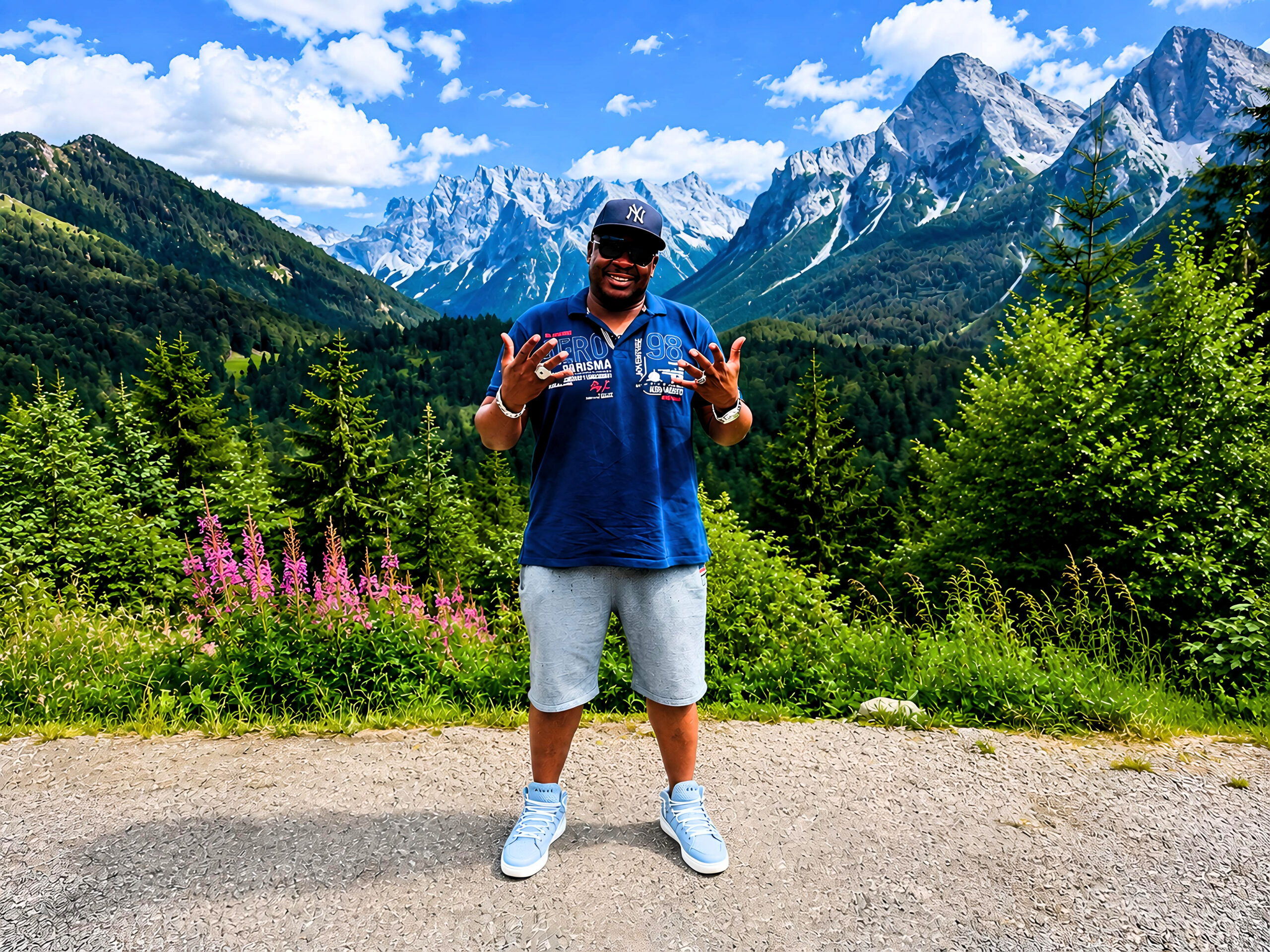
Leaving Berlin
We didn’t fly this one. I took the car, a full Berlin-to-Rome run on the scenic routes, the kind of trip where the point is the pavement, not just the destination. Tesla made that decision easy in ways a combustion engine never could. We planned the drive around charging stations tucked into small Bavarian towns, twenty or thirty minutes here and there, where we weren’t just waiting, we were shopping at a local bakery, tasting a regional beer, wandering a market square built centuries before anyone imagined a car that ran on electricity instead of gasoline.
South out of Berlin, the landscape changed the way Germany changes when you actually drive it instead of flying over it. The flat country gives way to rolling country, giving way, eventually, to the wall of the Alps rising up like the land itself decided to stop being polite. In a way, it partly reminded me of driving in certain parts of California.
The Bavarian Alps and Innsbruck
We crossed into Bavaria first. That stretch of Germany where the mountains do the talking for the region. Then over the border into Austria, into Innsbruck, the other face of the same range. Innsbruck has hosted two Winter Olympics, 1964 and 1976, and the city still presents itself as it knows it. The Golden Roof, the Goldenes Dachl, sits in the old town, glinting with 2,657 gilded copper tiles that Emperor Maximilian I commissioned in 1500 to watch tournaments from above the square, and standing under it, it’s easy to understand why a Habsburg emperor wanted that view for himself. We ate Tiroler Gröstl, potatoes, bacon, and onion fried down into something that tastes like the mountains made it on purpose. Amira had the kind of Knödel, dumplings, that make you understand why nobody in that region is in a hurry to eat lighter. Austria’s picturesque villages sat quietly.
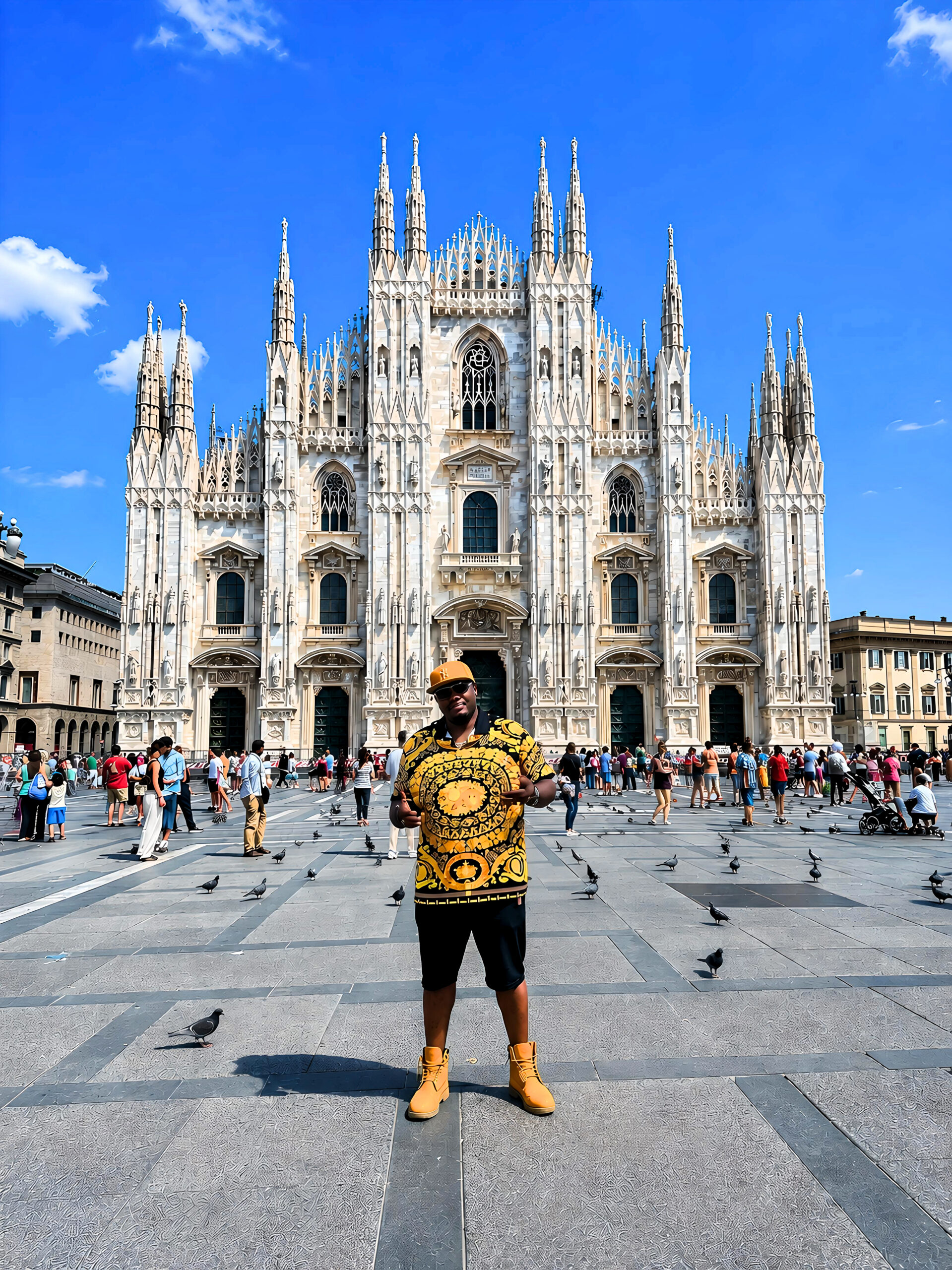
Milan
Then, into Italy, and Milan hit me like a city that refuses to slow down to explain itself. So all I had to do was match its pace, or get left behind. They said the Duomo di Milano took nearly six centuries to finish. I’d say its facade is a forest of more than 3,400 statues and 135 spires. Gothic ambition stacked on Gothic ambition until it became something closer to a mountain range built by hand. We walked through the Galleria Vittorio Emanuele II, one of the oldest shopping arcades in the world. Its glass-and-iron ceiling arched over marble floors, and I did what any self-respecting man does in that arcade: bought something I didn’t need and don’t regret. Dinner was risotto alla milanese, saffron turning the rice gold, followed by ossobuco so tender it barely needed a knife or a fork.
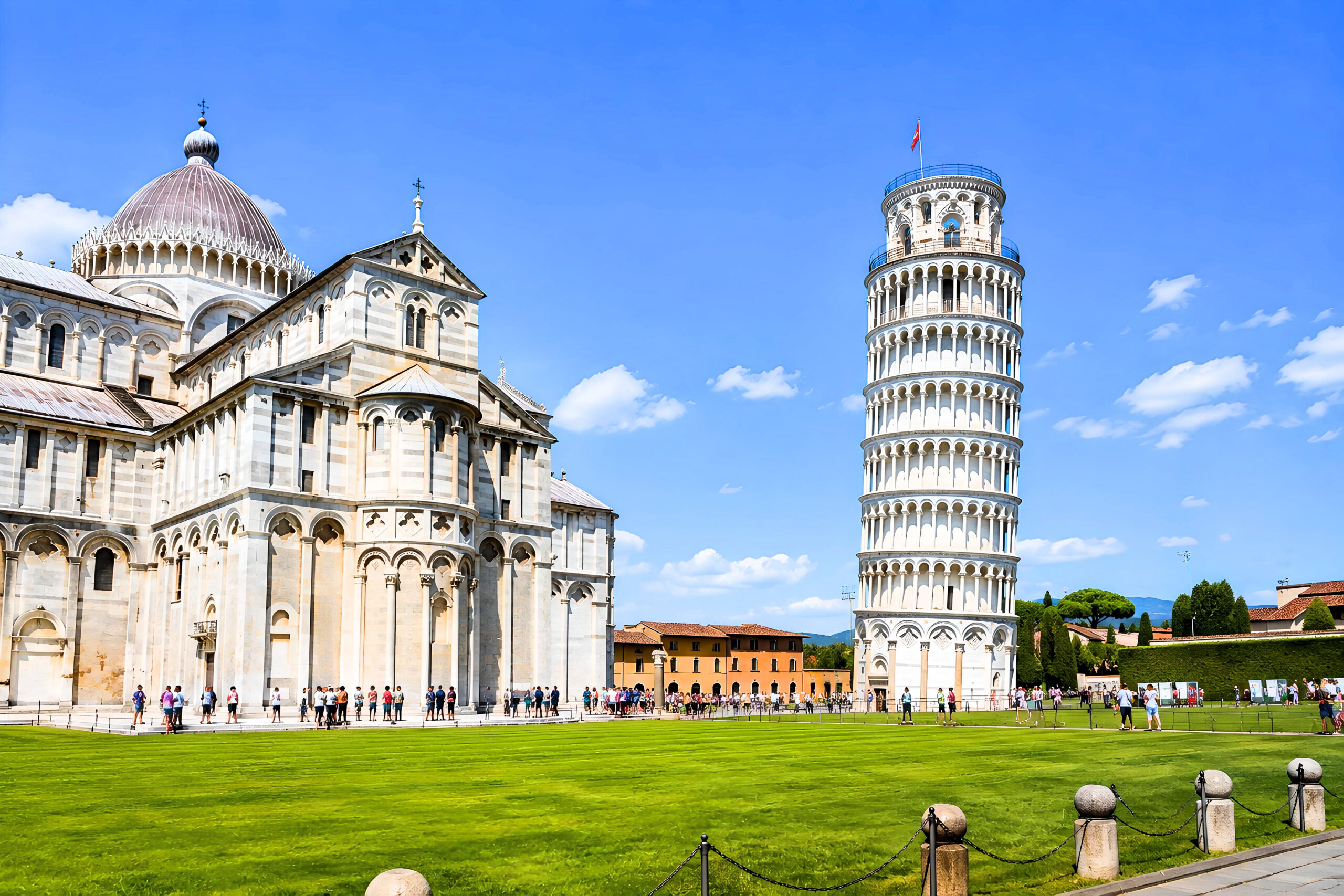
Pisa
Pisa gave us the tower everyone photographs, and almost nobody studies, so we studied it. The Leaning Tower has been tilting since construction began in 1173, the soft subsoil beneath it settling unevenly before the third floor was even finished, and eight centuries of engineers, popes, and dictators have all taken a turn trying to fix what gravity keeps insisting on. It sits in the Piazza dei Miracoli, the Square of Miracles, alongside a cathedral and baptistery built in the same brilliant white marble, Romanesque architecture doing its quiet, disciplined work while the tower next door does all the showing off. We ate well there too, ribollita, Tuscan bread soup, and a Chianti that made it clear we’d crossed into wine country, whether we’d meant to or not. I must have seen a hundred vineyards.
Florence
Florence is where the Renaissance stopped being a word in a textbook and started being a fact I could touch. Brunelleschi’s dome over the Duomo, completed in 1436, was the largest of its kind built since antiquity, engineered without the modern scaffolding techniques that would seem to make it necessary, a problem he solved by essentially inventing new machines to solve it. We crossed the Ponte Vecchio, the medieval bridge lined with jewelers instead of the merchants of meat and leather it held centuries ago, and stood in front of the Uffizi, knowing Botticelli and Michelangelo had both once walked those same streets, working out their version of a legacy. Florence gave us bistecca alla fiorentina, a T-bone the size of a dinner plate, pecorino from the hills outside the city, and leather goods from a shop that’s been family-run since before either of my grandparents was born.
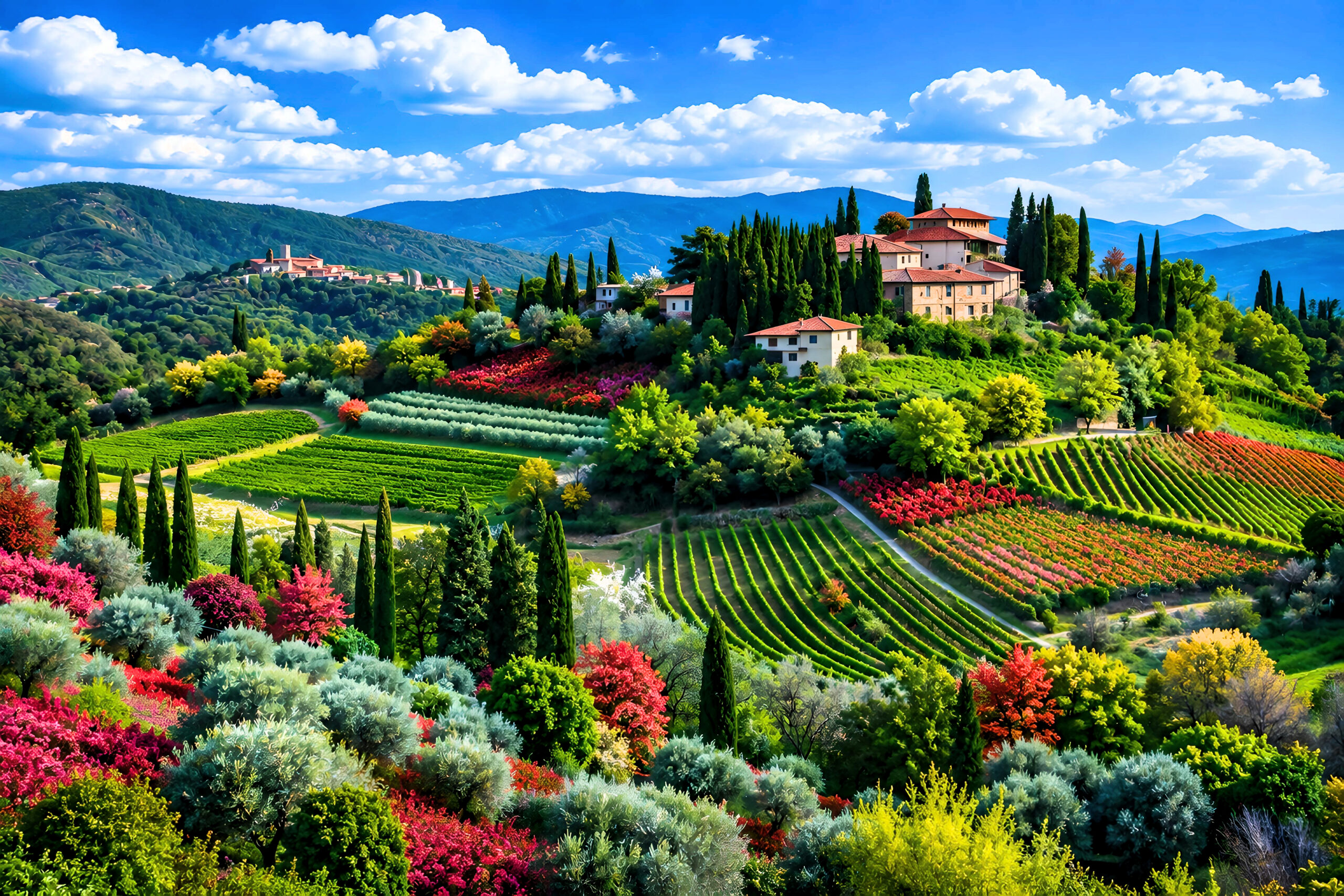
Tuscany
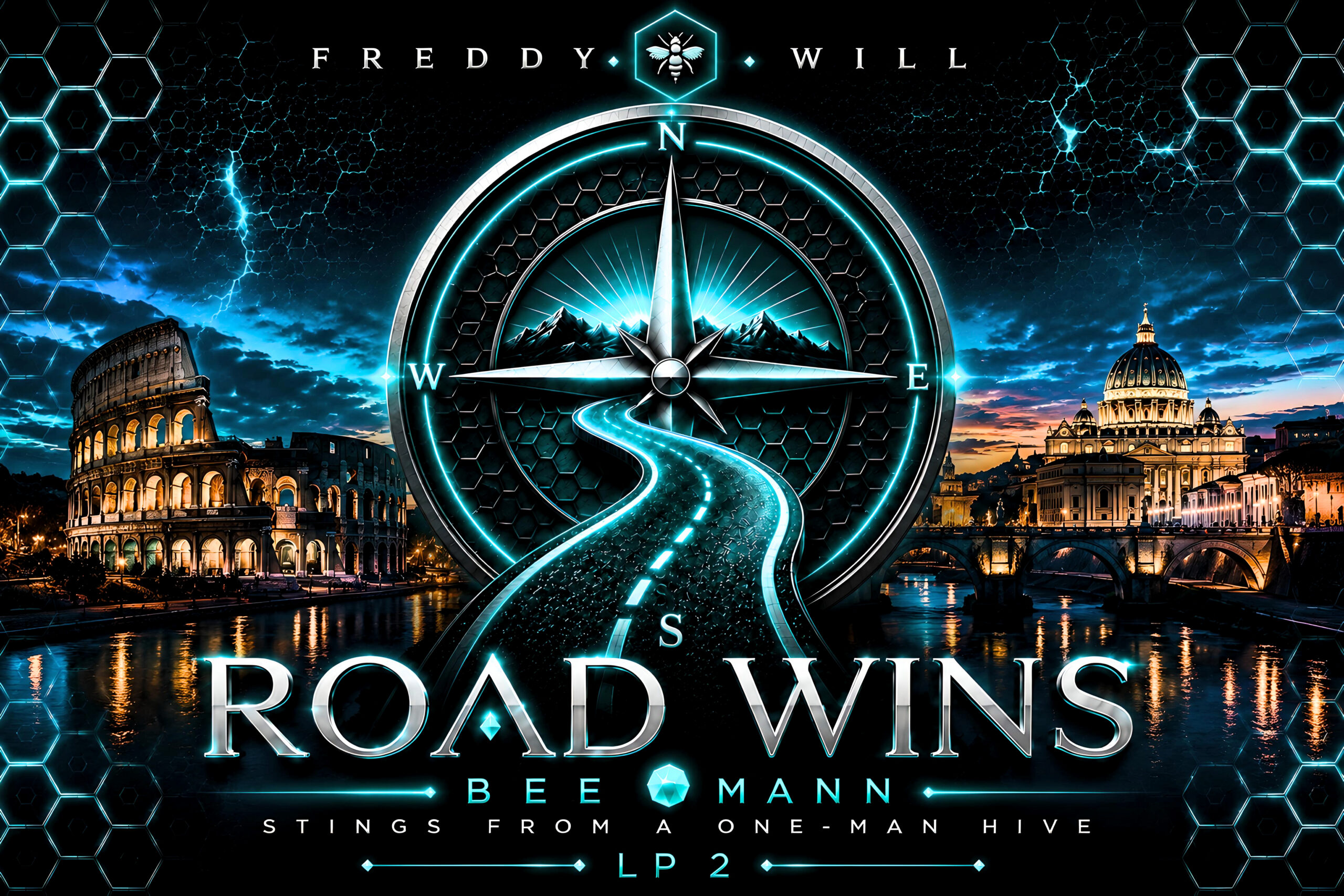
Between the cities, Tuscany gave us (my significant other and I) something no monument could. A resort in the countryside, vineyards running the horizon, the sun doing that heavy gold thing it only does in that region. Gourmet dinners stretched past midnight. The pool earned every dollar it cost when my cooking turned into a small feast. Amira and I had days there that belonged to nobody but us. The road gave me my sweetheart back to myself in the middle of a work trip, wild boar ragu on the table, Chianti in the glass, and after everything the song remembers about how this started, that kind of quiet counts as one of the largest wins on my Road Wins itinerary.
My villa itself, belonging to an Italian family that had passed it down across probably tens of generations. It sat the way these places always do, up in its own isolation. It’s wrapped in cypress trees standing at attention like they’d been posted there decades ago on purpose. Terracotta roofs, pale stucco walls, the kind of golden light in the evenings that makes you understand why painters kept coming back to this region for five hundred years and never got tired of it. From the terrace or the exterior wooden shutters, I could see planes running in every direction. Rows of green hills and valleys cut so precisely they looked drawn in. Beyond them, more hills, more villas, more of the same gold light going soft as the sun dropped. It is a liberating thing to stay somewhere beautiful.
It is somewhere that has belonged to the same bloodline in the early years of recorded history. Something written down, including in memory. To feel, even for two weeks, like the house had decided to let me in on that.
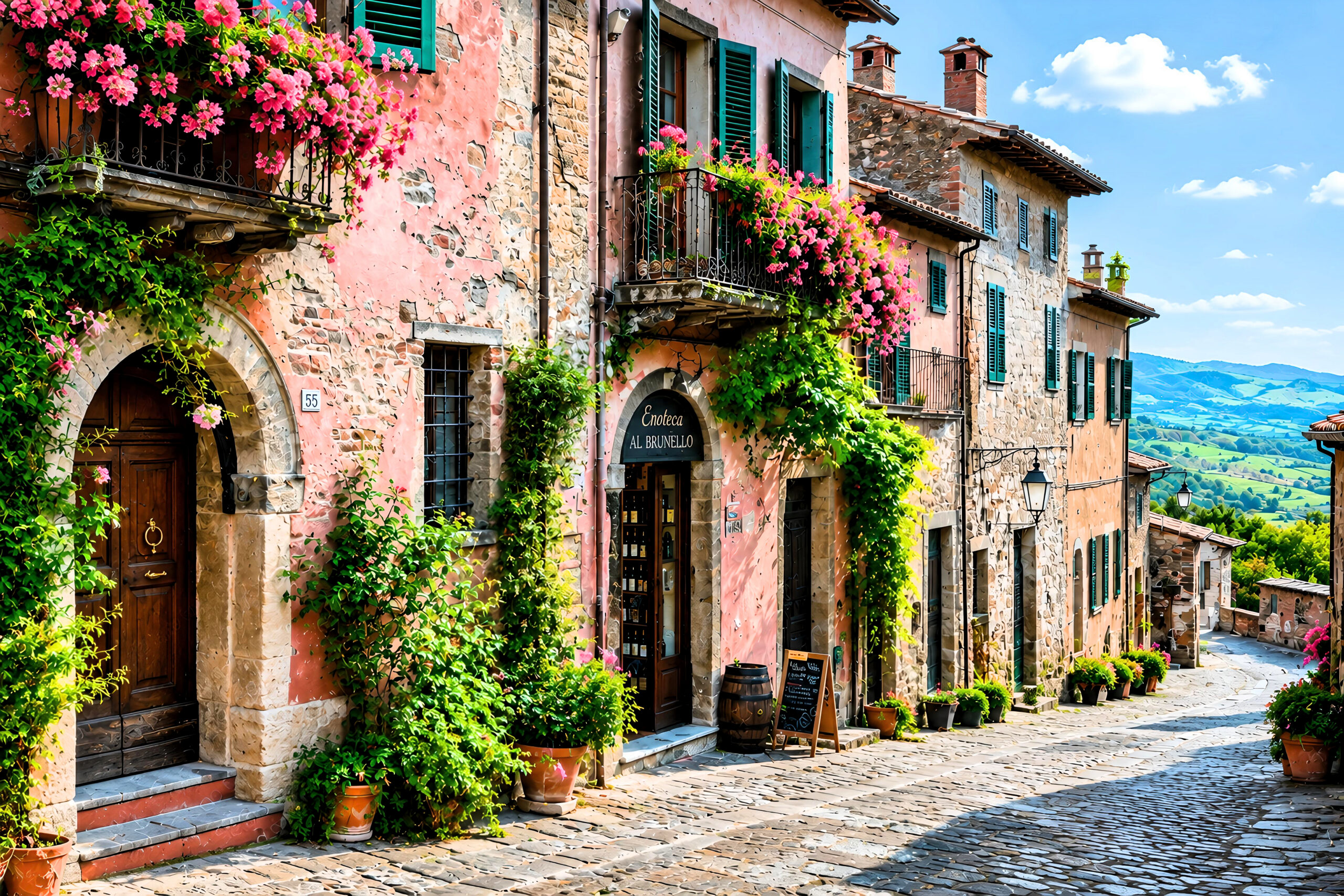
But the real find wasn’t the villa. It was the twenty-minute drive down into the nearest borgo, the kind of village that doesn’t announce itself. It just appears once the road narrows and the vineyards give way to stone. The houses there don’t stand alone. They lean into each other, wall against wall, one facade bleeding straight into the next. Centuries of plaster gone soft and patchy, rose and ochre and terracotta flaking away in places to show the old brick and stone underneath. Green shutters everywhere, thrown open against the heat. Geraniums spilling hot pink out of every windowsill and iron balcony, the one loud color against all that quiet, weathered stone.
I parked where the cobblestones got too narrow to trust the car any further and walked the rest.
Doorways worn smooth by more hands than one could count. A shop for a bottle of Chianti before heading back.
That’s the contrast I keep contemplating. Milan moved fast and made you keep up with it. Florence stood there daring you not to be humbled by six centuries of ambition in stone. Pisa made the whole world stop and stare at one tower defying gravity out of spite. But the borgo didn’t ask for anything. Neither did the walls I was sleeping inside every night. This dome-less monument, crowdless, close to a village, both holding themselves together one generation at a time. I bought wine and drove back to the villa under a sky that strains photography. And I pondered on that borgo and Milan and Florence. For all their weight, some wins don’t need an audience. Some of them just need a narrow street, a bottle of wine, a house older than money, and only a significant other around to share.
Rome
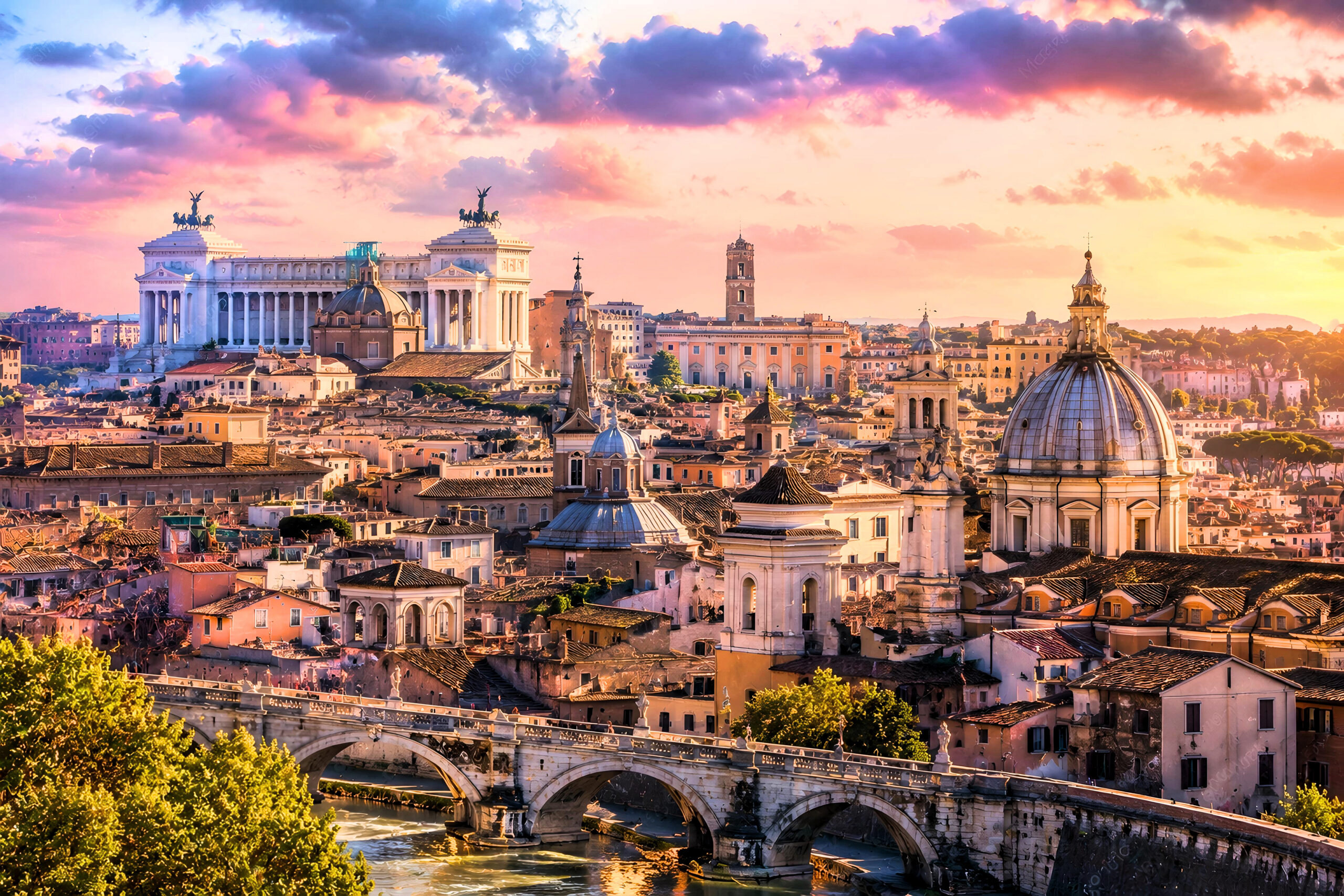
Then Rome, and Rome does not do anything small.
The Vatican holds Michelangelo’s ceiling and St. Peter’s Basilica, the largest church on earth. They built it over what tradition holds is the burial site of the apostle Peter himself. Early Christian sources consistently place Peter’s martyrdom in Rome during Nero’s reign, somewhere around AD 64 to 68, most likely in the persecution that followed the Great Fire of Rome. Tradition holds he was crucified upside down at his own request, feeling unworthy to die the way Jesus did. His fateful execution is tied to the area of Nero’s circus on the Vatican Hill, and he was buried nearby. St. Peter’s Basilica was raised centuries later over the site tradition identifies as his tomb.
Why am I telling the story of St. Peter to a reader who already knows it, or to a Shit Eater who has spent years stalking, hacking, and vandalizing everything that carries my name online? Because that is why this Road Wins prelude matters. This story is built around a road trip through Italy. What I saw there is history sitting in plain sight in every direction you turn. Europe holds onto its past that way. They burned down the historic cities and empires of Africa and rarely rebuilt what they destroyed. But they preserved their own. Rome itself was bombed during the Second World War. The San Lorenzo district was hit hard in 1943. The city could have gone the way of Berlin or Warsaw. Instead, it was deliberately spared, declared an open city, protected on purpose because of what it held.
That is the difference. Rome is standing today not because nobody ever touched it, but because somebody decided it was worth the trouble of protecting. And truly, every corner you turn holds something historic.
Rome, in my opinion, is one big museum
The whole city is a historic site wearing a zip code.
The Colosseum, finished in 80 AD, once held more than 50,000 spectators watching gladiatorial combat that doubled as Roman political theater, and standing inside it, every line I’ve ever written about spectacle and survival landed differently. The Pantheon, rebuilt by Hadrian around 126 AD, still holds the largest unreinforced concrete dome in the world, a hole open to the sky at its center that Roman engineers built on purpose to let light and rain both in, one of the boldest architectural decisions anyone has ever made and then just left standing for two thousand years. In between it all, the trip included a meeting at a University, where The Dark Road from Romarong has been assigned reading for over a decade, a fact that still humbles me every time I think about it.
We ate cacio e pepe the way it’s supposed to be made, three ingredients doing the work of ten, and carbonara without a drop of cream in it, the way the purists insist and the way I now insist too. I had around three Spritz.
Hall and Nuremberg
North again, to the small Austrian town of Hall in Tirol, once one of Europe’s largest producers of minted coins, its medieval old town so well preserved it barely needs a museum to explain itself. And on to Nuremberg, Germany, a city carrying the full weight of its history, the Nuremberg Trials held in the same halls where the twentieth century’s reckoning with itself finally happened, alongside a medieval old town rebuilt stone by stone after the war, Nürnberger Rostbratwurst on every corner, small and perfectly spiced, and Lebkuchen, the region’s gingerbread, sweet enough to explain why this city has been baking it since the 1300s. Those were my Road Wins this trip.
What the Road Actually Gave
Somebody looking at the itinerary would call this a vacation. We swam, we ate like royalty, we made love like the road belonged to nobody but us. Somebody looking at the receipts would call it a tour. I wrote blogs from hotel rooms and hit publish before the ink of the day was dry. And I took hundreds of photographs. Then I sat in a meeting at a University. I worked, in the middle of all of it, with Claude AI, building tens of blog pages from café tables and balconies, the hive’s output never off the clock, even when the body was technically on holiday.
The honest answer is that it was both, and the question of which one it “really” was is the wrong question, same as it’s the wrong question whether this whole life has been survival or triumph. It’s both, every time. Type 2 sat in my veins once, close enough that I felt the end in the mirror. I changed how I ate, fought for breath I used to take for granted, watched the numbers come down like grace instead of luck. I jog now where I used to crawl. That’s a road win too, quieter than a monument, heavier than most of them.
I built a family out of fragments of a shattered youth. Amira, Jasmine, and Austin. A hive that exists because a boy who was supposed to be a chalk line refused the assignment. Every vineyard afternoon on this trip fed the next chapter. Every ruin in Rome fed a lyric already written and now finally understood in the place that inspired it. Those quiet dinners fed the marriage that the whole mythology stands on. And whatever the Shit Eater is still trying to undo in the dark, the road keeps proving the same thing the song already said: the ones digging pits for me keep finding their own names at the bottom of them.
This is Part One, the record of the road itself. Part Two goes deeper, city by city, into what the history actually taught a griot standing inside it. But before that, I wanted the win on record exactly as it happened, all of it, the mountains, the tower, the dome, the wine, the years it took to stop being surprised that I’m still here to write any of this down.
The bee does not resent the distance between flowers. It calls that distance the job.
I called mine a win. If the devil wrote the first draft, God rewrote it with one.