 0
 0
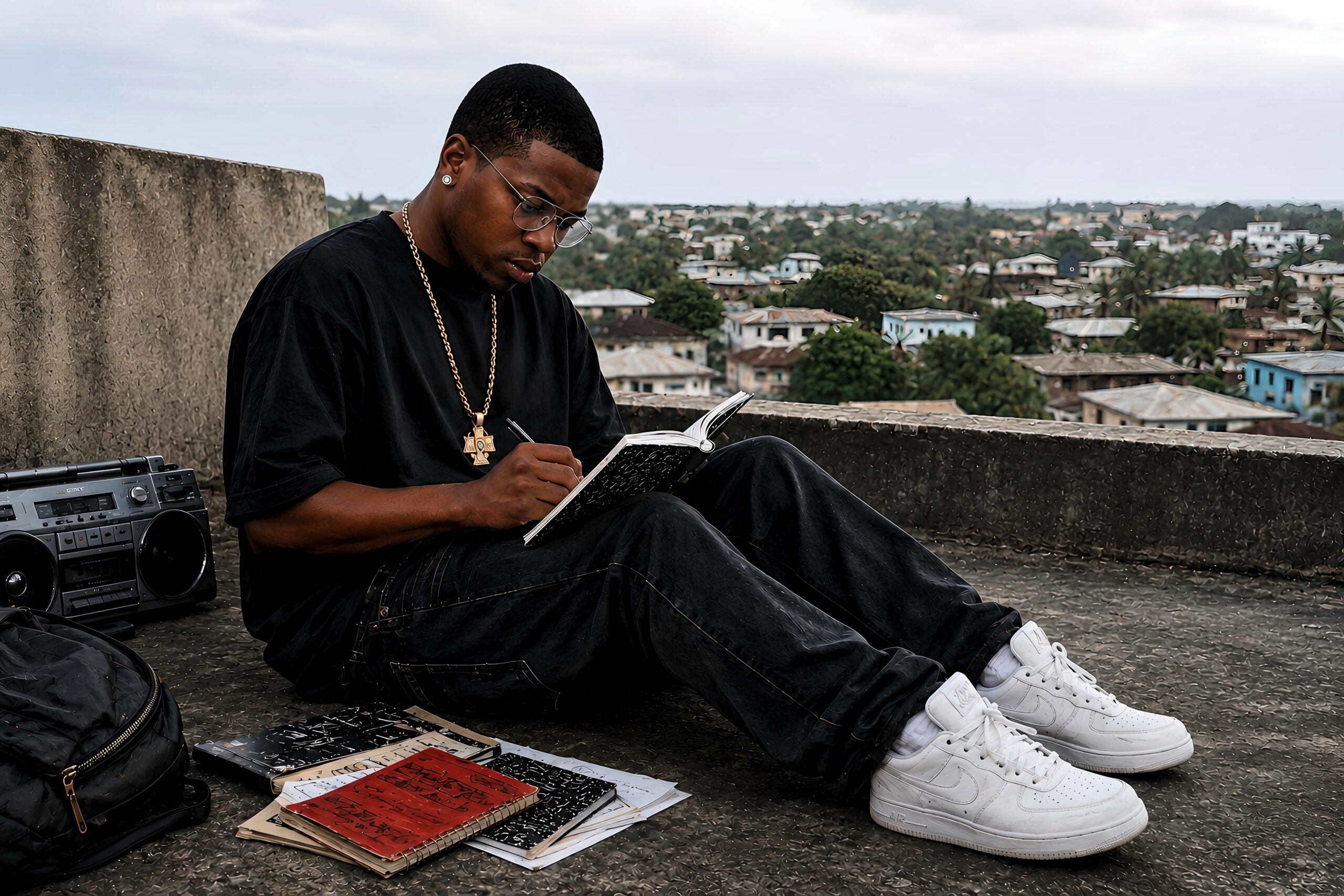
If you lived with me, one fact would become obvious fast. I am always writing. Always. Ex-lovers will attest to that. If it isn’t a song, it’s a blog. If it isn’t a blog, it might be an article, a book, a screenplay, code, notes for a future project, or some idea I haven’t figured out what to do with yet. Writing isn’t something I occasionally sit down to do. It’s become one of the ways I process this intricate world. Moreover, that started long before artificial intelligence. When I lived in Bo in 1990, I was already writing. I began writing my own lyrics (in American English and Krio) in 1995. There was nothing sophisticated about my process back then. I had a pen. I had paper. And I rhymed.
From 1995 through the end of that decade, every bar I wanted to keep had to be written down by hand since I had no access to a computer. I finally gained access to computers in 1997, but access and habit are two different things. By then, handwriting lyrics had already become part of how I functioned. So even after computers entered my life, I kept writing rhymes by hand well into the 2000s. That’s where my famous rhyme books came from. People sometimes hear me mention my twenty rhyme books, but that number needs some clarification. Those are actually the surviving handwritten notebooks I count as part of my past literary collection. There were more.
During my adolescence and teenage years, I relocated a lot. Sometimes I left places at short notice. Sometimes belongings got left behind. Somewhere, somebody I knew in one of the countries or cities I once lived in may still have an old Freddy Will rhyme book sitting in a box. And the rhyme books weren’t the only things I wrote by hand. I also racked up handwritten screenplays and scripts, at least ten by my own count. So when I talk about artificial intelligence and writing today, this history has to matter. I didn’t encounter AI and suddenly decided to become a writer. I was already a writer when the most advanced technology available to me was a ballpoint pen.

Truthfully, I was a perpetual loner. Not too many people checked on me (family included), and those who did came and went rarely. What that gave me was a lot of time to think, write, and practice spitting my rhymes. If I was popular, I probably wouldn’t have written anything. The other place where I memorized things was at work. My first job was busting suds in a nursing home. Listen, there are legendary emcees famous for composing huge amounts of material entirely in their heads. Jay-Z is probably the most famous example. His method of building verses mentally, rather than routinely writing them on paper, became part of his mythology as an emcee.
Lil Wayne has likewise spoken publicly about recording without first writing his lyrics down. That isn’t me. I can freestyle, and I can produce a verse or two straight off the top of my head. Those verses have a different character. Rawer. Swingy. More immediate. More instinctive. Sometimes that’s exactly what the record needs. But when I really want to construct something? Give me somewhere to sit with a pen and a pad because I like seeing the words. My process is slow, I write and rewrite, then practice until I memorize the song through repetition. And the crazy part is after memorizing the song, I would edit it again and then have to re-memorize the new version.
I like moving the words around. Swapping one word because the replacement gives me a better scheme three bars later. So there are lines crossed out in the book. I like realizing I’ve already used the same rhyme scheme six times, and forcing myself to investigate new words that rhyme in a different scheme. I like studying a verse’s framing and re-writing the hook. That’s my writing process. The good part about it is there could be multiple versions of the same song, written down and memorized. And I’ve been doing that since 1995. Another point you should know, if you think I’m bragging then you don’t know about the struggle in this process. It’s literally frustrating.
As I have stated, I didn’t just write raps. There’s another misconception worth correcting. Being an emcee didn’t mean I only wrote rap verses. I wrote the hooks too. By my own estimate, I wrote the hooks on roughly 99 percent of my own recorded songs in my released catalog. And those hooks weren’t necessarily rap hooks. I might hear something R&B-inspired. Reggae. Soca. Calypso. Rock. Gospel. Country. The genre never really concerned me. If I could hear the melody and feel the emotion the song needed, I could write toward it. That distinction eventually became important to how I understood myself creatively. Hence, I wasn’t merely someone who could rhyme.

I was developing the ability to conceptualize entire songs across genres. There’s a real difference there. A rapper can write the siccest sixteen-bar verses. A songwriter has to understand what the whole record is trying to become. One of my dreams was to write and record a hip hop and jazz crossover album. I also dabbled into writing raps and hooks to what became Afrobeat. Eventually I started writing more seriously on a desktop computer. That felt revolutionary. Suddenly I could delete something without crossing it out. Move a paragraph. Copy and paste a verse or hook. Save a document. Correct spelling. Reorganize sections without rewriting twenty pages by hand.
Today those capabilities sound mundane. Back then, compared with the notebooks I’d been carrying around, they felt almost like cheating. Then the computer connected to the internet, and the process changed again. Keep in mind, I didn’t copy the handwritten material from my notebooks to the computer. Once I got on the desktop, I wrote new songs and new stories. The writing continued. By 2010, I could be writing a song and simultaneously research a historical reference, check whether I remembered a date correctly, confirm the spelling of somebody’s name, look up a geographical detail, find a synonym, or chase down an idea that hit me halfway through the verse.
The computer didn’t eliminate my writing. It changed the environment the writing happened in. Over time, I noticed the medium started shaping the kind of material I produced. I ended up developing three writing modes. The first is freestyle. That’s the fastest and most instinctive. I produce immediate content. It tends to be raw, less defendable, and emotionally direct. Because there’s almost no space between thought and delivery. The second is pen and paper. Those contents come out more deliberate. I can sit down and construct something in ten minutes, twenty minutes, half an hour. It really depended on the song, the mood, and how quickly the idea reveals itself.

Then there’s the third method. The computer. That’s where I tend to produce what I consider my most developed writing. Not because the computer is more creative than I am. Because it gives me a much bigger workbench. I can research to restructure. Or I can compare versions to avoid unnecessary repetition. I can interrogate a reference to reorganize the storytelling. And I can leave something overnight and attack it again tomorrow. A song written this way might take me a day. Sometimes several days. Sometimes a week. That extra time isn’t evidence I’m struggling to write. It’s evidence I’m editing. And editing is part of writing. But then my workbench got even smarter.
If the jump from pen to computer was transformative, artificial intelligence expanded the workbench all over again. Writing platforms now offer capabilities that would have sounded impossible when I was filling those early notebooks by hand. Grammarly started out as the kind of technology people associated with grammar and spelling help, but today’s version also offers contextual rewriting, ideation, tone assistance, and generative writing tools. Paperpal offers grammar, clarity, paraphrasing, research, and citation tools, though it’s primarily designed for academic and research writing. I use it when I write blog posts like this one or even magazine articles.
Squibler is built specifically for long-form creative work, and now offers tools for planning, brainstorming, outlining, editing, developing characters and story arcs, organizing books and screenplays, and generating visuals. I use that when I’m working on a book or screenplay. Each AI is a tool for a specific task. Then came general-purpose conversational AI systems like ChatGPT and Claude. For somebody already compulsively writing, that was enormous. I didn’t suddenly have someone write instead of me. I gained something closer to an always-available editorial room. Here’s the metaphor I use. It feels like having a professor looking over my shoulder.
Not a professor I should automatically believe tho. AI can support what you write against. It can misread what you mean or even suggest something banal. It can confidently state something inaccurate. Where facts matter, claims still have to get checked against reliable sources. But as an intellectual sparring partner? That’s where it gets extraordinary. I can ask: Does this argument offend any special groups? Where’s it not making sense? What am I overlooking? Is this repetitive? What would someone who disagrees with me say? Is there historical evidence backing this point? Which claim here needs verification? Does this character’s motivation hit? Have I contradicted something I wrote three pages ago? Give me five alternatives to this structure. Now challenge all five.

That’s a fundamentally different relationship with a writing tool. Spell-check tells me: you spelled this incorrectly. AI can ask, in effect: are you sure this is what you’re trying to say? That’s a much more powerful question. But who wrote it? This is where the argument gets uncomfortable for some people. If I write three pages and ask software to fix the grammar, did I write them? Most people say yes. If I ask it to improve my punctuation? Probably still yes. What about restructuring a sentence? Paraphrasing a paragraph? Suggesting a stronger transition? Pointing out a contradiction? Proposing another chapter structure? Brainstorming ten possibilities for a character?
At what exact point does assistance turn into authorship? That question didn’t start with AI. Editors have rewritten sentences. Teachers have corrected manuscripts. Ghostwriters have written entire books. Research assistants have gathered sources. Copy editors have repaired grammar. Writing partners have suggested plots. Publishers have demanded structural changes. Screenwriters have worked in rooms full of writers. Novelists have dictated books to secretaries. Authors have relied on thesauruses, dictionaries, encyclopedias, word processors, search engines, and spelling and grammar software. We’ve always tolerated tools and aids and collaboration around authorship.
What AI does is compress many of those functions into one interface. And because that interface can talk back, the assistance suddenly feels like cheating. That’s what unsettles people. However, my all-nighters did not disappear. That’s one problem AI hasn’t solved for me or other compulsive writers. I still have to sit down and do the work. I still have nights when I write until ridiculous hours. Still get so absorbed that my loved one, lying on my bed in the most eye-popping lingerie, begs me to stop and take a break. Writing still eats time. Real time. I miss epic parties. I miss romantic dates. Turn down special invitations. As the chronic loner, I even miss opportunities for sex.
I miss sunny afternoons when everybody else seems to have enough sense to go outside. There are trips to the park that never happen. Evenings at the mall that disappeared. There are nights when the rest of the house goes quiet, and I’m still staring at the same chapter like I am doing right now. Sitting next to the fireplace with Netflix on pause at 10 PM. And I might be here until five in the morning. Technology hasn’t abolished any of that. Though I’ll admit to one weakness. Midnight rain with a window cracked open. Give me a thunderstorm, a fireplace, a large cup of hot chocolate, and a piece of writing that’s finally caught fire, and I’m perfectly happy being nowhere else.

That’s my environment. There are times when a great idea shows up when I’m nowhere near that environment. So I pull out my smartphone. Write a sentence. A title. Or a verse. A piece of dialogue for a character. A question. Sometimes three words that make absolutely no sense to anyone except the version of me who typed them. Later I bring that fragment back to the computer and build around it. AI has made that process faster but the spark still has to happen first. Maybe the most emotionally surprising development hasn’t involved words. It’s been image generation. Writers have always imagined characters. We know what they look like before anybody else does.
We know their posture and their clothing style. Their cities and their enemies. Even their houses. The weather in places that don’t exist. Their spacecraft and weapons. Their expressions when somebody betrays them. For most of my life, those images only existed in two places. Inside my head, and inside the words on the page that describe them. Then image-generation technology changed that. Suddenly, I could describe something I’d imagined and get a visual interpretation of it back. That experience is hard to explain to somebody who hasn’t spent years building fictional worlds. You’re effectively meeting someone who previously existed only inside your imagination.
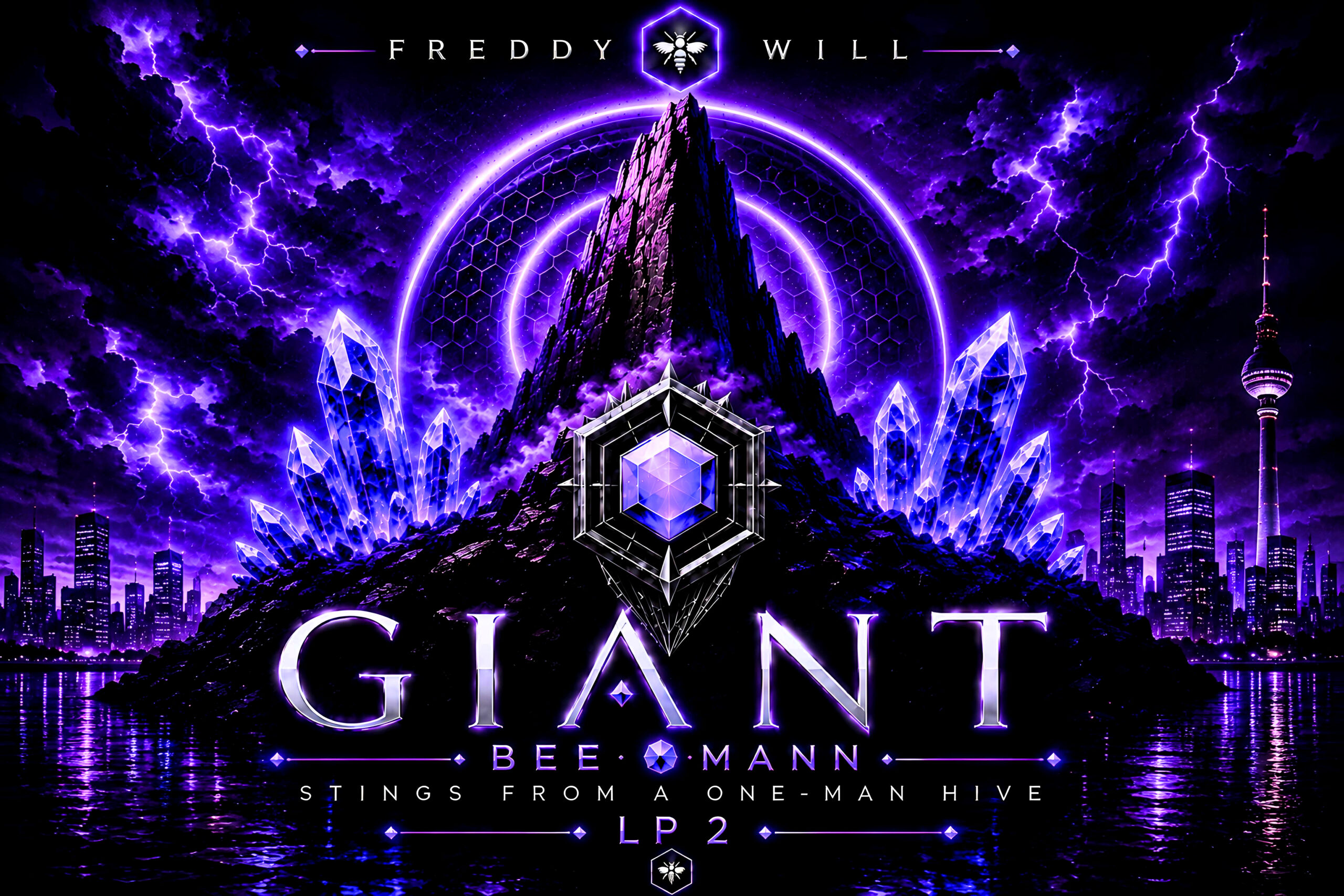
Image generation became especially powerful while developing the Bee Mann mythology. World-building isn’t just inventing characters. It means constructing environments, civilizations, technologies, relationships, histories, architecture, costumes, political systems, and visual rules that make an invented universe feel coherent. With image generation, I’d write these things first. Then I could experiment with them visually. What does this civilization actually feel like when you see it? Does this character look as intimidating as the prose suggests? Does the architecture communicate the culture I imagined? Would this costume actually work? What happens when seven spacecraft are sitting together, instead of existing as descriptions in seven separate paragraphs?
Sometimes the visualization reveals that what sounded magnificent in prose looks ridiculous when rendered in an image. Excellent. Now I know. Other times it does the opposite. I remember seeing a visual interpretation of Aura Prime, a civilization from the Bee Mann mythology, for the first time. I got goosebumps. Something I’d only known through imagination and my writing was suddenly looking back at me. AI didn’t invent the emotional significance of that moment. The emotional significance came from me recognizing my imagined world made visible. That can be enormously motivating for a writer. In other words, my writing room became a creative studio.

This is probably the best way to explain what changed. My computer had become primarily where I wrote. Then it transformed from where I wrote and researched to where I wrote, researched, edited, and published. Now it’s become more of a creative studio. I can draft manually. Text-to-speech software like NaturalReader allows me to listen to my passages and catch problems my eyes missed. I can ask an AI system to brainstorm with me. Then ask another to flag language that might unintentionally offend or distract from the point I’m making. Request structural criticism. Compare alternative phrasings. Confirm what came up unexpectedly mid-sentence.
AI helps me develop visual references for characters and environments. I can create illustrations for a blog. NaturalReader is fundamentally text-to-speech technology, while today’s Squibler explicitly supports AI-assisted planning, editing, and even visual generation. The tools are different. So are the jobs I give them. Productivity is not authorship. That brings me to the distinction that matters most. AI makes me more prolific. That is not the same statement as AI makes me a writer. It doesn’t. The writer was already there. He was there in 1995, with the pen. He was there filling twenty-plus rhyme books. And he was there writing scripts nobody had commissioned.
The writer was there writing hooks for singers who didn’t yet exist. He was there before broadband internet, before Grammarly, before Squibler, before ChatGPT, before Claude, before generative images. What technology changed was the amount of friction between an idea and its execution. My pen helped me write the page. The word processor let me edit it more efficiently. The internet let me research it. Grammar software let me polish it. Text-to-speech let me hear it. AI lets me interrogate it. Image generation lets me see it. Those are enormous changes. But none of them answers the fundamental question. What do I want to say? That remains my responsibility.
And maybe that’s where the conversation about AI and creativity needs more nuance. The meaningful distinction isn’t simply human-made versus machine-made. We increasingly need to ask: Who conceived the work? Who supplied its underlying experiences? What determined the themes? Who developed the characters? What sparked the consequential creative decisions? Who accepted and rejected the suggestions? Or who verified the factual claims? Who revised the result? And ultimately, who is responsible for what the finished work says? For my work, whether is music or literature, I want the answer to that final question to stay uncomplicated. Me.
AI can help me work faster. Challenge me. Help me to organize or polish. AI can give visual form to something I imagined. It can occasionally suggest an idea so good I wish I’d thought of it first. But it can’t go back to 1995 and fill those notebooks. AI can’t live the experiences that gave me what I write about. And it can’t take responsibility for the work bearing my name. That’s the bargain I make with this technology. I don’t ask the machine to replace my imagination. I use the machine to help my imagination travel farther. That, to me, is the difference between using artificial intelligence to avoid creativity, and using it to amplify a creative life that was already there.