 0
0
 0
0
I have been saying it since 2008, when I launched this blog from the Lakeshore Blvd West in Toronto with nothing but a laptop, a head full of ideas, and the stubborn conviction that somebody had to say it plainly: there is a war on hip-hop. Not a metaphorical war. Not the kind of war that gets discussed in think pieces and forgotten by Tuesday. A sustained, multi-front, coordinated campaign to contain, discredit, criminalize, and ultimately silence the most powerful cultural force the African diaspora has produced since the blues. This is a fact. And it’s serious.
When Boosie Badazz sat down on Drink Champs and told the world that Los Angeles has become too dangerous for rappers, when a man of his stature, with his catalog, with his survival record, sits across from N.O.R.E., another legend, and says out loud that he got his truck stolen during a No Jumper interview, that threats follow him like a shadow through his own genre’s capital city, you stop and you listen. Not because Boosie is a saint. But because Boosie is a witness. And witnesses who speak the truth in hostile territory deserve to be heard.
I want to break this down front by front. Because this is not one war. It never was. It is a siege. We are losing. And the only way to survive this deadly siege is to understand every wall they are pressing against.
Front One: Public Perception & the Double Standard
Let us begin where all wars begin — in the mind. Specifically, in the minds of people who have never been to the block, never felt the particular hunger that produces a rapper, never understood that the reason so many of these songs hit so hard is that they are not performances. They are testimonies that the fans relate to.
Hiphop as a Culture and a genre gets flattened into a set of stereotypes so consistently, so deliberately, that the flattening itself has to be understood as another tactic. Misogyny. Homophobia. Materialism. Violence. Crime. Those words get attached to hip-hop the way a brand gets burned into cattle — permanently, painfully, and for the purpose of ownership. If you can define what something is, you can control what it is allowed to become.
Here is what nobody wants to say: in every other culture, when women adore successful men and choose to be with them, those men are celebrated. They are called “lady’s men.” They are given magazine covers and Netflix documentaries. But let a rapper accumulate the same kind of magnetism, the same kind of wealth, the same kind of devoted female attention, and watch how fast the narrative shifts. Suddenly, he is an abuser. A manipulator. A predator. His money is just flashy materialism. His interstate romances are evidence of trafficking.
His confidence is aggression.
I have watched this happen too many times to call it a coincidence. I have watched artists I admire get built up by the same media apparatus that then dismantles them the moment they get too big, too autonomous, too confident in their own power. The Culture, the entrepreneurship, the storytelling legacy that built this genre, fifty years of building something out of nothing, in communities that were given nothing, gets routinely ignored in favor of the most sensational, the most damaging, the most easily weaponized version of the story.
That is deliberate. And it is exhausting. But exhaustion is part of the strategy. They want you too tired to fight back clearly. I have lived this as an independent artist operating inside the American echosphere from outside, building from Berlin, and I can tell you that the perception war reaches across oceans. The moment people hear hip-hop artist, a set of assumptions fires that has nothing to do with me, nothing to do with my catalog, nothing to do with the twenty books I have published, or the Grammy nomination, or the publishing house with international distribution. The stereotype arrives before I do. Every time. The work is to outlast it. And the work never stops.
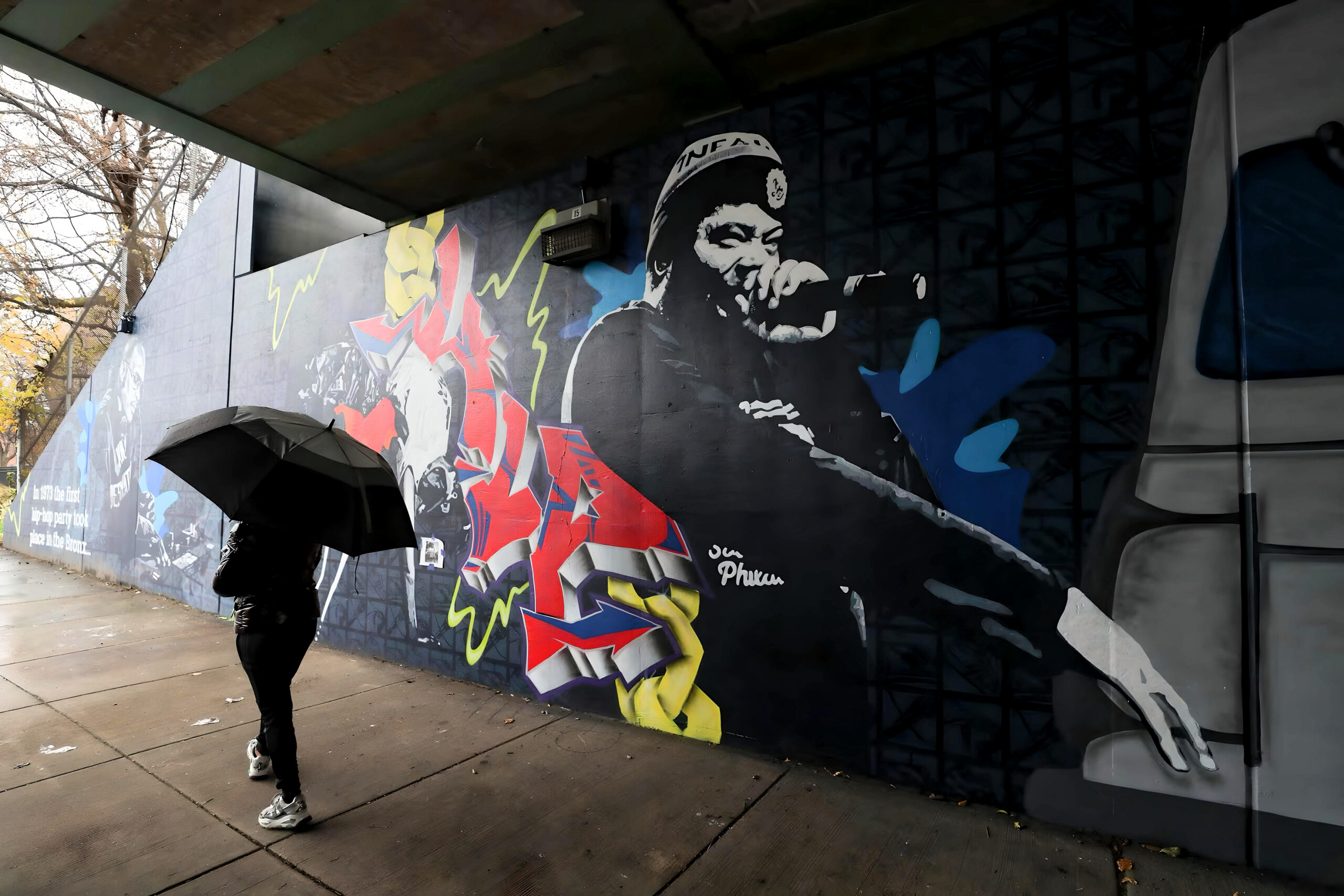
Front Two: The Enemies Within the Radius — Envy, Imitation, and Sabotage
The second front is the one nobody wants to talk about honestly because it requires looking at our own communities. But I have always believed that clarity, even when it is painful, is an act of love. So here it is.
Rappers get stalked and murdered in their own cities more than anywhere else. Although many died in LA. Boosie said it plainly, and he is right. The numbers back it up. In the last decade alone, we have lost hundreds of artists to gun violence. Pop Smoke in LA. Nipsey Hussle in front of his own store in LA. PNB Rock. Young Dolph in his own city, in broad daylight, because he chose to build independently, and that independence made somebody afraid. The list goes on, and it does not end, and every name on it represents a future that was taken before it could fully arrive.
Recently, we saw a thirty-year drop in hip-hop from the charts. But the physical violence is only the most visible expression of a deeper pathology. There is the envy that never picks up a gun but works just as methodically. I have experienced it as an independent artist, people who study your movement, bite your sound, replicate your aesthetic, and then, instead of building their own thing, pour their energy into undermining yours. Copycats who take your flow and then spread rumors about your character. Associates who smile in your presence and work against you in your absence. In Drill Culture, it could be a “groupie” or a “fan” giving up your location.
People who could not create what you created, so they make sure you cannot sustain it. Most of those murder victims (XXX, Nipsey, Pop Smoke, PNB Rock, Dolph, Trouble, even King Von and FBG Duck) would be topping the charts now if they were still alive. This is not speculation. This is documentation. I have had people replicate my marketing approach, my book-plus-album release model, my specific promotional strategies, and then attempt to discredit me to the same audiences I had spent years cultivating. I have had my momentum deliberately disrupted at critical moments by people operating close enough to matter. So-called “friends” have set me up.
It is a lonely thing to recognize. Because the instinct is to trust the people in your circle, especially when you come from a background like mine, a refugee who rebuilt everything from nothing across three continents, who did not arrive with a network or a system already in place. You build relationships carefully. You invest in people. And sometimes those investments get turned against you. The lesson is not bitterness. The lesson is discernment. Not everyone who claps for you is clapping for your success. Some of them are clapping because they think the sound will cover the sound of what they are building against you. Move accordingly. Build with intention. And protect your creative space like the irreplaceable thing it is. Watch out for the ex-partners or spouses, too.
Front Three: Law Enforcement, the Courtroom, & the Criminalization of Lyric
I was once with someone who would use my lyrics as clues to tip off the authorities. There is a phenomenon so well-documented at this point that it has been studied by legal scholars, documented by journalists, and challenged in courts across the United States — and it still continues. The use of rap lyrics as criminal evidence. Let me say that again so it lands properly. In American courtrooms, prosecutors have introduced rap lyrics, creative expression, artistic work, the same kind of metaphorical, dramatic, hyperbolic storytelling that Shakespeare used and that no one has ever tried to introduce as evidence of Shakespeare’s criminal intent, as proof of a rapper’s guilt. They have said to juries: this man wrote these words, therefore these words describe what he did.
No country music lyric about shooting a cheating spouse has ever sent anyone to prison. No heavy metal lyric about death and destruction has ever been used to secure a conviction. But hip-hop lyrics have been weaponized in this way hundreds of times, against Black and Latino artists, consistently, systematically, and with the quiet approval of a justice system that has decided that certain voices describe their own crimes when they speak.
Beyond the courtroom, there is surveillance. The targeted stops. The selective enforcement that follows success. Bar tenders calling the police, bouncers calling the police, secretly. You hit the club, and next thing you know, you’re in jail. I have spoken to artists who describe the experience of making money as the moment law enforcement’s attention intensified — as though their prosperity itself was suspicious, as though a Black man building something real was by definition building something illegal. The people know they have blocked your path. How are you thriving? The system stacks the deck and then acts surprised when the game produces predictable results.
Boosie lived this. Young Thug lived this. Gunna lived this. The YSL RICO case was constructed almost entirely from lyrics and social media posts, prosecuted with the machinery of organized crime statutes against a group of artists and associates whose primary shared activity was making music together. Whether you agree with every choice those artists made or not, the precedent that case set is terrifying. It says: if we decide you are too connected, too influential, too powerful in your community, we can build a legal architecture around your words and your associations and take you down. One way or another, you will find yourself in a jam.
This is a front that requires legal education, community organizing, and sustained advocacy. Artists need lawyers who understand both the music industry and criminal defense. Labels need to stop abandoning their artists the moment legal trouble appears. And communities need to stop treating incarceration as an inevitable feature of hip-hop life rather than as the deliberate outcome of deliberate policy. There must be an urgent reform here.
Front Four: Family, Inner Circle, & the Loneliness of Transformation
Success is supposed to be the destination. You grind for years in obscurity, you pour everything you have into your craft, you sacrifice sleep and stability and sometimes relationships, and you do it all because you believe that one day the work will reach the people it was meant for. And then it does. And then you discover that arrival comes with its own kind of grief. This is the part I was not prepared for. I struggled with this one.
The people who were with you in the struggle do not always know how to be with you in the elevation. Some of them resent the change. Some of them accuse you of forgetting where you came from simply because you are no longer drowning there with them. Some of them hold your growth against you as though your refusal to stay small is a betrayal of the compact you made in harder times. Some believe you don’t deserve the rose in your hand.
I am from West Africa. I survived two civil wars. I rebuilt myself across three continents with no mentor, no institutional support, no one who took a sustained interest in my development, and said: I see what you are building, and I am going to help you build it. I have been largely self-made in the truest sense of the phrase, not as a boast, but as a statement of the particular solitude that shapes certain kinds of lives. And that solitude teaches you things that comfort cannot teach. It teaches you that the people who are supposed to love you are not always capable of understanding you. And that their inability to understand is not the same as malice, even when it produces the same damage. The great part is, I was able to be prolific within their silence and absence.
I have had family members question my choices. I have had friends distance themselves when the gap between my trajectory and theirs became too wide to bridge casually. I have had people who watched me struggle suddenly appear with opinions and demands the moment the struggle produced something visible. And I have learned — slowly, imperfectly, still learning — that protecting your peace is not selfishness. It is survival. It is the condition of continued creation. Sometimes the toughest decision is letting those who walked away stay gone
The loneliness of transformation is real. It does not make the front page. It does not get discussed on Drink Champs. But it takes artists out just as surely as bullets and courtrooms. You cannot create from a place of constant emotional depletion. You cannot sustain a body of work while simultaneously managing the emotional labor of everyone in your radius who is struggling with your growth. At some point, you have to choose the work. And that choice has a cost. I am not pretending otherwise. It takes years to fill that void and overcome that.
Front Five: The Digital War — Algorithms, Hackers, Bots, & Coordinated Suppression
This is the front that did not exist when hip-hop was born in the Bronx in the late 1970s. This is the front that has emerged fully in the last fifteen years and has become, in my experience and observation, one of the most vicious and least understood battlefields in the entire war. And people are starting to recognize that it exists.
The digital economy was supposed to democratize music. And in some ways it did. Independent artists can now distribute globally, build audiences without label infrastructure, and release work on their own terms and timelines. I have done this. The book-plus-album model I have built across my entire career — releasing annotated literary works alongside studio albums, treating the book and the music as two chambers of the same creative act — would not be possible without the infrastructure that digital distribution created. I am a direct beneficiary of what the internet made possible for independent artists. Some might even classify this as my strength.
But the internet also created new weapons. And those weapons are being used against hip-hop artists with the same deliberateness and the same impunity that characterizes every other front in this war.
Shadowbanning. Demonetization. Algorithmic suppression. This list continues. These are not conspiracy theories. They are documented, acknowledged features of the platforms that now control the primary discovery mechanisms for music and content. An artist can build momentum over months, watch a video climb steadily, feel the audience growing — and then wake up one morning to find the reach has collapsed overnight, the comments are flooded with bots, the streaming numbers have been manipulated, and the platform has provided no explanation and offers no recourse. Your hundred thousand views reduced to a thousand, and that’s that.
I have experienced coordinated digital interference with my own work. Platforms compromised. Content flagged without cause. Streaming activity that does not reflect organic listener behavior. I am not alone in this. Artists across the independent spectrum describe the same pattern: the moment you build something real, something that does not require the machinery of a major label to sustain itself, something begins to push back. Whether that pushback is algorithmic, commercial, or something more deliberate is sometimes difficult to prove.
But the pattern is consistent enough to demand serious scrutiny.
Beyond suppression, there is the misinformation front. Social media has created an environment in which false narratives about artists can be constructed and distributed faster than truth can correct them. A rumor about an artist’s character, their finances, their romantic habits, their affiliations, their past — once it enters the algorithm, it spreads with the same velocity as a verified fact. And the platforms have no meaningful accountability mechanism for this. You can report. You can appeal. You can document. And the narrative keeps moving.
This front requires digital literacy, legal protection for intellectual property, community standards for how we share information about artists, and the kind of sustained critical attention to platform accountability that consumer rights movements have brought to other industries. It also requires artists to build audiences across multiple platforms simultaneously — so that no single algorithm, no single platform’s decision, can silence everything you have built. However, one can face attacks across all platforms at once, and artists are experiencing that.
Why This Matters Beyond Hip-Hop
I want to be precise here because imprecision would dishonor the argument. Not every problem hip-hop faces is external. Personal responsibility is real. Some of the damage is self-inflicted. Some of the narratives that get weaponized against hip-hop are narratives that hip-hop handed to its critics. I am not pretending otherwise, and I am not building a case for victimhood. I mean, think about it. A victim is simply a casualty, and this is a war.
What I am building is a case for a clear-eyed understanding of an uneven playing field. Country music has celebrated murder, infidelity, and substance abuse for decades without facing the institutional scrutiny that hip-hop faces for the same themes. Rock and roll built an entire mythology around destruction and excess and got museum exhibits and lifetime achievement awards. Heavy metal has been dressing itself in death imagery since the 1970s, and nobody has tried to introduce Metallica lyrics as evidence of a crime that leads to prison time.
The difference is not the content. Like the older White men who have engaged in sex tourism in Thailand, Colombia, and the Philippines for almost a century, they never got a nickname. The moment Black men started showing up, they suddenly became “Passport Bros.” The difference is who is making the content. And that difference has to be named honestly, consistently, and without apology. There is a war on Blackness itself, let alone the art forms that come from it. In recent years, there has also been a gradual quieting of Afrobeat and Amapiano.
Hip-hop has always been a voice for the people the world would prefer not to hear. That is its origin and its power, and the reason it became the dominant global cultural force of the last forty years despite every attempt to contain it. The same qualities that make it powerful make it a target. The communities that produced it were never supposed to have a platform this large. The artists who carry it were never supposed to be this wealthy, this influential, this sexually attractive, so much so that even Asian and Indian women are giving us a nod.
So the war makes sense. It is not random. It is the predictable response of every power structure that has ever felt threatened by the power of the unheard finally being heard. That’s how I know I am being seen.
How We Fight
I am not going to close this with empty inspiration. We fight by understanding exactly what we are fighting. We fight by building legal infrastructure — entertainment lawyers, criminal defense specialists, intellectual property protection — before we need it, not after. We fight by educating ourselves about the platforms we depend on, their algorithms, their terms of service, and their accountability gaps, so that we are not surprised when they are weaponized against us. We fight by being deliberate about who we allow into our circles, not paranoid, but discerning. Someone said, stay dangerous and always be ready when they come.
We fight by taking mental health seriously — by understanding that the emotional weight of fighting on five fronts simultaneously is not sustainable without support, and that seeking that support is not weakness, it is strategy. We fight by building community across the genre, across the diaspora, across the lines of style, region, and generation that the industry has always used to divide us.
And we fight by creating. Relentlessly. Precisely. Without apology. Because the most subversive act available to a voice that the world is trying to silence is to refuse to be silent. To build something so substantial, so carefully constructed, so rooted in truth and craft and genuine human experience, that it cannot be dismissed. That it demands to be reckoned with. Boosie is still here. The music is still here. The culture is still here. Despite everything. We fight on multiple fronts. But the music still rises.