 0
0
 0
0
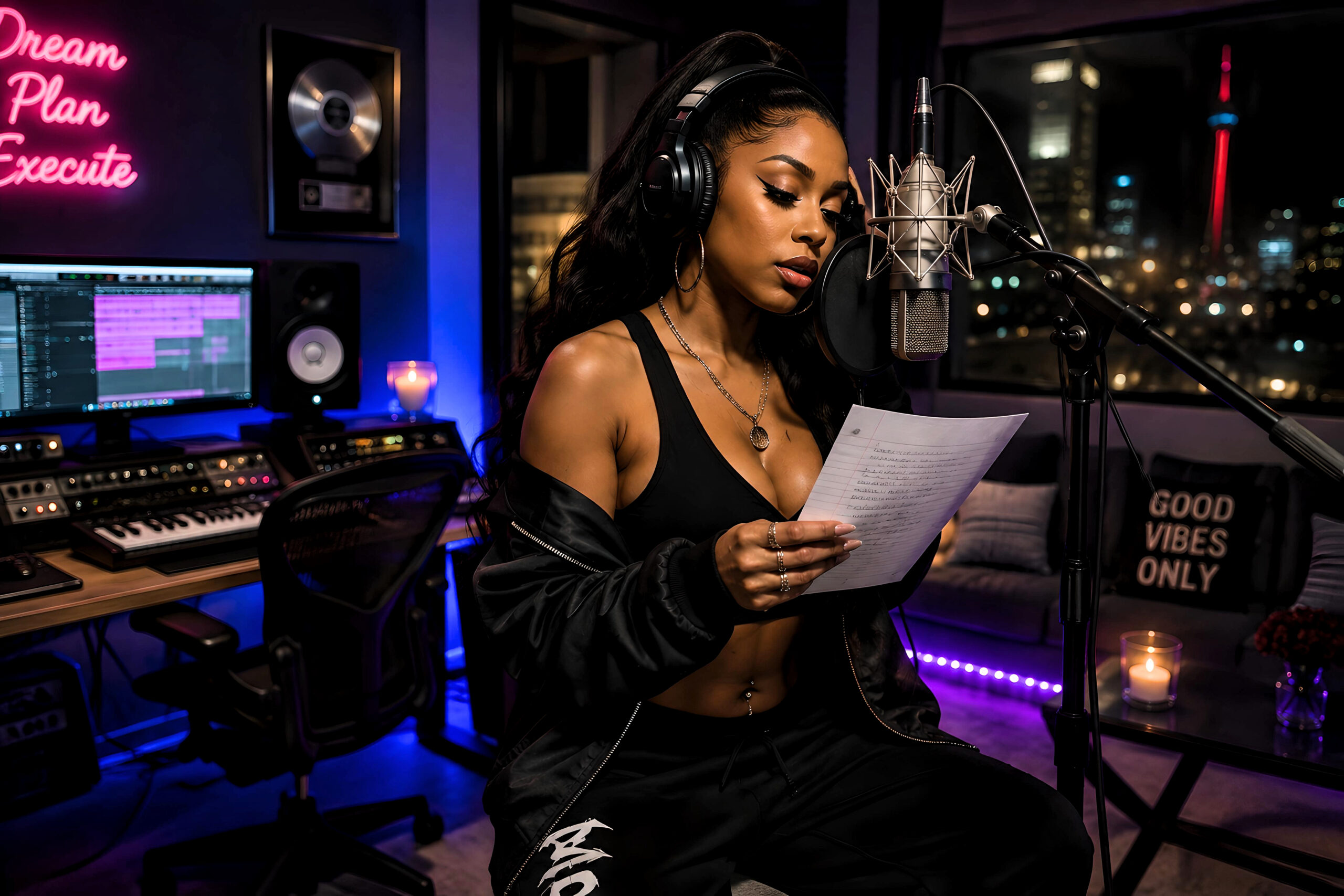
Maybe you agree that I put this blog in perspective. So, here it is. Before documenting the creation of my Bee Mann albums, let’s establish how we’ve made my music throughout my career. I make music to entertain listeners and the computer was already in the studio when I arrived. Artificial intelligence did not suddenly introduce technology into my creative process. I had been making computer-assisted music for more than two decades before generative AI entered the conversation. We had digital recording, MIDI, pitch correction, and virtual instruments. And we had Digital Audio Workstations, or DAWs, plug-ins, sampling, drum programming, and software effects. None of that was exotic to me. It was the infrastructure of every home and project studio I ever worked in.
The purpose was always the same. Take the music (or song) I hear in my head, and find the most effective way to get it into the speakers. Technology helped me do that. It also cut the cost and equipment required to make professional recordings. That transformation began long before AI showed up. Cubase, for example, grew out of MIDI sequencing technology Steinberg developed in the 1980s (decades before me), and later added digital audio recording and VST technology. Virtual instruments emulate or generate everything from drums and synthesizers to pianos and orchestral sounds. A DAW increasingly resembled a recording studio, packed inside a computer.
Reason took the concept even further. When it arrived in 2000, it handed musicians a virtual rack, loaded with instruments, effects, and interconnected studio equipment. Reason Studios describes part of the original philosophy behind the software as democratizing music-making by cutting the need for expensive physical gear. For independent artists, that democratization mattered enormously. By the time I was recording songs like City Boy, Auto-Tune and heavy vocal processing had become impossible to ignore in popular hip-hop and R&B. Some people in the culture might still credit T-Pain far more than others, for popularizing the Auto-Tune in hip hop.

For me, I still remember one of my earliest thrills of recording. Hearing myself played back through the studio monitors. I knew exactly what my untreated voice sounded like, live, or kicking a freestyle in a cipher. But through a studio microphone, recorded digitally, compressed, equalized, processed, and polished, that same voice became something else entirely. It sounded grander. Cleaner. More controlled. Sometimes more on tune. That fascinated me. I even saw the same with other rappers and singers. And I have also done the same with those rappers and singers as a producer. And technological intervention in music was already controversial before AI showed up.
Consequently, some musicians and listeners believed a recording should be built from people physically playing instruments. If you heard a piano, somebody should have played a piano. You heard drums, somebody should have played drums. If you heard a trumpet, somebody somewhere should have blown air through a trumpet. Hip-hop had already complicated that philosophy through sampling, drum machines, and turntablism. Digital production pushed the argument even further. Software like Cubase, FL Studio, originally FruityLoops, Reason, and Pro Tools let producers record, sequence, edit, and manipulate the sound of music entirely inside a computer.
Virtual instruments, synthesizers, samplers, and sound libraries made it possible to build convincing drum, bass, keyboard, and orchestral elements, without ever having the actual instrument in the room. A MIDI keyboard made the distinction even sharper. The same physical keys could trigger a believable sound of a piano on one track, strings on another, a synthesizer on the next, and drums right after that. The musician was still making every creative and musical decision. Our instrument had simply become software. Interestingly, some of that criticism actually influenced me. I developed a real appreciation for bringing live musicians into my recordings, because there were techniques a human performer could give me (or the song) that I couldn’t easily program.
So, I hired saxophonists, guitarists, and other instrumentalists to play on my records. And I loved what live instrumentation could do. I still do. A musician doesn’t just produce the requested notes. A good musician interprets them. Timing shifts slightly. Spit pours out of a worn trumpet. Fingers attack the guitar strings differently. The player hears something in the arrangement and hands you an idea you never considered. That unpredictability can be magic. It can also get complicated. I found the musician. Explained what I wanted. Set a date that worked for everybody. Got everybody into the studio. Paid for the session. And then confronted one of the oldest problems in collaborative art. What happens when creative people hear two completely different songs?

Their intent is the same but creative disagreement isn’t necessarily bad. Some of the greatest records ever made probably exist because somebody in the studio said, “No, try it this way.” But for an independent artist paying for studio time by the hour, creative democracy can get expensive fast. Then Fiverr changed something. It presented us with another piece of technology that revolutionized our workflow. Not a music production program this time, but an online marketplace. Fiverr launched in 2010, built around the idea of turning freelance services into clearly defined products, or “gigs,” that customers could browse and buy. That model wiped out most of the friction involved in finding, negotiating with, and hiring freelancers remotely. For me, that was a game changer.
If I wanted a specific instrumental part, I no longer had to find somebody locally, book a studio date, and drag everybody into the same room. I could search for musicians. Listen to examples. Choose the player whose sound suited my record. Purchase their service. Send the reference track, tempo, key, and musical direction, along with whatever other instructions were needed. Then the musician recorded remotely and sent the audio files back to me. I imported those stems into my session and kept building the record. That sounds ordinary today. It did not feel that way when that method of working first became practical. The studio had stopped being geographical.
Thanks to the almighty internet, the guitarist didn’t have to live in my city. Neither did the background vocalist. Neither did the graphic designer. Not even the person editing the music video. My creative team could exist almost anywhere on earth. Rights and ownership still had to be handled properly. Hiring someone online doesn’t eliminate copyright, licensing, or contractual issues. But once the service, the deliverables, and the rights were clearly defined, remote commissioning made the whole process dramatically easier and faster. Independent musicians soon learn fast that “artist” is rarely the only job description. You are not just the artist; you are the executive.
As for me, in my humble career (or journey), I had to become multitalented because I couldn’t afford to hire a specialist every time something needed to get done. That means I quickly taught myself enough about Cubase and Pro Tools to handle digital recording and production myself. Then I learned graphics. Web design. Writing. Publishing. Promotion. Basic production. Creative direction. Not because I woke up one morning determined to become a one-man media corporation. Necessity has an excellent training program. And if that sounds impressive, let me add the less glamorous truth. Being multitalented is exhausting. Every skill you pick up becomes another job that somebody assumes you can handle yourself. That’s exactly why Fiverr became so useful to me.

It didn’t eliminate my creative control. It let me decide where my own time mattered most, and where another specialist could execute a piece of the vision faster and better than I could. That’s essentially how I’ve always imagined records. As puzzles. I hear the whole picture, but the finished recording is built from pieces. The beat. Bass. Drums. Additional instrumentation. Background vocals. Effects. Arrangement. My verses. The hook. Mixing. Mastering. Artwork. Every piece has to fit the larger idea. Sometimes I make the piece myself. Other times a producer makes it. Sometimes an engineer shapes it. Sometimes a musician performs it. Other times software generates the sound. The important question has always stayed the same. Does it serve the record?
From Producer-Assisted to AI-Assisted: This is the context I bring to artificial intelligence. I respect live musicians. And I love working with bands. I understand exactly what a good producer contributes. Sure, I know what a talented engineer can hear that the average listener never catches. But I’ve spent my entire recording career using technology to close the gap between imagination and execution. Digital recording did that. MIDI did that. Pitch correction did that. Virtual instruments did that. DAWs did that. Plug-ins did that. Remote freelance platforms did that. And now AI is doing it again. That’s why, from where I stand, AI doesn’t feel like some alien force that suddenly invaded music. It feels like the next stage in a technological continuum I was already living inside.
Think about how I made records earlier in my career. When I recorded my Stay True mixtape in 2006, the process was fairly straightforward. I got access to a collection of beats. Then I listened through them and picked the ones that spoke to me. Sometimes I wrote a brand new song for the beat. Sometimes I already had lyrics and went searching for production that could carry them. That was normal. The producer built one part of the musical environment. I stepped into that environment and wrote or performed inside it. Later, on my debut and the projects that followed, my relationship with production got more collaborative. I worked with producers who also functioned as studio engineers. That gave me far more control over instrumentation, structure, and arrangement.
Those engineers did a lot more than press record. Some helped shape choruses. They moved sections around and even suggested arrangements. They changed sounds entirely. Those producers heard exactly where something was missing. They took an instruction like “I need this part to feel bigger,” and turned it into technical decisions that actually made the record bigger. In other words, there was always another intelligence involved in translating my imagination into sound. It was human intelligence. Now the Assistant Can Be Virtual. This is where AI changes my workflow. I can now work with software capable of handling tasks that once required several separate tools, multiple technical processes, or an entirely different collaborator. This is another game changer.

Depending on the system, AI can help generate or prototype instrumental ideas, explore arrangements, manipulate audio, assist with vocal processing, build harmonies or backing parts, separate stems, transform sounds, and let me rapidly audition different musical directions. It doesn’t literally replace every function of Cubase, Pro Tools, a producer, an engineer, Fiverr, and a room full of musicians. What AI does is more interesting than replacement. It integrates and accelerates parts of that same workflow. The distance between having an idea and testing that idea shrinks down to almost nothing. What once took several emails, a booked studio session, a musician, an engineer, and three days can now sometimes get prototyped in minutes. That’s enormous for an independent artist.
The important thing is there’s also a legal and creative distinction worth noting. Using AI somewhere in the creative process doesn’t automatically mean AI authored the work. The U.S. Copyright Office has recognized that AI can function as an assistive tool within human-created work. The copyright question turns substantially on whether a human author determined the expressive elements. That distinction describes exactly how I think about these tools. I’m not interested in pressing a button and asking a machine to “Be Freddy Will.” It can’t. AI didn’t live my life. It doesn’t have my memories. AI didn’t write my rhymes. It wasn’t in my recording sessions twenty years ago.
AI doesn’t know why a particular lyric matters to me. It doesn’t own my catalog, my judgment, my intentions, or my lived experience, just because it can generate sound. What interests me is something different. I can bring the concept and I can bring the lyrics. I can bring the melodies and I can bring the rap performance. And I can also bring forty years of musical instinct. I can decide what belongs and what doesn’t. And technology can help me translate that vision into a finished recording, faster and more efficiently than ever before.
That’s why I don’t see the jump from DAWs to AI as a rupture. I see a line. MIDI, then digital recording, then virtual instruments, then DAWs and plug-ins, then remote collaboration, then AI-assisted production. Every stage knocked down a barrier between the creator and the finished work. Every stage sparked arguments about what counts as “real” musicianship. And every stage eventually forced us to separate the tool from the person using it. For me, that distinction remains fundamental. The machine keeps changing. The reason I use it never does. I still hear the song in my head first. Everything after that is just the process of getting everybody else to hear it too.