 0
0
 0
0
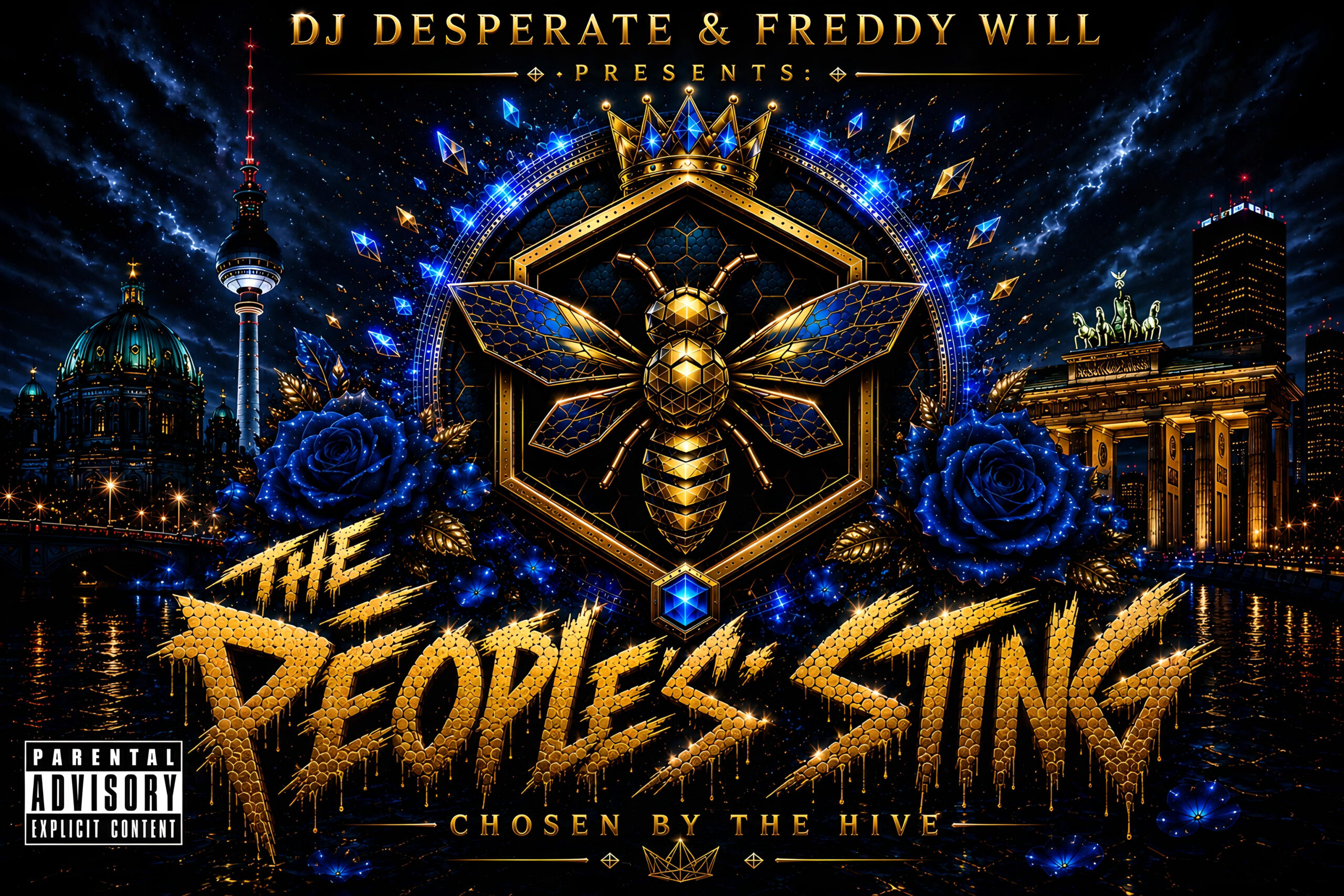
Here’s something I didn’t plan on saying when the Bee Mann project began. The fans would change an unreleased album. Not metaphorically. They changed it. The People’s Sting: Chosen by the Hive is a 12-track spin-off from Bee Mann: Stings from a One-Man Hive LPs 1 & 2. Nine of its tracks came directly from songs listeners chose from LP1 and LP2. I took several of those selections and created alternate mixes, different textures, different energy, same DNA. Then I added three new records. And somewhere along the way, what was supposed to be a fan-selected compilation developed an identity strong enough to change the album that was supposed to come after it.
I will explain how that happened, starting with the other name on the project.
There’s a name that deserves more than a production credit. DJ Desperate. Why DJ Desperate?
That’s a long story, but it deserves to be told. So here it is.
Since the early stages of my career, I’ve tried to keep Sierra Leone connected to whatever I was doing abroad. Wait. Let me clarify that carefully because I don’t want to manufacture a fantasy about my relationship with Sierra Leone when it isn’t true. I’m not pretending that I’m the hottest artist from Sierra Leone. I’m NOT. There are Sierra Leonean rappers and musicians with enormous domestic audiences and cult followings that I simply don’t have. Also, by using the phrase “domestic audience,” I am not implying that they are not relevant or popular internationally. Many of them may also have an international following. In this moment, I am speaking about Sierra Leone.
If you asked a random Sierra Leonean to name their twenty favorite artists, there’s a very good chance Freddy Will wouldn’t appear on that list. People barely know me there compared with some of the country’s stars. My career developed largely outside Sierra Leone. I naturalized in the United States. My nationality is American, even though Sierra Leone remains the country of my birth and an enormous part of my heritage. But… something strange has happened. Every once in a while, I’ve found myself representing Sierra Leone in some unexpected way. Or, reaching a historic milestone connected to the country, without becoming one of the country’s most popular artists.
I became a published author while maintaining my recording career. By 2009, I had established what would become one of my signatures: releasing books alongside companion albums. My Book of Chrymes and While I’m Still Young – The Talking Drums 1.2v were both released that year as interconnected works. Then came something I never could have predicted. I wrote and performed “Future” for the various-artists children’s project Healthy Food for Thought: Good Enough to Eat. The album went on to receive a Grammy nomination for Best Spoken Word Album for Children at the 53rd Grammy Awards. In either instance. I was the first artist from Sierra Leone to do that.
I was a contributing songwriter and performer on a Grammy-nominated project, not the producer or individual nominee listed by the Recording Academy. That is an important distinction, but for a kid from Freetown who had carried hip-hop through Liberia, Sierra Leone, The Gambia, Senegal, and North America, it was extraordinary. Then, in 2011, another surreal thing happened. Four limited-edition postage stamps were issued bearing my name and image. Later, my life took another historic turn and brought me into diplomatic circles in Brussels. I’m extremely grateful for all of it. But here’s the unexpected part: achievement and popularity are not the same thing.
I would push that further and say, from my experience, achievement does not automatically generate acceptance or praise. There is a lesson to learn that people have their favorites. Often, they may view the accomplishments of others as competition or a loss to their chosen favorite. And there is usually very little anyone can do. Whatever happened, my accomplishments did not transform me into Sierra Leone’s biggest artist. Surely, that clarification matters to this story. Because the Sierra Leone side of my career wasn’t sustained by some huge national fan base. It was sustained by something much smaller. A handful of people who simply refused to stop supporting me.
Enter Prince Will & Siltech
One of the earliest people to support me in Freetown was a man named Prince Will. And yes. Will was really his last name. Prince took to my music and became one of my most dedicated supporters and promoters. For almost a decade, he championed what I was doing. There was another charismatic young man called Siltech. Prince and Siltech became an informal bridge between my career abroad and Sierra Leone. They would take my new releases to DJs back home and encourage them to play them. Sometimes the DJs did. Sometimes my records were playing in Sierra Leone, and I didn’t even know about it. There was no massive marketing operation behind any of this.
No major-label radio department or national campaign. No army of street teams. Just people carrying music to other people. DJ Jidakizz was another person who promoted my records through his radio station. But then life happened. Prince passed away. Siltech relocated to the United States. Soon, one of the bridges connecting Freddy Will to Sierra Leone became thin. However, sometime afterward, another promoter named Egarton contacted me. I didn’t respond at first. There was something about his energy that reminded me of Prince. While still mourning Prince, I wasn’t emotionally ready to allow somebody new to occupy anything resembling Prince’s space.
Thankfully, Egarton kept showing genuine interest. Eventually, I warmed up to him. He began sharing links to my books and promoting whatever I was doing. Then he connected me with DJ Desperate. Except there was a twist. DJ Desperate already knew who I was. Years earlier, Prince and Siltech had approached him about my music. Nothing substantial came from it then. But years later, when Egarton came back around with Freddy Will records, Desperate decided to give it a go. That’s where this story evolves. He became the DJ who wouldn’t stop playing Freddy Will. Correct me if I’m wrong. Around 2022, DJ Desperate started playing my music on the 93.3 FM radio station.
Then he kept playing it. And playing it… What distinguished him from other DJs who had supported me previously was that Desperate made sure I knew it was happening. He sent video clips. I’d see him playing Freddy Will records on air in Freetown while I was thousands of miles away, going through another transition in life. I had moved from Canada to Belgium and was transitioning toward Germany. Musically, I was in an unusual place. My last conventional full-length studio album had been years earlier. I had previously recorded new music occasionally, including hip-hop and soca/calypso crossover records with Grenadian-Canadian artist Matthew DeeLee.
Sure, I had released two compilations, alternate mixes, and some occasional newer songs. Some of those DeeLee collaborations remain documented across my later catalogue. But I wasn’t operating like an artist in the middle of a major new album cycle. Because I wasn’t. Granted, I was still writing and composing behind the scenes. DJ Desperate didn’t seem concerned about that. He just kept playing the records. City Boy. Endurance. Labobamus. Natural Light. Girl from Happy Hill. Carnival. Oh, La, La. And sending video clips. There is something psychologically powerful about watching a DJ on another continent believe in music you grew tired of pushing yourself.
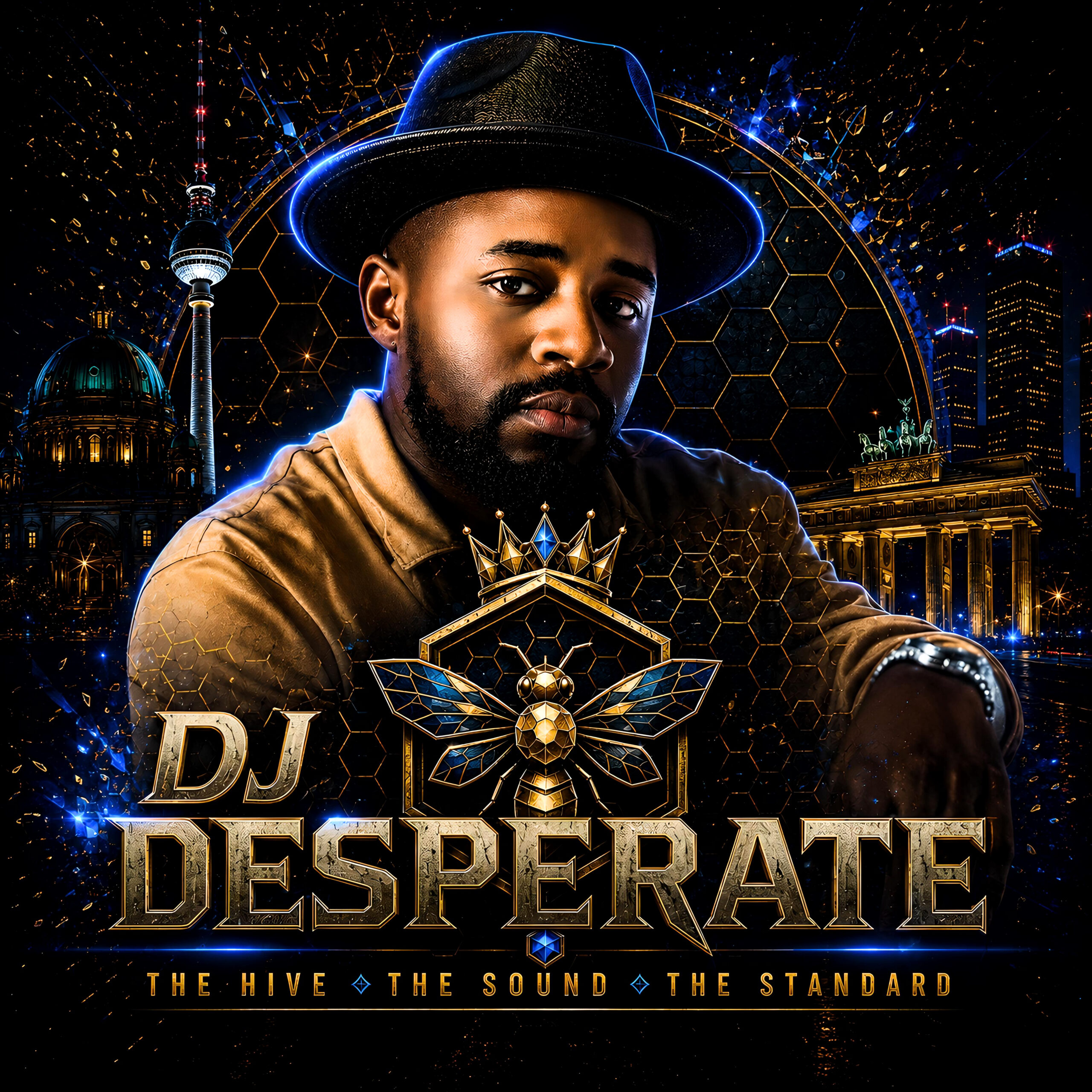
After a while, it started working. His determination became one of the motivations that made me refocus on making new music. Still rebuilding in Berlin, by 2024, however, most of my attention was on my books. I had relaunched Badson Publishing and was republishing my literary catalogue. Music wasn’t the only thing I was reconstructing. I was reconstructing the entire creative operation around my life. That’s the rebuilding period I keep crediting Berlin for. But somewhere inside all that rebuilding, music started calling again. And DJ Desperate had never stopped answering. He had continued to play my classic tunes and send me the clips to see.
So… by 2025, I decided that instead of merely thanking him for supporting my music, I wanted to bring him into what came next. That became: CrossOver: Best of Freddy Will. The collaboration formalized a relationship that had already existed informally for years. And this part isn’t merely a story I’m remembering after the fact. The released album is officially credited to Freddy Will & DJ Desperate: 26 songs, released November 11, 2025. Then… Bee Mann happened. When DJ Desperate entered the Hive, what began as an idea around a bee had expanded into books, albums, characters, mythology and eventually a trilogy. Three books with three companion hip hop albums.
LP1, Bee Mann: Stings from a One-Man Hive, arrived May 10, 2026. LP2 followed on June 6 with thirteen more tracks. Those releases and dates are independently listed on the major streaming platforms. When it came time to promote Bee Mann, commissioning DJ Desperate felt natural. He had been playing Freddy Will when there wasn’t a Bee Mann. Why wouldn’t I bring him into the Hive once there was one? And Desperate did what Desperate does. He played the records. Relentlessly. LP1. LP2. Again and again until something started happening on the other side of those broadcasts. Listeners learned the records. Not merely one single somebody had pushed at them.
The albums. They developed favorites. They had opinions. Eventually, when we asked them which songs they liked most. They told us. Cocaine Witch. Giant. Road Wins. Too Many Enemies. Afropolitan. Clutch. Frontin’. In Germany, the fans chose Accuse Me, I’m Dope, and PantyDown. Those choices became the foundation of The People’s Sting. And that’s why it says: DJ Desperate & Freddy Will Presents. He didn’t promote a finished compilation. He helped create the conditions that made the compilation happen. When the Hive got a vote, the first two Bee Mann albums were built around an interesting contradiction. And they literally exposed that.
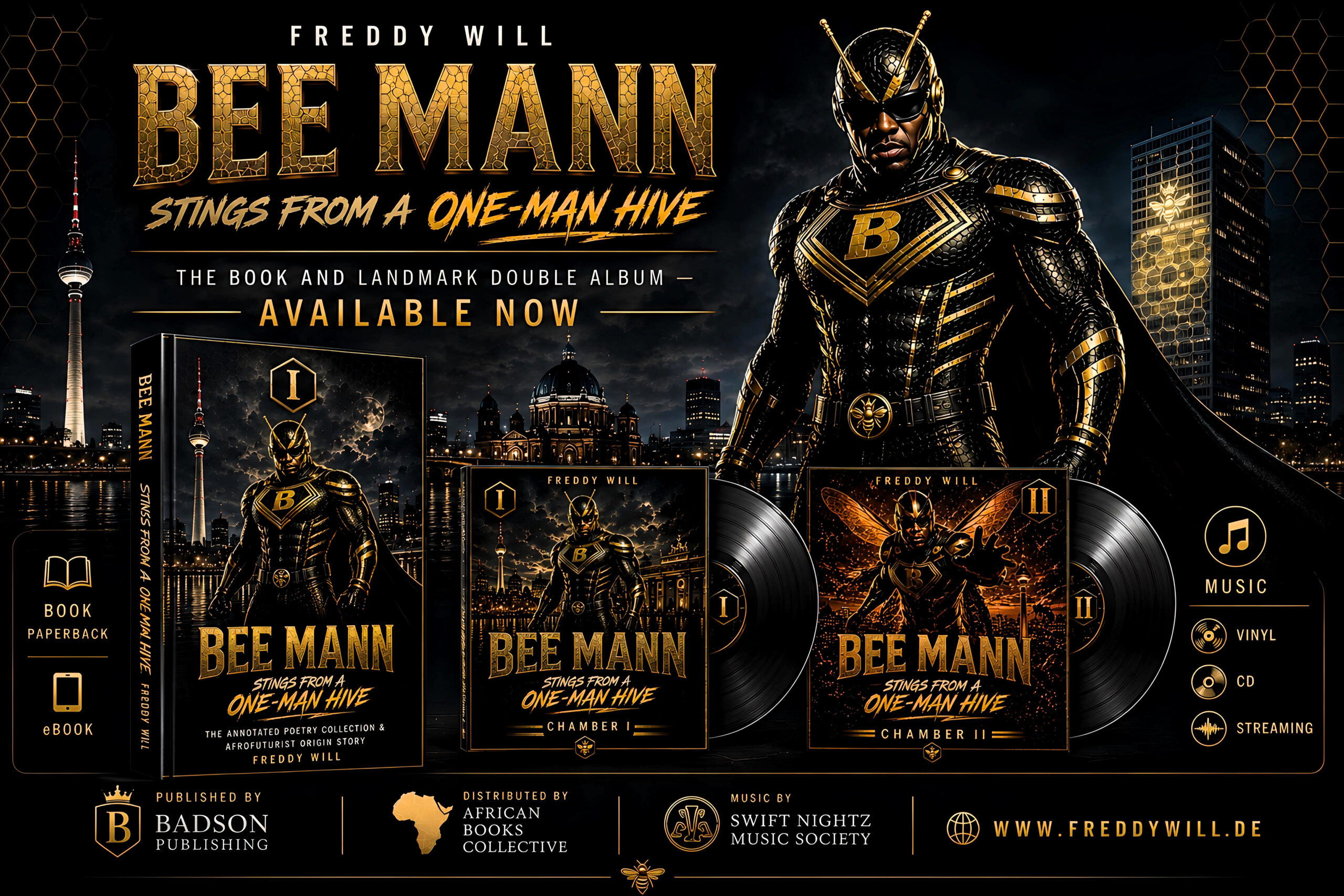
I called my albums “Stings from a One-Man Hive,” but increasingly, there was nothing “one-man” about the world growing around it. LP1 is about the singular self: survival, independence, identity, and the making of Bee Mann. LP2 complicated that idea by bringing Amira, Bee Woman, toward the center of the mythology. The Hive became marriage, children, shared responsibility, and people whose lives are affected by the decisions of the man who once imagined himself standing alone. Then The People’s Sting complicated it further. This time, the audience entered the Hive. I took their selections back into production and created alternate versions of several of them.
The challenge with an alternate mix is different from making a new song. When you’re creating from scratch, you’re trying to discover what the song wants to become. When you’re remixing something people already love, the question changes: How much can I change without destroying the essence they love? That’s a fascinating, creative problem. The audience has already told you what works. Your job isn’t to prove them wrong by showing how clever you can be. It’s to find another possibility hiding inside the same song. Different energy. Same DNA. That’s why the subtitle became increasingly appropriate. Chosen by the Hive. Their fingerprints are on the record, too.
Then the Compilation Changed LP3
This is where the series of events got even more interesting. Originally, three new songs on The People’s Sting, My People, Fallin’, and GateKeeper Diaries were intended as early previews of LP3, Devils May Cry. The strategy was straightforward. Release them ahead of LP3. Give listeners an early taste of where the trilogy was heading. Then carry those songs forward when the third album arrived. Perfectly normal album strategy. Except I finished The People’s Sting and kept listening to it. And somewhere along the way, it stopped sounding like a compilation. It sounded like an album in its own right. That created a problem. And that problem was not easy to ignore.
If My People, Fallin’, and GateKeeper Diaries remained previews, then The People’s Sting and Devils May Cry would both depend on the same three records, even if there were other hit singles on the album. And trust me, there are. Instead of one project leading naturally into another, LP3 would arrive with part of its identity already spent. I didn’t want that. Every Bee Mann album needs a reason to exist. So I made the call. My People, Fallin’, and GateKeeper Diaries belong to The People’s Sting. Permanently. They’re not previews anymore. They’re not bonus tracks waiting for their “real” album. This is their album. And once I made that decision, I had three holes in Devils May Cry.
That turned out to be one of the best things that could have happened to it.
The Tracklist
1. Cocaine Witch (Alternate Mix)
Spiritual duality, ritual, and devotion collide. The song draws on imagery of witches using cocaine as a trance agent while placing Amira’s own spiritual devotion at the center of a conflict with practitioners working against her family. There’s also a narco-feminist thread running underneath it.
2. Giant
A song whose title sounds like a boast but whose argument is humility. Built partly from bee imagery and Berlin’s history of collapse and reconstruction, Giant honors both his rise and Amira’s parallel work of building a marriage and family. Surviving alone required strength. Building together required more.
3. Road Wins
Success interpreted through the Hive. Different sacrifices. One structure. The chorus asks how he made it this far and arrives somewhere unusual for a rap record about achievement: gratitude instead of flex.
4. Too Many Enemies (Alternate Mix)
Meanwhile, we have a threat assessment anthem. Instead of speaking vaguely about opposition, this record begins cataloguing what’s actually arrayed against the Bee Mann and the Hive. By this point, Bee Mann’s enemies aren’t merely metaphorical anymore. The mythology has populated itself with various factions of enemies.
5. Afropolitan (Alternate Mix)
The identity anthem reconstructed. Dual passports. Code-switching. Geographic movement. Cultural fluency. Furthermore, underneath it all, there is a firm rejection of the representations of Africa that flatten the enormous continent and its diaspora into poverty, catastrophe, and cliché.
6. Clutch (Alternate Mix)
Reliability when it counts. For family. For the community. Or for love. “Clutch” operates in two senses: performing under pressure and the mechanical component that keeps moving parts connected.
7. Frontin’ (Alternate Mix)
Success and isolation occupy the same room. “Used to roll with family, lately it’s only me.”
The towering achievements are real. Likewise, so is what it costs.
8. My People
One of the three songs that changed the future of the project. My People moves through Black history and resilience, from slavery and the broken promises following abolition through civil rights and internalized oppression—before ending in a tribute to Black womanhood. Harriet Tubman. Rosa Parks. And the refrain: “You the Queen of the Earth.” This song was supposed to belong to LP3. It doesn’t anymore.
9. Fallin’
A grown man’s love song. Not infatuation from somebody who hasn’t figured his emotions out yet, but romance from the perspective of a man at forty-eight who believes he finally understands what matters. Family. Intent. Permanence. “If you change my life, you’re already my wife.” This is another one of the three songs that changed the future of the project. It was also supposed be belong to LP3 but now it belongs here.
10. Accuse Me, I’m Dope (Alternate Mix)
Pure defiance. A remix from the original rock and roll/hip hop crossover on LP1. Nearly two decades of enemies attempting to knock him down, count him out, or redefine him and the irritating habit of continuing anyway.
This is one of the two songs that the German fans or listeners chose from LP1.
11. Panty Down (Alternate Mix)
Another German fan favorite. The romantic reset. Where Hissy Fit and Toxic explored distance and tension, PantyDown moves the story back toward intimacy through a detailed honeymoon-style evening. The couple remembers why the two of them entered the Hive together in the first place.
12. GateKeeper Diaries
And then we end with confrontation. Another LP3 joint moved to TPS. GateKeeper Diaries takes aim at algorithmic suppression, shadowbanning, and the narratives that can surround independent Black artists when their success doesn’t arrive through conventional institutional permission. Dark, cinematic boom bap with trap influence.
Its central argument is: a dashboard doesn’t get to decide what the culture already knows.
Final Thought
From Prince Will to Siltech to The People’s Sting: Chosen by the Hive. When I look at this record now, I don’t just see twelve tracks. I see a chain of events. Prince Will believed in the music when there was no obvious persuasion he had to. Prince and Siltech carried records to DJs. Jidakiz played them. After Prince was gone, Egarton appeared with that strangely familiar energy and eventually connected me with DJ Desperate. Desperate remembered that Prince and Siltech had approached him years earlier. Then he started playing the records himself. And wouldn’t stop. That persistence helped pull me back toward making new music. Eventually, we made CrossOver together.
Then Bee Mann arrived. Desperate played that too. Listeners learned the albums. We asked them. They answered. I remixed their choices. Three additional songs joined the lot. The compilation became an album. And that album became strong enough to force me to rebuild LP3. Look at that sequence long enough, and the title almost becomes literal. The People’s Sting. Every Bee Mann release before this began with me deciding what the audience hears. This one began with the audience telling me what they had heard. That’s different. They listened closely enough to develop favorites. They cared enough to vote. I trusted those choices enough to reconstruct.
And then I trusted the resulting album enough to change Devils May Cry because of it. That’s not artistic compromise. To me, that’s the hive functioning exactly as a hive should. A signal goes out. Something receives it. Something comes back. And the entire organism adjusts. Chosen by the Hive. There’s another reason this story matters to me. For years, I tried to keep Sierra Leone in the loop even though I was never one of the country’s biggest stars. That’s an odd position to occupy. You can have accomplishments associated with a place without being particularly famous there. You can leave and still care whether home hears what you’re doing.
Ultimately, I can become an American and represent Sierra Leone as my heritage. And sometimes you don’t need an entire country to know your name. Sometimes you need a Prince. A Siltech. Jidakiz. Egarton. DJ Desperate. And a small pocket of listeners paying attention. That’s enough to move something. In this case, it moved an entire album. Then it moved, the next one. The irony is almost too perfect. I started this mythology by calling it One-Man Hive. Three releases later, the fans are rearranging my album. So much for one man. That’s why the cover says: DJ Desperate & Freddy Will Presents. And that’s why the record is called: The People’s Sting: Chosen by the Hive.
Not chosen by an algorithm. Or chosen by a label executive. Not chosen by a streaming dashboard. Chosen by people listening to the records. And for a mythology built around the idea of a Hive, I can’t think of a more appropriate way for this particular album to have been born. The People’s Sting: Chosen by the Hive is streaming now. And LP3 is coming next, reborn, rebuilt, and rooted somewhere deeper than I originally intended.