 0
0
 0
0
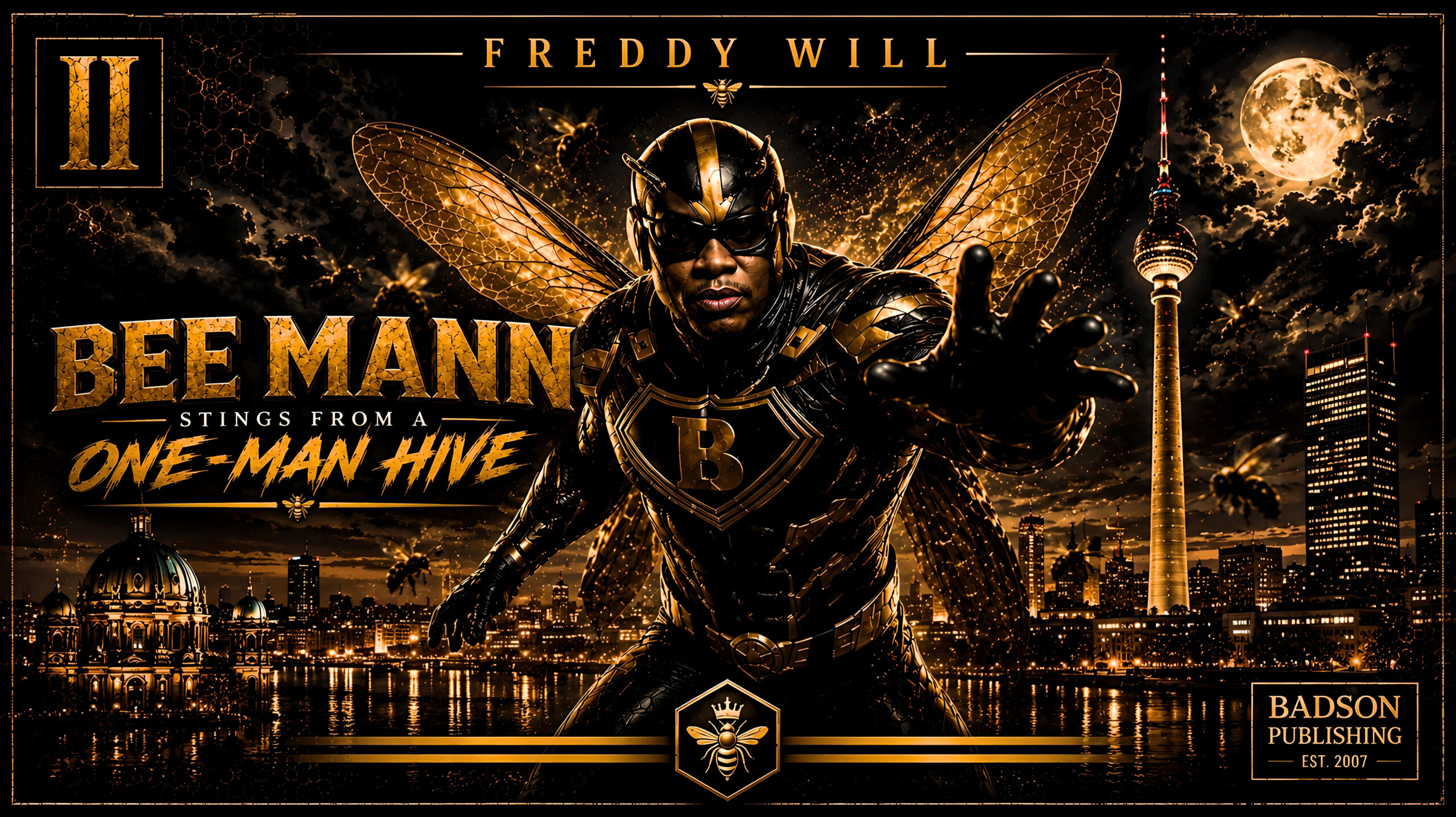
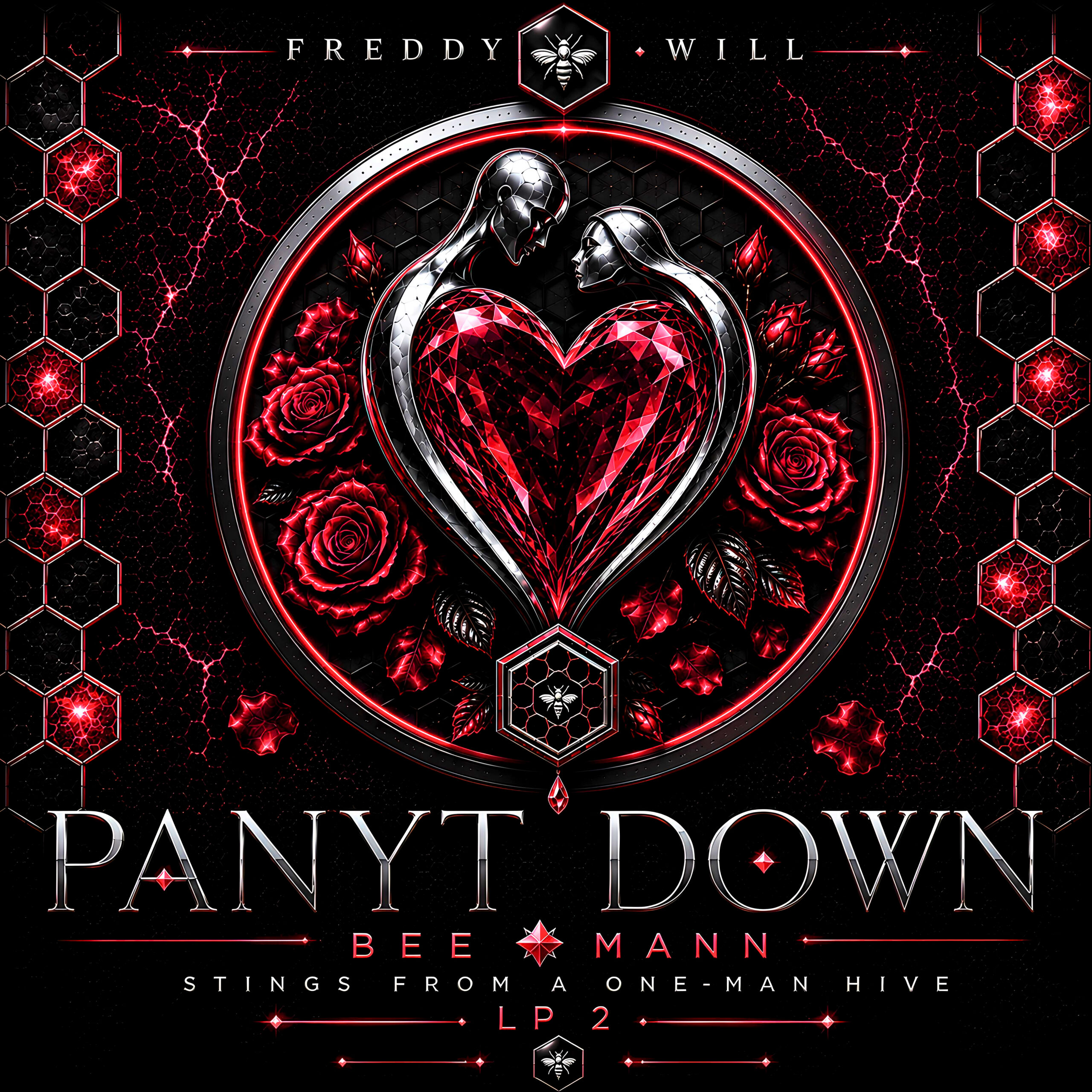
LP1 answered how a man becomes Bee Mann. LP2 asks the harder question: What does it cost to keep being him, and who else is paying that cost alongside him? Bee Mann: Stings from a One-Man Hive II is the second half of the Stings from a One-Man Hive double-album project. Swift Nightz Music Society released it on June 6, 2026. Like LP1, this is a companion album for Book One. The book is the same 25-track annotated poetry collection published through Badson Publishing and distributed by African Books Collective. Together, they take the poems from the page and translate them into sound. That makes the Bee Mann universe much bigger from there onwards.
Book One is the introduction. Book Two, Bee Mann: Siege of Wannsee, and Book Three, Bee Mann: Devils May Cry, are the contenious narrative, and their musical counterpart is LP3. However, before the mythology can expand outward, LP2 has some unfinished business inside the Hive. The Hive isn’t one man anymore. The title of the first album tells you its thesis before a single record plays. One-Man Hive. Singular. Self-built. A man at the center of his own survival story, even when other people are standing around him. LP2 is where that idea begins to come apart. And that’s a good thing. The title track opens by confronting the cost of ascension itself: power without tenderness.
Then, Cocaine Witch and Toxic begin shifting the camera. The story stops being exclusively about what the mission costs Bee Mann and starts asking what his mission costs the person standing beside him. That person is Amira Will, the Bee Woman. She existed around the edges of some of LP1’s story. Here, she moves toward the center. Road Wins makes that partnership structural. Two people occupy different roles inside one Hive, each bringing something the other cannot provide alone. Giant makes the philosophical turn explicit. Strength is no longer measured simply by whether one man can survive adversity. This is probably the biggest sting from the Hive.
The greater achievement is whether two people can build something durable after adversity has finished trying to destroy them. And what it will cost them to do so. Consequently, the mythology itself catches up with the marriage. Wasp Mann introduces an external enemy. Queen’s Sting does something more important. Amira defeats him herself. Bee Mann doesn’t rescue her. She doesn’t hold off the villain until the hero arrives. She wins. That distinction is fundamental to the mythology I’m building. Bee Woman isn’t Bee Mann’s assistant, accessory, or romantic reward. She has her own powers, her own conflicts, her own victories, and ultimately her own mythology. By the time HoneyComb closes the record, the contradiction inside the original title has finally revealed itself.
The Hive isn’t one man anymore. Maybe it never really was, even though the title suggests it. There is a Queen capable of fighting her own battles. Three children are growing up inside the frequency their parents created. There is a marriage whose survival requires two people rather than one man’s self-sufficiency. One-Man Hive was a title LP1 earned honestly. LP2 doesn’t reject it. It complicates it. Permanently. I’ve spent my career as a crossover artist. Long before genre-blending became one of popular music’s default settings, I was interested in what happened when hip-hop stopped respecting its borders. I’ve fused it with calypso, reggae, and rock and roll.
LP1 continued that instinct and brought Amapiano into the palette. LP2 goes somewhere different. I became more experimental with jazz crossovers and neo-soul, looking for a sound that carries the record, becoming more emotionally complicated than the one before it. That matters because I’m still pursuing a larger musical ambition. I want to establish myself as one of hip-hop’s great crossover artists. Not crossover in the old commercial sense of making a record palatable to another market. I mean musical crossover, taking hip-hop into other traditions without surrendering the thing that makes it hip-hop. LP2 is another deliberate step in that direction.
The production method itself remained familiar. I still perform every verse and wrote every hook. I still construct the records like puzzles: beat, bass, drums, instrumentation, background vocals, arrangement, mixing, and mastering. Some elements I create myself in Cubase and Pro Tools. For others, I commission musicians (sometimes through Fiverr), give them a reference, tempo, key, and creative direction, and receive stems that become ingredients in the larger production. And, as with LP1, AI is part of that toolkit. I use it for functions including graphic designs, mixing assistance, mastering, tone correction, and harmony generation. Again, the graphic designs are exclusively AI.
Therefore, I don’t regard that as fundamentally different from the technological progression I’ve watched throughout my career: MIDI, digital recording, pitch correction, software instruments, remote collaboration, and now generative and assistive AI. The technology changes. The question of authorship doesn’t always. For me, AI didn’t write or compose a single song on LP2. I did. It helped me execute a record that demanded considerably more sonic layering than LP1. Granted, I have heard of people who were never musicians themselves who use generated songs as their work. Ask me, and I would say I need time to study and understand what they are actually doing.
The Tracklist
1. Bee Mann
The mythology’s naming chapter and the title track of the double album “Stings from a One-Man Hive.” It is the point where the man becomes the myth. Built around the Cherubim as a symbol of the cost of ascension, the song confronts a dangerous proposition: power without tenderness is just a weapon with nowhere to rest. It is one of the project’s first genuine moments of self-indictment rather than the expected performed humility.
2. Cocaine Witch
On the other hand, we have spiritual duality, ritual, and devotion collide. The song draws on imagery of witches using cocaine as a trance agent while placing Amira’s spiritual devotion at the center of a conflict with practitioners working against the family. There is also a narco-feminist thread underneath it.
3. Europa
Meanwhile, the general moves to the watchtower. Instead of reacting, he observes. The song examines Europe through the eyes of someone who chose to believe in it and discovered that disappointment can cut deeper than hatred precisely because disappointment requires expectation. In the end, the song is a strange kind of love letter to a continent that hasn’t always lived up to its own ideals.
4. Toxic
Ultimately, the storm arrives. The record tracks what happens when accumulated pressure has nowhere healthy left to go and begins contaminating the relationships it was supposedly meant to protect.
5. PantyDown
Reset mode. Built around an intimate honeymoon-style evening, the song reconnects emotionally with the tensions introduced earlier in Hissy Fit. After distance comes an attempt at intimacy. The hive needs that too.
6. Road Wins
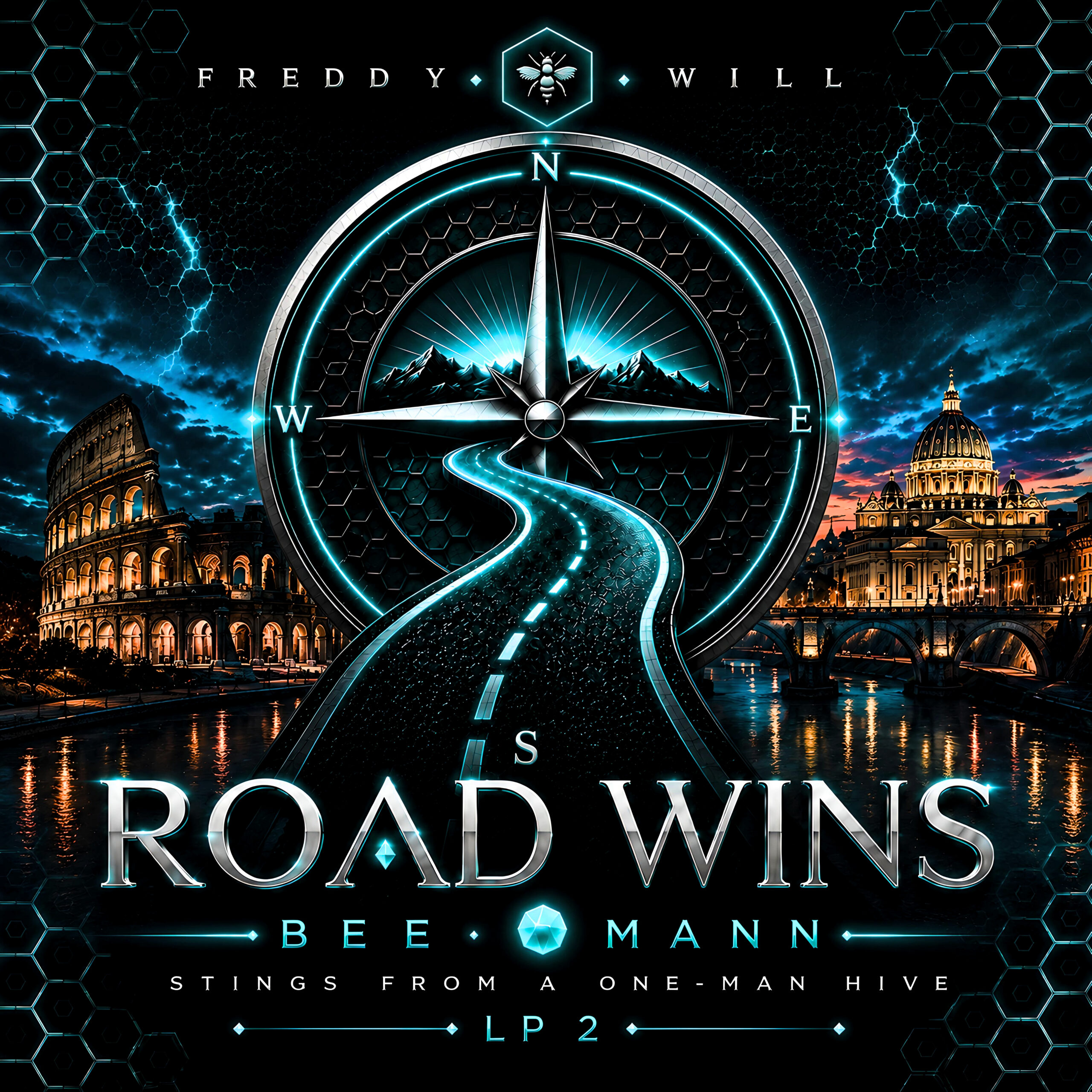
All told, one of the records at the philosophical center of LP2. Bee biology becomes a metaphor for marriage: two people carrying different functions inside the same structure, each making sacrifices the other cannot make for them. The chorus asks how he made it this far. For once, the answer isn’t swagger. It’s gratitude.
7. Giant
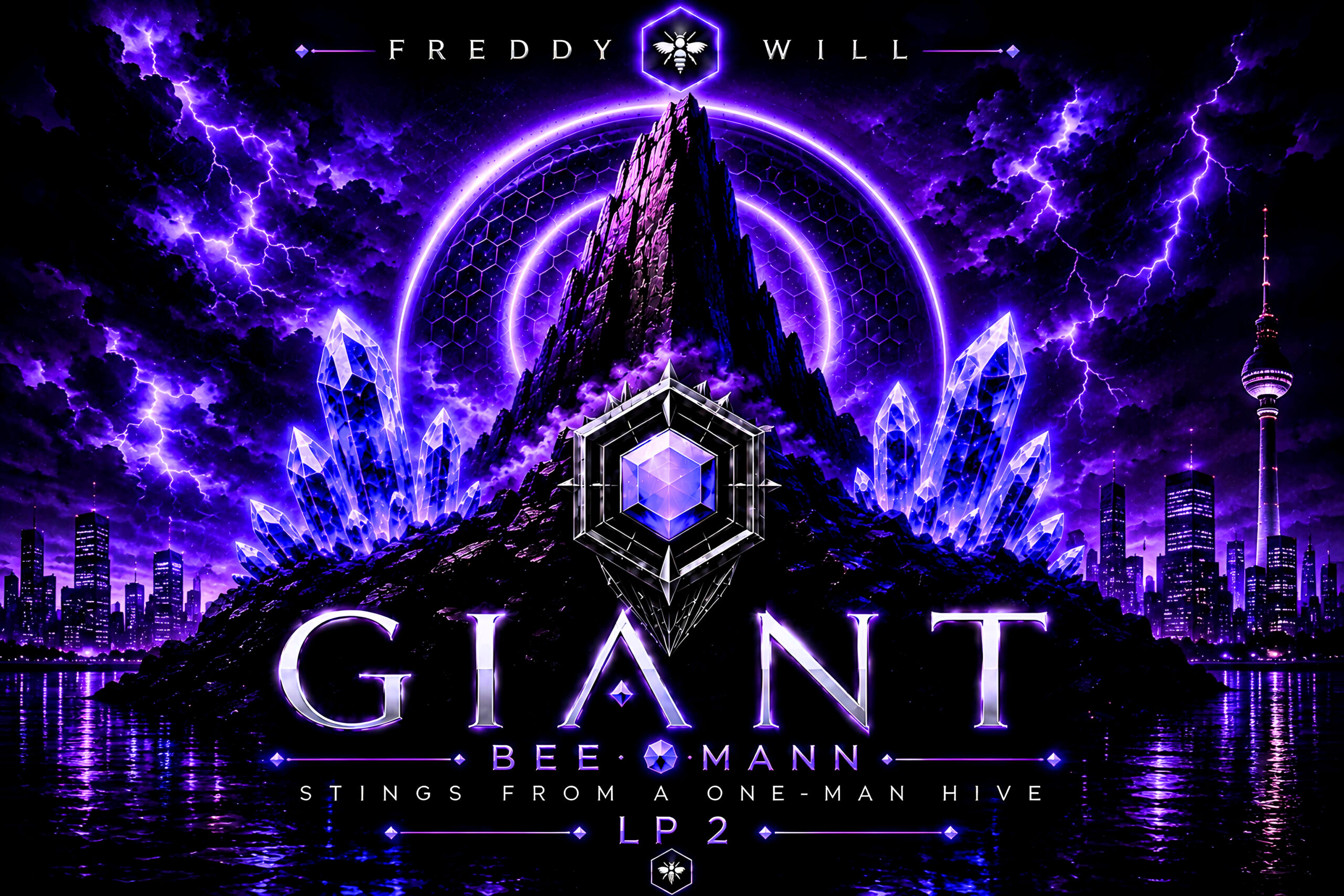
Another deliberate reversal. “Giant” sounds like the title of a boast record. Instead, it becomes an argument for humility. Drawing from bee imagery and Berlin’s history of destruction and reconstruction, the song honors both his rise and Amira’s parallel work of helping build a marriage and family from the ground up. Surviving alone required strength. Building together required more.
8. Wasp Mann
Enter Chad Miller. This is the villain theme, but the perspective isn’t entirely comfortable. From Bee Mann’s position, Wasp Mann is an enemy. From the perspective of the Viper Queen and the Flies, his arrival can look like vindication. Predator mode. Wasp-striped armor. A court of enemies descending on the honey. The mythology is beginning to acquire competing versions of the truth.
9. Queen’s Sting
Amira’s epic. The track establishes the Veiled Shore, a humanoid dimensional environment in which Bee Woman confronts Wasp Mann. And defeats him. Alone. That victory matters beyond the song because it establishes something the larger Bee Mann mythology will depend upon: the Queen doesn’t need the King to win every battle. It also creates the conditions for Wasp Mann’s eventual return in Siege of Wannsee.
10. Ill Intuition
A sixth sense. The protector of the flames. The hive becomes both broadcaster and antenna—sending signals while simultaneously detecting disturbances before they become visible threats.
11. Shit Could Wing Left
Vigilance as an expression of love. A family lives inside the hive, knowing that catastrophe can begin with one wrong wingbeat. Protection, therefore, isn’t one dramatic heroic act. It’s constant attention.
12. Too Many Enemies
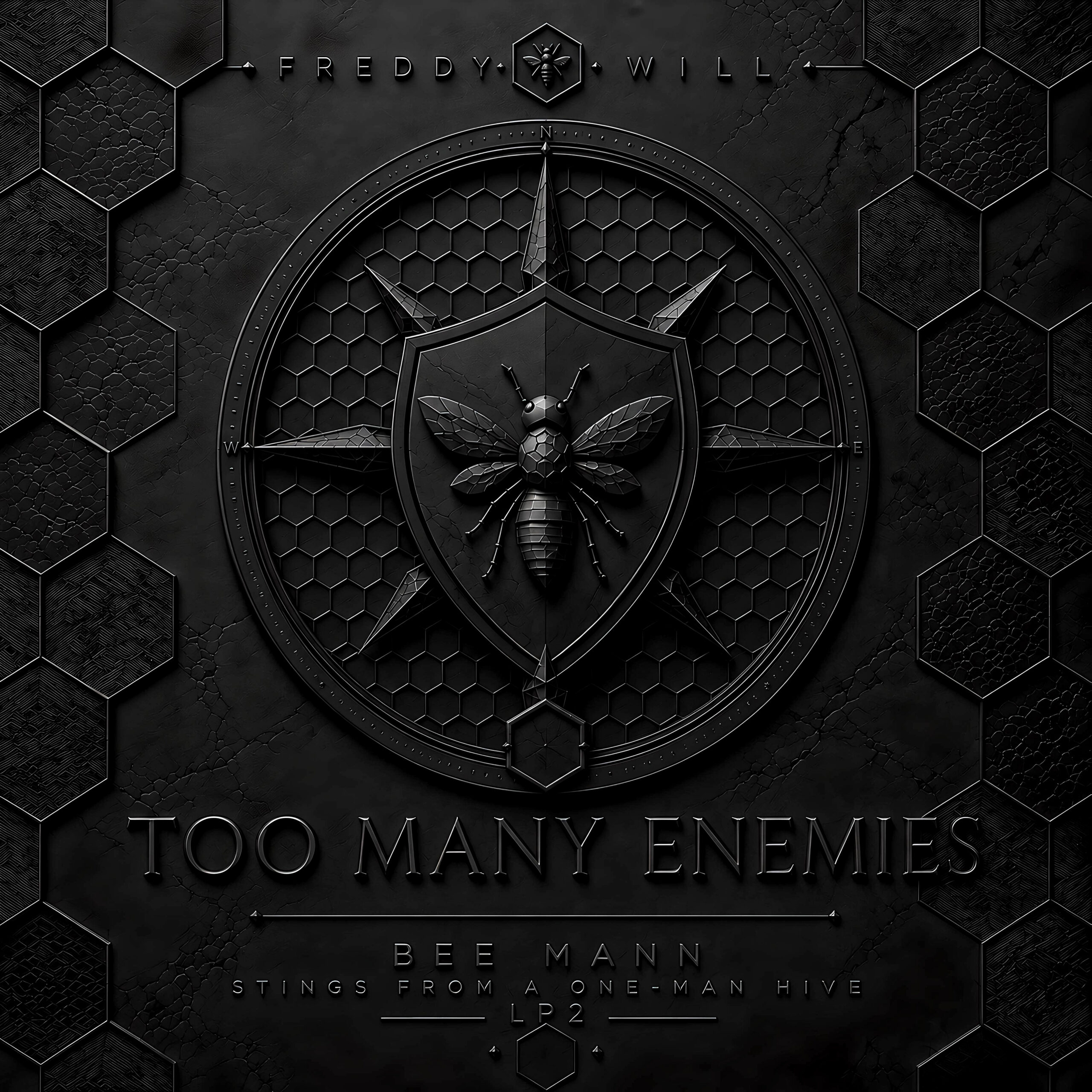
Threat assessment. Instead of speaking vaguely about opposition, the record begins cataloguing what is actually arrayed against the hive. By this point, Bee Mann’s enemies aren’t metaphorical anymore.
The mythology has populated itself.
13. HoneyComb
And the loop closes. Likewise, not with the man. With the structure around him. The hive, complete. From One-Man Hive to Chosen by the Hive.
My personal favorites on LP2 are Bee Mann, Giant, and Road Wins. The listeners chose differently—and their choices ended up creating something I hadn’t originally planned. The fan favorites became Cocaine Witch, PantyDown, Giant, Road Wins, and Too Many Enemies. Several of those songs would later help anchor the spin-off compilation The People’s Sting: Chosen by the Hive, built around alternate versions of fan-selected records from LP1 and LP2 alongside several new tracks. I love the logic of that. The first project was called One-Man Hive. Then the audience started choosing the records. Suddenly, even the music itself wasn’t entirely one man’s hive anymore.
What LP2 Is Really About
LP1 is about becoming powerful enough to survive. LP2 is about discovering that survival isn’t the highest objective. Because once you’ve built a marriage, raised children, created a home, and given other people a reason to depend on you, strength acquires consequences. Your ambition costs somebody something. And your absence costs somebody something. Then your enemies threaten somebody besides you. Your victories belong partly to people whose names aren’t on the trophy. And sometimes the person you thought you were protecting turns around and protects the hive without you. That’s Bee Woman. That’s the evolution from LP1 to LP2.
Survival can be a solo act. Nothing worth surviving for stays that way. Bee Mann: Stings from a One-Man Hive II is streaming now. The One-Man Hive is complete. And now the real siege can begin.