
 0
0
 0
0
Before I publish the annotation for the poem (and song) COCAINE WITCH, I will say a few words about what inspired the idea. Several people have asked me about the meaning and the inspiration behind the song.
What Is Cocaine Witch?
Cocaine Witch is a poem I turned into a song on my concept album, Bee Mann: Stings from a One-Man Hive II. On the surface, it’s about modern witches using cocaine as a trance agent for ritual work. They believe that the deeper the trance, the more potent their magic. Underneath that, it’s a meditation on spiritual duality: Angels and Demons, light and dark, both capable of harm or good depending on the intent of whoever commands them.
Amira’s Yemayá devotion sits at the center, as well as her character in the mythology. Other practitioners target her, working against her and her family. And there’s a narco-feminism thread woven through the lyrics.
A note on the practice itself: Amira draws veve, which is a Haitian Vodou symbol, not part of Yemayá devotion on its own. Yemayá belongs to the Yoruba orisha tradition, carried forward through Santería, Lucumí, and Candomblé. So what Amira Will practices is intentionally syncretic, a blend of two distinct African diasporic religious systems. That blending isn’t an error in the mythology, it’s a deliberate part of her character, and it mirrors something real. Syncretism happens in actual practice, and Colombia has its own Afro-diasporic spiritual traditions along its Pacific coast, where different lineages have long met, mixed, and been carried forward together.
Why did I write Cocaine Witch?
As with everything in Bee Mann: Stings from a One-Man Hive (The Book), the narrative begins with a poem. With this poem, Cocaine Witch I intended to give Amira her own register. I wanted (1) to highlight African diasporic religious systems. (2) Present a Colombian woman outside of the Passport Bro narrative, and (3) give a nod to narco-feminism. I skipped the traditional Abrahamic religions here. But the story goes deeper than that.
As I have always stated, my albums are a thesis.
This song, Cocaine Witch, could be its own book if you really dig into the knowledge inside it. So if you’re here for a shocking reel for social media or some booty-shaking YouTube video, leave right away. This is the Theatre of Literature, which includes music, and it’s built for real readers and people with a philosophical interest.
The Abrahamic Undertone
You see, even though I am a Christian, I do not condemn witchcraft. To me, witchcraft is a polytheistic religion, and as such, I respect it. But I’m more Abrahamic than strictly Christian in how I think. I draw from Christian, Islamic, and Jewish teachings together to build my worldview, and that’s the lens I’m writing through here.
My Abrahamic influence is almost unavoidable. Let’s start with what scripture actually says, and I want to be precise about it, because I’d rather fact-check myself than have someone else do it for me.
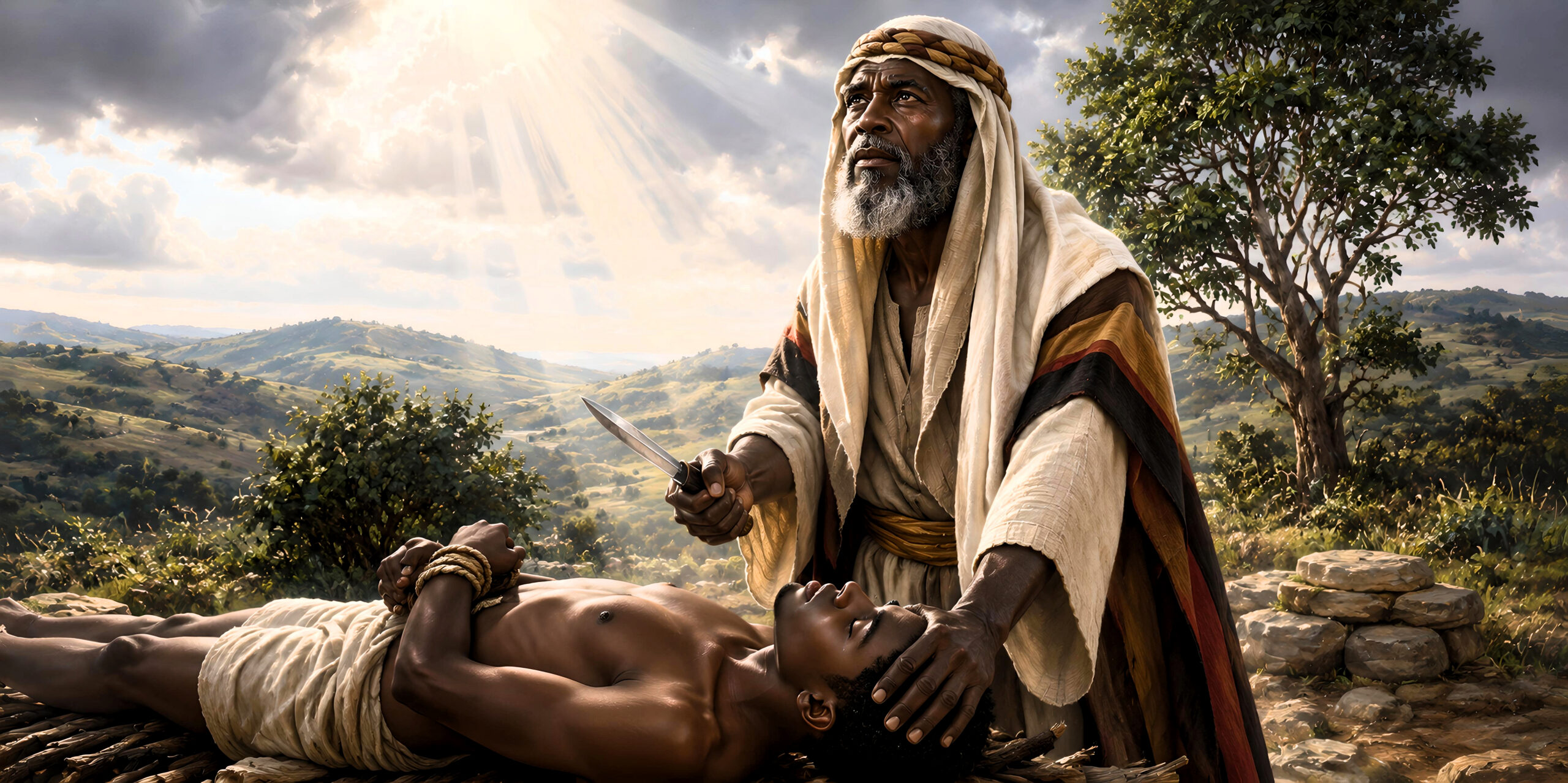
Witchcraft talk leads to talk about God, and that leads to arguments about Angels and Demons. Angels causing sickness, destruction, and death are well documented in the Bible. In 2 Samuel 24 and 1 Chronicles 21, God sends a plague on Israel that kills seventy thousand men, with an Angel extending his hand toward Jerusalem to destroy it, until the Lord finally says, “It is enough! Now drop your hand!” In Exodus 12:23, “the destroyer” passes through Egypt to strike down the firstborn, an Angel by most ancient readings. In 2 Kings 19:35, one angel of the Lord strikes down a hundred and eighty-five thousand men in a single night. And in the New Testament, Acts 12:23, an Angel strikes down King Herod, who is eaten by worms and dies. Sickness and death, together, by the same hand.
Now, on the other side. When I said, “Angels and Demons, light and dark, both capable of harm or good depending on the intent of whoever commands them.” The Bible has no mention of Demons who heal, bring prosperity, and help with matters of the heart. I have to be correct here. At least not from Scripture itself. The Bible consistently shows demons as forces that afflict, torment, and possess. It never shows them healing or handing out wealth.
But… many people associate some good qualities with demons.
What I was really thinking of comes from a different tradition entirely. The Ars Goetia, part of the Lesser Key of Solomon, is a seventeenth-century occult grimoire. It catalogs seventy-two demons said to be bound and commanded by King Solomon. Each with their own power, teaching, wealth, healing, and even love. That’s a real and rich tradition, but it’s post-biblical occult literature. It’s not the Bible. We have to be clear about that.
But since I think Abrahamic, not just Christian, I went looking further, and this is where it actually gets interesting. The Quran tells a different story. In Surah 34:12-13 and 38:37, the Jinn under Solomon’s command aren’t destroying anything. They’re building. They fashion palaces, basins, and cooking pots. They dive for pearls.
Jinn are often described as the Islamic version of Demons. I don’t know how true.
Tradition holds that when Solomon began construction on Masjid Aqsa in Jerusalem, Jinn gathered stones and pearls from across the earth for the work. In the Quran’s own theology, Jinn aren’t simply good or evil by nature, the way Christian thought splits Angels and Demons. They’re their own order of beings, some faithful, some not, capable of either. So if you want a scripture, an actual sacred text, showing spirits normally associated with darkness doing constructive, even holy, labor, the Quran gives you that far more directly than the Bible does.
The Torah stands on an even thinner ground in this respect. It barely names Demons at all: Se’irim in Leviticus, Shedim in Deuteronomy, and both appear only as things God forbade Israel to sacrifice to. It attaches nothing positive to them. The idea of a Demon helping build something sacred comes from later rabbinic legend, not the Torah itself. The point being, the idea exists outside of witchcraft as an organized system.
The Talmud tells of Ashmedai, a Demon king Solomon is said to have captured and forced, unwillingly, into helping locate the Shamir, the miraculous creature used to cut the Temple stones without iron tools, since iron was forbidden for that build. Some scholars believe this is actually where the Quran’s own Jinn-and-Temple story has its roots (an Abrahamic lore, if you may) pulled from Jewish legend rather than the Bible’s account.
So here’s where I land, honestly. The Bible shows Angels doing both good and harm. On Demons doing good, scripture itself is silent. That idea comes later, from the grimoires and from Islamic and Jewish tradition sitting outside the Torah’s official text. And that’s really the deeper point behind the poem and song, Cocaine Witch. This duality doesn’t live only in one book. Across scripture and the traditions built up around it, the same pattern keeps showing up: power itself isn’t good or evil. It depends on who’s commanding it, and toward what end.
Back to Amira Will
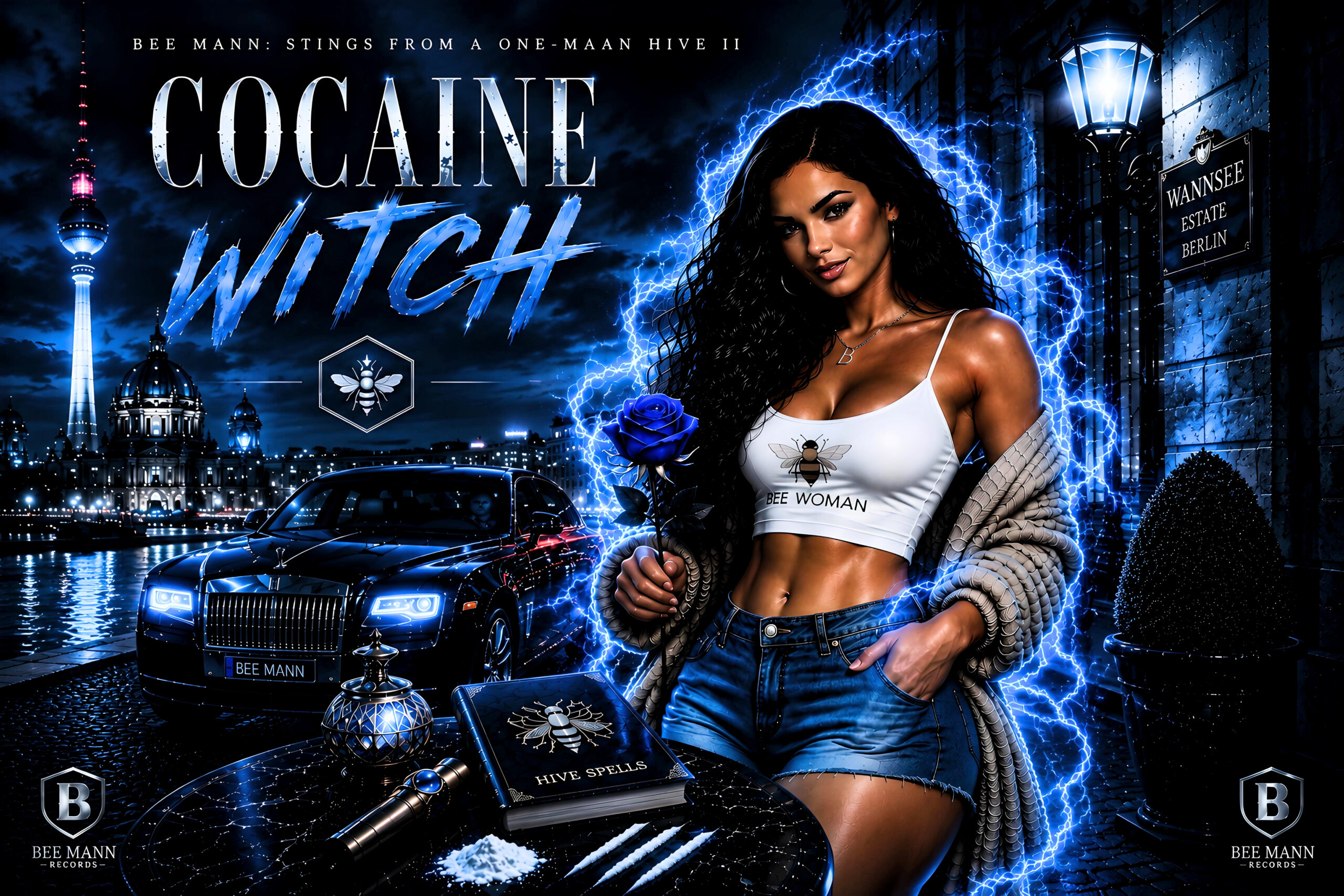
Our fictional character, Amira Will, in the Bee Mann mythology, is a Colombian who practices Yemaya devotion. She draws the veve and does the ritual work that comes with it. And there are other witches in the story, using their own gifts against Amira and her family, sometimes with the same tools, aimed in the opposite direction.
The song also gives a nod to narco-feminism, a real movement most people have never heard of. It’s a branch of feminist activism built by and for women who use drugs, founded on the idea that criminalizing a woman’s relationship to drugs is itself a form of patriarchal control, and that reclaiming that relationship, on her own terms, can be an act of power rather than shame. The movement traces its founding moment to a 2018 meeting in Berlin. That’s not a coincidence I inserted for flavor. It’s a real thread I pulled into the mythology on purpose, because Cocaine Witch isn’t just about magic. It’s about who gets to decide what a woman does with her own body, her own substances, and her own power, and who gets punished for choosing wrong in someone else’s eyes.