0
0
 0
0
Lately, I’ve been watching the ripple effects of the Trump Administration’s stance on immigration. It’s sparked a real moment of reflection within the African diaspora. Many Africans across the U.S. are quietly asking themselves that tricky question: Why are we still here? Granted, many have been naturalized and have become proud dual citizens. However, President Trump hasn’t just targeted undocumented folks as expected. No! His pressure extends to people with temporary residency, green cards, and even naturalized citizens who’ve lived in America for decades and contributed in every way possible. That betrayal shook many people, including some who had recently supported him. It’s like how many felt disillusioned with President Obama toward the end of his presidency.
When Obama promised change, many people thought he meant economic change, but they now believe he was talking about a shift in acceptance of non-heterosexual people. When Trump said immigration reform, many thought he was speaking only about illegal migrants. Many now fear that he was referring to all migrants, legal or illegal, green card holders or naturalized citizens. What brought this to light was Trump’s public clash with a Somali-American congresswoman. His derogatory comments about Somalia sent a shockwave that hit millions in the African diaspora. It made us wonder whether the only impression some world leaders have of Africa is that of poverty, backwardness, and corruption (completely ignoring Africa’s brilliance, culture, and potential).
Naturalized citizens in the United States often articulate their identities through the framework of dual nationality. This is evident across a wide range of diasporic communities: Italian-Americans, Chinese-Americans, Indian-Americans, and even Russian-Americans, among many others. The African diaspora reflects similar diversity. Given that the continent comprises more than fifty nation-states, it includes Sierra Leonean-Americans (such as myself), Nigerian-Americans, Kenyan-Americans, South African-Americans, and numerous others. Each participates in the broader American mosaic while maintaining a connection to ancestral origins. Even green card holders gladly join the US Armed Forces, proudly considering themselves as diehard patriots even before naturalization.
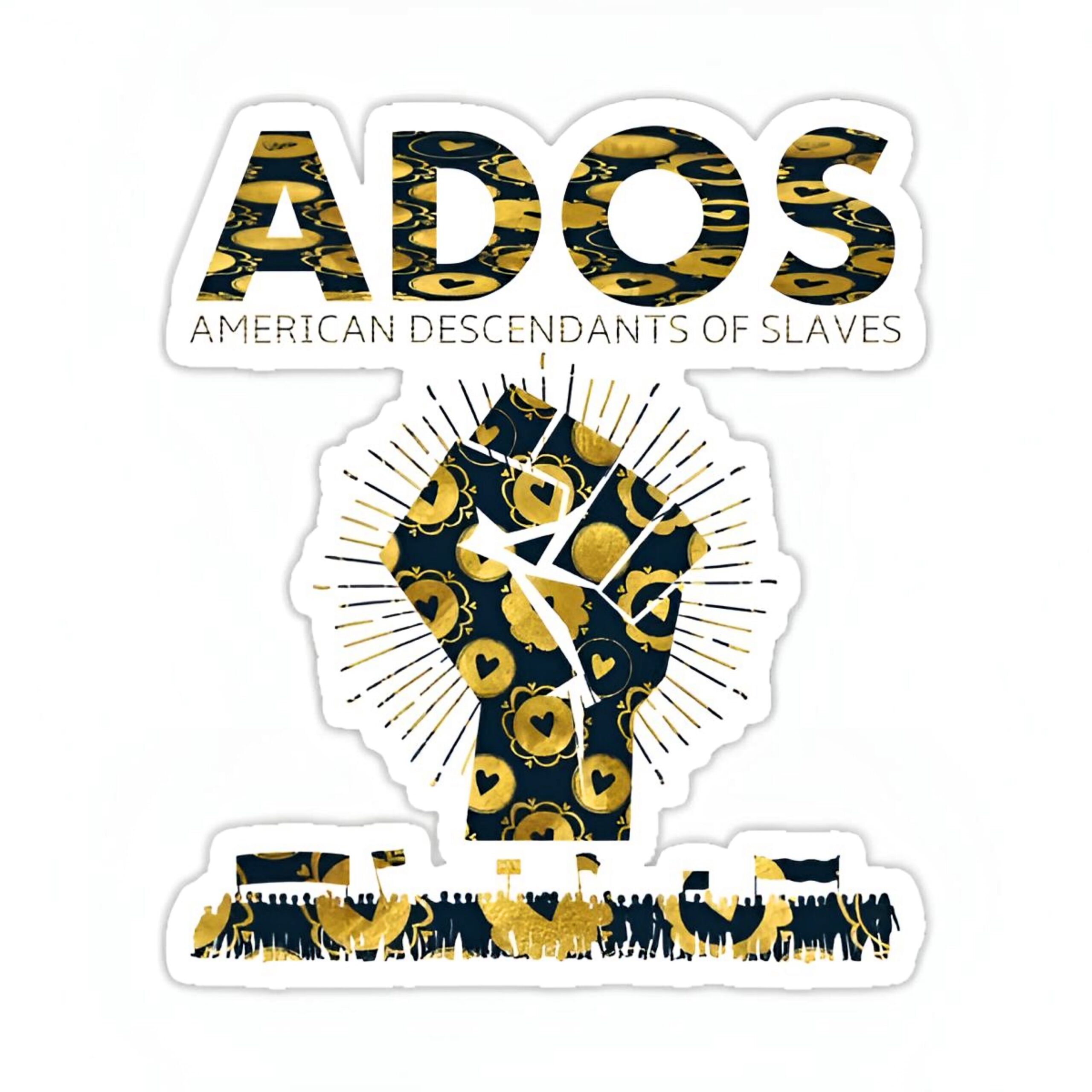
Whether natural born or naturalized, we are all Americans who would bleed and die for the flag. Despite this established culture, recent political discourse has revived hierarchical distinctions among immigrant populations. Even some African Americans have become vocal about their distinction as either Foundational Black Americans or American Descendants of Slavery. They do that to distance themselves from the general African American label, which included naturalized Americans of African descent. The president’s remarks concerning Somalia, particularly his question as to why the United States does not admit more migrants from Sweden, Denmark, or Norway, implicitly revive a longstanding critique of immigration from developing African and East Asian nations.
His inquiry frames migration as a comparative evaluation of national worthiness, reinforcing assumptions about the relative desirability of specific populations over others. Having resided as an American in Europe for an extended period, I can provide firsthand context: Western Europeans generally express little interest in emigrating to the United States of America. Conversely, many Africans demonstrate a pronounced orientation toward American cultural, political, and economic opportunities. Their migration is often motivated by aspirational factors rather than by criminal intent or opportunism. Although public perception may suggest otherwise, empirical data consistently show that migrants from developing countries exhibit lower-than-average crime rates.
Nonetheless, when someone from such a community commits a violent offense, the stigma is projected onto the entire group. A single Somali offender becomes representative of all Somali immigrants, reinforcing stereotypes that are both inaccurate and damaging. Complicating this dynamic is the internal complexity within specific immigrant communities. Segments of the Somali diaspora, for example, have attempted to distance their identity from Blackness by asserting an Arab ethnic affiliation. This form of intra-diasporic differentiation contributes to broader patterns of social fragmentation. In a nation historically characterized by pluralism and multicultural integration, contemporary America increasingly exhibits tendencies toward factionalization.
Many communities are retreating into narrowly defined identity blocs. The influence of American political rhetoric extends beyond domestic borders. The United States functions as both a cultural and ideological bellwether, and shifts in its discourse frequently reverberate across Western Europe. As a result, several European nations have recently adopted policies and attitudes that reflect heightened hostility toward immigrants, often mirroring sentiments first articulated in the American political arena. Naturalized Americans are questioning the loyalty of the United States to them while wondering if the United States recognizes and respects them as fellow citizens or simply immigrants with an American passport. Like, if I got hijacked in Russia, is America coming to get me?
That’s where this conversation begins. After decades of leaving home to build a future in the West (earning degrees, saving money, gaining valuable skills), why do so many remain abroad even after achieving their goals? Especially now that so many have the knowledge and resources that could help move Africa forward. We could be more useful in the African workforce. This isn’t just about politics. It’s about identity, belonging, opportunity, and what it really means to build a reliable future. The United States’ Presidents can write and sign Executive Orders to bypass Congress. That means a new administration can reverse the advancements made in the past. Racism, discrimination, homophobia, sexism, etc, can all return after winning a several-decade fight against them.
1. CONNECTION
One thing people don’t always understand is that many Africans who’ve lived in the West for 20+ years don’t stay just because of opportunity. They stay because they’ve built a real life there. It’s a matter of having a connection. Loving America, Canada, Australia, or Europe doesn’t erase our love for Africa. It’s possible to hold both truths at once. But after two decades in a country, something natural happens. You form roots. Real ones too. And it’s challenging to leave that behind. Speaking from my experience moving to live in a new country eight times, I have left behind many valuable connections. You build memories around your first car, your first apartment, your first stable lover. Your children were probably born there, go to school there, and your friends live there.
You get married, build a career, join associations, and weave yourself into the place’s everyday rhythm. To leave that all behind can be painful. Many become integrated in ways that expand their identity. We may still speak our languages, dress in cultural styles, and cook national dishes, but our day-to-day lives, habits, and mindsets evolve. That’s the essence of the Afropolitan identity (African at the core, global in expression). For many, our story spans multiple cities. I lived in New Jersey and Pennsylvania, then I moved to Ontario and Brussels. Those places shaped me. From watching the NBA, NHL, MLB, and NFL, or FIFA, to raising kids who went from kindergarten to high school in these communities, these experiences become part of your DNA. Dating also plays a role in our lives.
Some Africans work for the same employer for decades, building friendships with co-workers or colleagues. Even when they switch careers, they stay surrounded by the same networks. So when people ask, “Why don’t you just move back to Africa?” The answer isn’t simple. Life in Africa doesn’t freeze in time. It moves forward. People change. Cities evolve. When I returned to Sierra Leone after 22 years, it was a different place (than the one I knew). Well-known places had transformed. Friends were gone. Neighbors had moved. Some didn’t even remember me. I felt like a stranger there. And that’s the truth nobody talks about: sometimes the place you think will always feel like home becomes unfamiliar while the place you once called foreign becomes the one that makes the most sense.
2. HEALTH COMPLICATIONS
Another primary reason many Africans in the diaspora don’t return home is health. By the time most of us finally break into absolute financial stability, I’m talking about the kind that keeps you from ever falling back into poverty, decades have already passed. Could you take my story? When I first landed in Canada (from the United States) at 28, my net worth was around $350K–$450K. Comfortable, yes, but nowhere near the kind of wealth that sustains an entire lifetime. Owning assets worth half a million does not mean you’re taking home $100K a year. It just means you’ve got things (a house, some stocks, some savings) that add up. Most immigrants start from the bottom. Low-paying jobs. Night classes. Certifications. University degrees. Then slowly (painfully slowly) we climb.
By the time we’re earning $300K a year with a net worth sitting somewhere between $2 million and $5 million, we’re usually in our late 40s, 50s, or beyond. And here’s the truth nobody likes to talk about: You may finally be wealthy… but you’re also older. And sometimes, you’re sick as well. I live with Type 2 diabetes today. I’m financially secure, but I can’t just up and move to a place where the medication I rely on isn’t consistently available. And I’m not alone. Many in the diaspora are managing hypertension, kidney disease, recurring cancers, liver disease, heart disease, chronic respiratory issues, degenerative conditions, dementia, mental health struggles, or substance recovery (to name just a few). Or they depend on technology, such as CPAP machines or refrigerated medications.
The only reason many are alive and functioning at a high level is because of access to advanced Western healthcare technology. So yes, financially, this stage of life would’ve been perfect… twenty years earlier. If I had today’s resources back in 2006, when I moved to Canada, my entire trajectory in Africa might have been different. Money can sometimes arrive too late. This is the quiet truth about the diaspora. We give our youth to the West, we earn our success in the West, but when it’s finally time to enjoy it… Our health gives out and binds us to the West. Even if the heart longs for home, the body sometimes says no. Imagine depending on a CPAP machine and living somewhere where unexpected blackouts are regular. Imagine needing refrigerated medication, but the power grid is unreliable. For many Africans abroad, returning home isn’t a lack of desire. It’s a matter of their survival.