 0
0
 0
0
I’m writing this blog as my reaction to Lil Durk’s trial as it unfolds in hip hop. It’s not because I think I know everything, and certainly not to pronounce anyone guilty before a jury does. I want to draw lessons from it. Here is my thesis: I say King Von (RIP) may have been the thread holding together the much larger organizational structure around OTF (Only the Family) and O-Block. He was charismatic, influential, and apparently capable of inspiring extraordinary loyalty among the people around him. In that sense, he may have been one of the most important pieces of this puzzle. I am describing what organizational theorists call a “key-person dependency.”
By that, they mean an organization becomes extraordinarily cohesive because loyalty, identity, authority, and informal discipline are concentrated around one charismatic individual. Yet, that same concentration creates fragility. When that person disappears or makes a catastrophic decision, the organization has no institutional structure capable of absorbing the shock. In this meditation, that’s my intellectual contemplation. The fascinating hooks in this OTF/O-Block paradox are these: King Von’s loyalty created loyalty. Von’s reputation created cohesion. His willingness to act created authority. But those same characteristics may also have amplified serious risks.
After his sudden and unfortunate death, that loyalty he had generated potentially became an obligation for others. That’s the point where I want this meditation to sit. Keep in mind that at the time I am writing this blog, Lil Durk’s prosecution concerns an alleged retaliation for Von’s death. Hester (OTF Jam) has testified that Durk participated in the alleged plot, but those allegations remain contested at trial. Recent reporting also shows Durk’s defense attacking Hester over changing statements, including an earlier account in which he reportedly said he had never spoken with Durk about Quando Rondo before the Los Angeles trip. That counterpoint is important here.
For me, the real question becomes: what happens when loyalty to a leader also becomes a liability? That’s a stronger question to ponder than simply who is violating the “street code.” There is another concept buried inside this blog that you should not miss. That is, the leader’s risk is not his or hers alone. When I translate that into my own life, you will see the reason why I never put my team in front of the public. In fact, one of the criteria to be on my team is invisibility. I never ask my teammates to do my dirty work, and I do not expose them or our resources to the public. I consider myself a hands-on leader, meaning I am the one doing the driving when we go out.
Freddy Will takes action, and most of the time, I go alone, leaving the team behind. Their role is usually technical, such as logistics, transaction handling, negotiation, or advising. That is because I know, or I am afraid, that when an ordinary person makes a reckless decision, the blast radius may be small. When an influential person makes one, other people’s loyalty causes them to move too. That’s essentially what I am arguing about King Von’s Atlanta confrontation. I see the paradox in this story as rather painful. The qualities that made Von important to those around him may have been the same ones that made his decisions extraordinarily consequential.
A leader who inspires people to follow them anywhere carries a different kind of responsibility because their mistakes no longer belong only to them. And that is what I want to meditate on here. This isn’t another lecture about how terrible gang life is. Nor is it an argument about whether somebody deserves prison or worse. Please note that my organization is NOT a gang. The government and the courts use terms such as “gang” and “criminal enterprise,” and I am not trying to sanitize that when I lean towards the word “organization.” We are examining leadership, loyalty, decision-making, and consequence. This blog is a contemplative piece of literature.
Some claims about King Von were never tested in a courtroom because he died before that could happen. As Lil Durk is presently on trial and has pleaded not guilty, those distinctions must be made. This blog isn’t about throwing King Von under the bus. In fact, part of what makes his story so compelling to me is that I can see both sides of the paradox he faced. I can understand why people loved and followed him. At the same time, I can look at some of the decisions in his story and ask what they ultimately cost the people who followed him. That is why, before getting into the core of this subject, we must separate the two legal cases often discussed together.
Two Cases, Not One
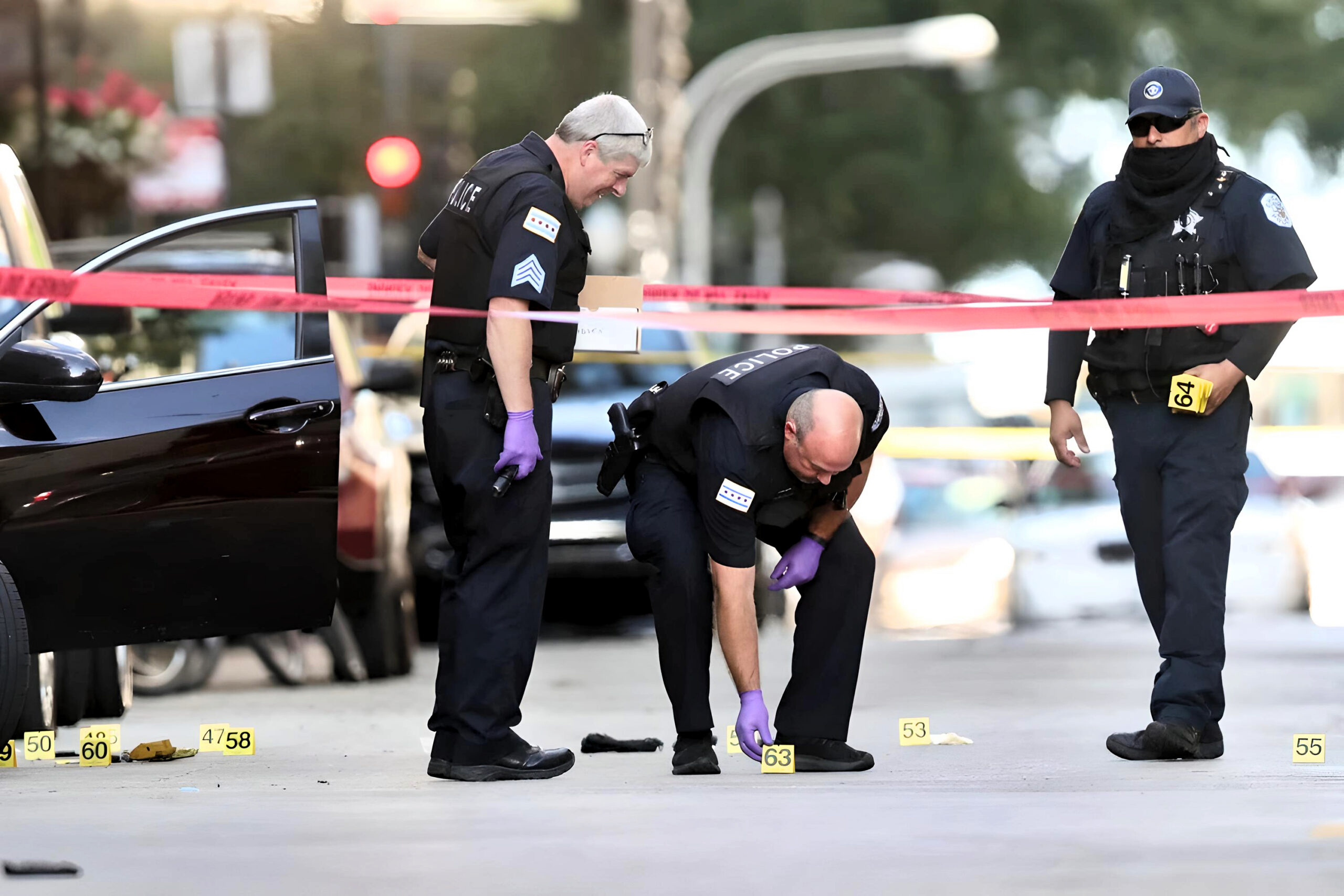
The first is the murder of FBG Duck (RIP), whose real name was Carlton Weekly. Duck was assassinated in Chicago’s Gold Coast neighborhood on 4 August 2020. In January 2024, a federal jury convicted six members or associates of O-Block of racketeering offenses that included Duck’s murder. According to the Justice Department, the jury found that the defendants conspired to murder Weekly to maintain or increase their positions within their organization. This is not speculation. The convictions happened. In January 2024, a jury convicted six O-Block members or associates of murder in aid of racketeering and conspiracy in connection with Duck’s killing.
The murder convictions carry mandatory life sentences in federal prison. We are dealing with the lives and reputations of real people and their families. Before writing this blog, I checked federal case information and subsequent reporting and found that the six men were convicted on 17 January 2024. The murder-in-aid-of-racketeering convictions do carry mandatory life imprisonment. However, according to what I found, their sentencing hearings were repeatedly postponed. The original August to September 2024 dates did not result in sentencing. They were moved to January 2025 and then postponed again. A January 2025 update listed:
● Charles Liggins (“C Murda”) — 11 August 2025
● Kenneth Roberson (“Kenny Mac”) — 13 August 2025
● Ralph Turpin (“Teezy”) — 26 August 2025
● Christopher Thomas (“C Thang”) — 28 August 2025
● Tacarlos Offerd (“Los”) — 9 September 2025
● Marcus Smart (“Muwop”) — 18 September 2025
I could not find reliable primary-source documentation establishing that those later hearings actually occurred and resulted in final judgments. My searches for each defendant’s supposed sentencing produce substantial misinformation and contradictory dates. One prominent summary, for example, simultaneously says they were sentenced to life and that their sentencing dates were still forthcoming, an obvious internal contradiction. There is, however, an important nuance for the argument I am making here. All six men were convicted of the murder, but prosecutors did not allege that all six personally shot Duck. That part is a subject for debate in itself.
Ralph Turpin, for example, was alleged to have spotted Duck and made the call that set the attack in motion. The other defendants had different alleged roles as shooters and drivers. As I stated earlier, this blog leans towards a leadership argument. My point isn’t how “six killers went to prison.” It is that a decision allegedly originating higher in an organizational hierarchy ultimately exposed an entire group of men performing different roles to mandatory life imprisonment. What requires much more care is King Von’s alleged connection to the killing. During and around the case, allegations emerged that “Von put money on Duck’s head” or otherwise financed the hit.
Those serious claims have since become embedded in the online mythology surrounding King Von, repeated by commentators and content creators across YouTube and other social media platforms. Nevertheless, mythology and adjudicated fact are not the same thing. Von was never prosecuted for ordering FBG Duck’s murder, and he never had the opportunity to answer such an accusation in court. So, throughout this meditation, when I mention the possibility that Von ordered or financed Duck’s assassination, I am discussing an allegation, not declaring it a fact. Doing that is simply my attempt to avoid repeating a mantra without knowing the facts behind it.
The second case is completely separate. It concerns the August 2022 shooting in Los Angeles. Prosecutors say Quando Rondo was the intended target, but his cousin, Saviay’a “Lul Pab” Robinson (RIP), was murdered instead. That is the case for which Lil Durk is presently standing trial. Prosecutors allege that the attack was retaliation for King Von’s killing in Atlanta in November 2020 and that Durk financed or participated in the conspiracy. Durk has pleaded not guilty, and his lawyers dispute the government’s account. Kacey Hester, better known as OTF Jam, has pleaded guilty and is now cooperating with prosecutors. He has testified that Durk participated in the plot.
On the other hand, Durk’s defense has also been attacking Hester’s credibility. They confronted him with earlier statements that the defense says conflict with portions of his testimony. So, Hester’s testimony is not a verdict in this blog. There is also a shockwave in the hip-hop and street community over OTF Jam’s cooperation with the feds. Allegedly, he was a respected assassin who lived by the street code. Many have interpreted his testifying against Durk as a betrayal. I bring these two cases together in this meditation because I see a possible connection between them that has less to do with snitching or criminal law than with leadership. That connection is consequence.
The Glue
My contemplation on this Lil Durk trial has me asking myself. King Von was one of the most important pieces of the OTF and O-Block puzzle. In everything I’ve watched and read about him, one characteristic keeps appearing: charisma. People (in Chicago) seemed to genuinely love Von. Right? There is an important distinction between people obeying someone out of fear. And another when they follow the person because they identify with him. Von appeared capable of producing the latter. His followers appeared to identify with him. He represented something to the people around him. What was it? Loyalty? Authenticity? Courage? Reputation? Shared history?
Whatever somebody thinks about the environment from which those values emerged, they are extraordinarily powerful ingredients in my “key-person dependency” argument. I would compare that to Tupac Shakur’s (RIP) presence on Death Row Records. Von appeared to influence the people around him instinctively. That kind of person can become organizational glue. But glue creates dependency. If the loyalty of an entire network becomes concentrated around one charismatic individual, removing that individual, as also in the case of Tupac Shakur, doesn’t simply remove one person. It can destabilize the relationships or businesses surrounding him.
That is why I keep wondering whether the OTF/O-Block story after King Von would have unfolded differently if he were still alive. Not because I know what Von would have done. I don’t. That is why I drew a comparison to Tupac Shakur. Obviously, Pac was a far more successful artist than King Von. Suge Knight was the leader of the company and it was home to the likes of Snoop Dogg and others including the Lady of Rage, carrying the label before Pac arrived. I am talking about what happened to Death Row after Tupac’s sudden demise. But because his absence appears to have created a vacuum that others had to navigate. And that is what brings me to Atlanta.
Why Isn’t King Von Alive?
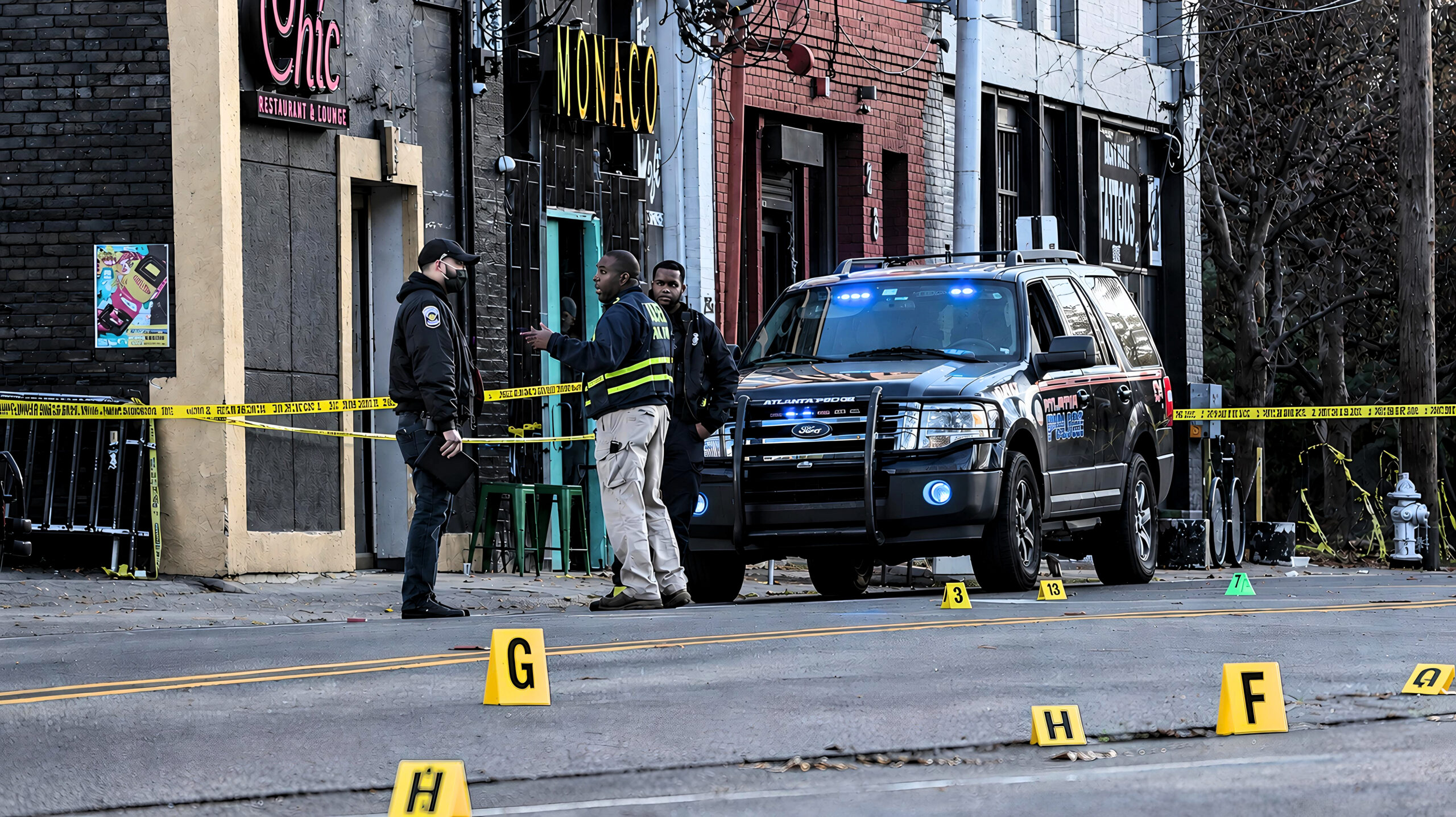
This is the question I keep coming back to with only one answer. Why is King Von not alive right now? Part of me hopes that many of the darkest allegations attributed to him were exaggerated: lyrics, tweets, taunts, street reputation-building, and the catchy mythology that inevitably grows around a successful rapper whose music is closely connected to the environment that produced him. I genuinely hope some of it was theater. Because whatever the truth about those allegations, I don’t believe Von deserved to die that night. Although available footage appears to show him approaching Quando Rondo and throwing punches before the gunfire began.
Just like the Tupac and Olando confrontation, reports described Von as initiating the physical confrontation. Accounts naturally differ about what everyone involved believed was happening. What we cannot know is what Von expected. Maybe he thought it would be a fistfight. Maybe he underestimated the danger. Perhaps his anger overrode his judgment. I don’t know. And I will not pretend to know. I find it difficult to believe that when he moved toward that confrontation, he imagined that within minutes he would be mortally wounded or dead hours later. And that’s precisely why the decision fascinates me. How did Von expect that confrontation to end that night?
Here was a successful artist coming off an album release party that same night. His loyal associates surrounded him, building a career millions of aspiring rappers would have wanted. Von had everything to lose. More importantly, everyone there had something to lose if he did not make it home that night. That’s leadership. The leader doesn’t merely carry his own life into a situation. He carries the loyalty of everyone who will follow him into it. Once Von moved, his people had to move. When the fight began, his people became participants. Once Tim fired shots, there was no calling the decision back. And there is the real kicker. Lil Tim had to take the initiative.
Check this out. Most reports on Chicago’s gun violence are execution-style murders. The shooter surprises his target in a drive-by or similar method, arriving unexpectedly. They shoot before the victim can react, stand over the wounded victim, and finish the job before fleeing. There are no mentions of tactical shootouts. When Von’s team engaged in a shootout in that unfamiliar area, they were out of their element. Von died, others on his team did too. And the repercussions extended beyond that as his men were unaccustomed to that style of battle, especially after leaving a party. That is where a leader weighs his options for his team’s proficiency before initiating an attack.
When Loyalty Outlives the Leader
This is where the ongoing Lil Durk trial becomes relevant to my meditation on leadership. Prosecutors allege that the 2022 attack targeting Quando Rondo was retaliation for King Von’s death. The intended target survived. Saviay’a Robinson (RIP) was killed instead. As a side note, to be fair here, we also see Quando Rondo coming under repeated attacks. He ultimately loses his cousin, which is devastating. Honestly, Quando Rondo did not deserve for OTF to target him in either documented instance. He did nothing serious enough to justify both attacks. Not the Von one, and not by OTF/O-Block later. I want to point that out to make this meditation stand squarely.
I don’t know all the behind-the-scenes facts, but based on the public record, one could argue that King Von’s decision led to his demise. There needn’t have been a retaliation. Lil Durk denies directing the attack on Quando Rondo. He is fighting the case… Either way, think about the chain of events for a moment. Von launched a confrontation in Atlanta in November 2020. He lost his life, not deservedly, but shouldering partial blame for going there that night looking for that fight. He was supposed to be in his Airbnb celebrating the successful release of his new project. Still, once the tragedy occurred, grief, loss, anger, and loyalty survived him.
Almost two years later, prosecutors say those emotions culminated in another act of violence in Los Angeles. They claim OTF murdered a man who was not the alleged intended target in cold blood. Now, nearly six years after Von’s untimely death, people are sitting in a federal courtroom determining whether Lil Durk, King Von’s label boss, bears criminal responsibility for what followed. That is an astonishing blast radius for one decision on one fateful night. If Von had gone home instead of breaking formation with his team, detouring to that location, and initiating that sporadic confrontation, perhaps none of what followed would have happened. That’s my speculation.
The FBG Duck Question
That brings me back to FBG Duck. I went and checked out some of his music and liked it sonically. His beats and flows are catchy. I also found him charismatic and compelling, and like everyone else, I wish he were still here. For the record, I also like King Von’s records. Many sounded like classic hip-hop storytelling. And of course, I love Lil Durk’s music as well. All of these men are very talented artists, including Quando Rondo and NBA YoungBoy. You don’t need me to confirm that. Even though I don’t agree with the subject matter of drill music, I like some of the music from the artists involved in this tragic story for their individual craftsmanship.
Whatever grievances existed between the people surrounding STL and O-Block, FBG Duck’s assassination created another enormous chain of consequences. Six men were ultimately convicted in federal court for crimes connected to his killing. And if the allegation that Von financed or encouraged Duck’s murder were ever proven true, then I would see it through the same leadership lens. Duck also shouldn’t have recorded the diss song. Not because I’m interested in deciding who was right or wrong in a Chicago street rivalry. I’m not. As I have stated, I’m interested in the burden created when an influential person makes his conflict everyone else’s responsibility.
If one leader’s decision requires six other people to risk death or spend the rest of their lives in federal prison, then the decision cannot be measured solely by whether its immediate objective was achieved. You have to count the aftermath. That’s the part of leadership people sometimes forget. We celebrate the leader who can move people. We rarely ask whether he knows when to tell them not to move at all. By recording a song to diss the dead rivals of his organization, he reopened some very fresh wounds. Those were the names of people who died in horrendous manners. Reopening those gushing wounds caused a blowback not only for himself but for his people as well.
The Most Dangerous Kind of Loyalty
Perhaps that is the tragedy underneath this entire story. King Von seems to have possessed something many leaders spend their entire lives trying to acquire. People followed him willingly. That’s power. But you can’t demonstrate power merely by convincing people to move when you move. Sometimes you demonstrate leadership by saying, “We’re done here.” Go home. We don’t need anything more to happen tonight. Imagine how different this story might be if somebody had made that decision in Atlanta. Von might be making music. Perhaps the alleged retaliation prosecutors are now describing never happens. Maybe Saviay’a Robinson is still alive.
Possibly Lil Durk isn’t sitting in a federal courtroom fighting for his freedom. We don’t know. And that uncertainty is precisely why I call this a meditation rather than a verdict. I am not interested in making saints or monsters out of any of these men. Von was a human being. Duck was a human being. Robinson was a human being. Durk is a human being who remains entitled to a jury’s determination of whether the government’s allegations against him are the truth. NBA YoungBoy, Quando Rondo, and Lil Tim are also human beings. The six convicted O-Block defendants are human beings too, even though a federal jury found them responsible for terrible crimes.
But humanity doesn’t remove responsibility. It makes responsibility more important. Because leadership can lift the people who follow you, it can also take them down with you. And the greater your influence becomes, the less private your bad decisions are. That may be what I find most haunting about the King Von story. The tragedy isn’t simply that a talented young rapper died at 26. It’s that a man who had apparently acquired extraordinary loyalty may not have fully understood the responsibility that came with it. Charisma created loyalty. Loyalty created power. Power created responsibility. And when the leader was gone, the consequences kept unfolding.
So maybe the ultimate measure of leadership isn’t how many people are willing to follow you.
Maybe it’s whether the places you lead them are worth following you into.