0
0
 0
0
This is as much an inquiry as it is a reaction. When Jay-Z announced an exclusive partnership with Target to release a 30th-anniversary collector’s edition of his landmark 1996 debut album Reasonable Doubt on vinyl, the response from certain corners of Black America was immediate and fierce. The charge was simple: sellout. But before we can render a verdict, we need to understand the full case. And that means asking several uncomfortable questions that the court of public opinion rarely stops to answer. Let us start at the beginning.
What Is DEI, and Why Was It Dismantled?
To understand the Target boycott, you first need to understand what DEI is, where it came from, and why it became a political flashpoint. DEI stands for Diversity, Equity, and Inclusion. In corporate and institutional settings, DEI programs generally describe efforts to increase access and remove barriers from employment, education, and advancement for people from historically underrepresented or disadvantaged backgrounds, including those defined by race, gender, religion, socioeconomic status, disability, and sexual orientation. The roots of DEI in the United States trace back to the Civil Rights Act of 1964, which outlawed employment discrimination based on race, religion, sex, color, and national origin. President Lyndon B. Johnson expanded on this the following year with Executive Order 11246, which required federal agencies and contractors to take affirmative steps to ensure equal employment opportunity. Over the decades, these commitments evolved into what we now recognize as DEI programs: diversity hiring goals, supplier diversity initiatives, equity action plans, inclusion training, and Chief Diversity Officer roles. The whole idea is to create an equal playing field that nobody told the white people about.
Yes! When you go to predominantly white schools, nobody teaches diversity there. The modern DEI infrastructure was significantly strengthened under President Biden, who in 2021 signed an executive order mandating Diversity, Equity, Inclusion, and Accessibility strategies across the entire federal workforce. Corporations, universities, foundations, and non-profits followed suit, creating DEI offices, publishing annual equity reports, and making sweeping public pledges, many of them made in the aftermath of George Floyd’s murder in May 2020.
Then came January 20, 2025. On his first day back in office, President Donald Trump signed Executive Order 14151, titled “Ending Radical and Wasteful Government DEI Programs and Preferencing.” The order directed all federal agencies to terminate DEI offices and positions, end equity action plans, cancel DEI-related grants and contracts, and remove DEI performance requirements for employees and government contractors. Federal DEI staff were placed on paid administrative leave almost immediately, with layoffs to follow. A subsequent order, Executive Order 14173, went further, rescinding decades of civil rights executive orders stretching back through the Biden, Obama, Clinton, George W. Bush, and even Lyndon Johnson administrations. It also encouraged the private sector to follow the federal government’s lead and directed the Attorney General to identify what it called the most “egregious” corporate DEI programs for potential investigation and legal action. Now, that was the knockout blow!
The administration framed DEI as illegal racial discrimination in disguise, a system that rewarded certain groups at the expense of others and violated the principle of equal treatment under the law. Supporters of DEI argued the opposite, that these programs do not create quotas (which are already illegal) but rather work to equalize access for people who have been systematically disadvantaged. A 2023 Pew Research Center study found that 56 percent of employed Americans considered increasing DEI at work a good thing. And that did not change much.
Regardless of where one stands on the policy debate, the political reality was clear: corporate America was now facing legal and regulatory risk for maintaining the diversity commitments they had so publicly celebrated just four years earlier. One by one, major companies began walking back their pledges to avoid criminal charges.

Target’s Retreat and the Boycott That Followed
Target Corporation, headquartered in Minneapolis, had been among the more visible corporate voices on racial equity. In 2021, in the wake of George Floyd’s murder, which occurred literally in Target’s home city, the company pledged to invest two billion dollars in Black-owned businesses by the end of 2025 and launched its Racial Equity Action and Change initiative. These commitments were made publicly, prominently, and in the middle of one of the most charged racial justice moments in American history. But no one expected what would happen next.
January 2025 came, days after Trump’s inauguration and the signing of the anti-DEI executive orders, Target announced it was scaling back its DEI commitments. I mean, who wants to go against the US President and the federal government? The company ended its three-year diversity hiring goals, withdrew from the Human Rights Campaign’s corporate equality index, exited an industry racial equity program, and significantly reduced its reporting to diversity watchdog organizations. To many in the Black community, the message was plain: the pledges made over George Floyd’s body were abandoned the moment they became politically inconvenient.
The backlash was organized and swift. Minnesota civil rights attorney Nekima Levy Armstrong of the Racial Justice Network, Monique Cullars-Doty of Black Lives Matter Minnesota, and Jaylani Hussein of CAIR-Minnesota stood outside Target’s Minneapolis headquarters and announced a nationwide boycott beginning February 1, 2025. Atlanta pastor Jamal Bryant amplified the effort with a high-profile forty-day “Target Fast” during Lent that grew well beyond his congregation. The boycott had real financial consequences. Target reported declining comparable sales, reduced store foot traffic, and a stock price drop of approximately thirty percent across 2025, a slide widely connected to former CEO Brian Cornell’s departure from or relocation to another part of the company.
In March 2026, Pastor Bryant declared his personal fast concluded, citing some corporate responsiveness on Black business spending. The backlash to that announcement was nearly as fierce as the original boycott. Grassroots organizers maintained that the broader protest was never Bryant’s alone to end, and Levy Armstrong wrote publicly that he had “no authority” to speak for the movement. Bryant later apologized on his podcast, admitting he had misread the room. Basically, the boycott had to continue indefinitely since the financial pain was apparent.

Enter Jay-Z: The Controversy Explained
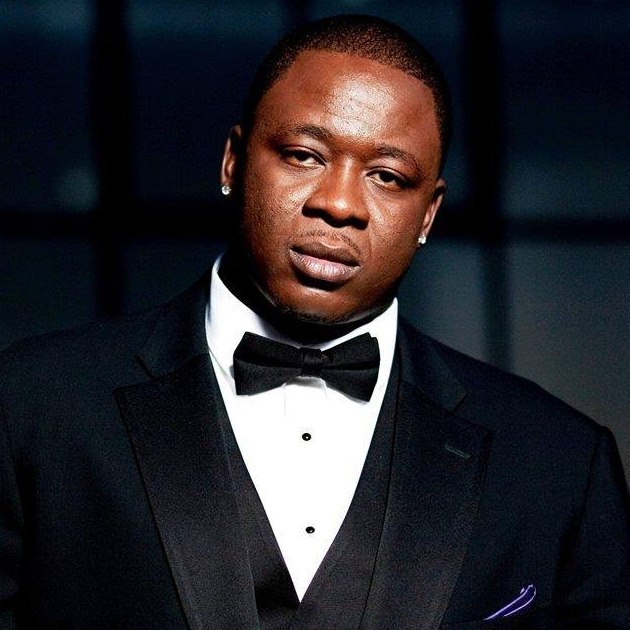
Against this backdrop, Jay-Z, born Shawn Carter, announced an exclusive partnership with Target for the release of a limited-edition white double LP of Reasonable Doubt to mark the album’s 30th anniversary. The collector’s pressing, priced at $40 and capped at four copies per customer, features exclusive cover artwork, a collectible insert, a D’Ussé tie-in, and unreleased versions of select tracks. It became available for preorder in early June 2026 and is set for release on June 26, timed to Jay-Z’s three-night Yankee Stadium anniversary run in July.
One important clarification that has been buried under the outrage is worth making explicit: the Target exclusive is not the entire album. What Target holds exclusive rights to is this specific white vinyl color variant. A standard black double LP of the same anniversary release is available for the same $40 price directly through the Roc Nation store. The music itself remains accessible on all streaming platforms. But for critics, that distinction is largely irrelevant. For the critics, the Target store boycotters, the symbolic damage of lending Jay-Z’s brand to a Target marketing campaign, which includes in-store anniversary experiences of a Jay Z classic, was the injury. One commentator captured the sentiment precisely: “The brother billionaire wants y’all back in Target.”
Jay-Z was not the first Black artist to partner with Target during the boycott. J. Cole sold vinyl exclusively through Target for his album The Fall-Off and the 10th anniversary of 2014 Forest Hill Drive. Kendrick Lamar’s 2024 album GNX is also sold on vinyl exclusively at the retailer. But Jay-Z, as a billionaire with the resources and leverage to choose any distribution partner, faces a different standard. With great power, as they say, comes great scrutiny.
Whose Black Community Is Speaking?
Here is where this inquiry must get honest. When the black court of public opinion accuses Jay-Z of betrayal, we need to ask: which Black community is doing the accusing, and on whose behalf? The term “Black community” is not a monolith. It encompasses Black Americans whose families have been in this country for generations, the descendants of enslaved people, often referred to as Foundational Black Americans or American Descendants of Slavery. It also includes African, Caribbean, Latin American, and European-born people of African descent. It includes Pan-Africanists, nationalists, integrationists, conservatives, progressives, LGBTQIA+ activists, feminists, religious communities, and working-class people who have never attended a single protest in their lives.
When I look at the loudest voices in this particular controversy, I consistently see feminist and LGBTQIA+ activist frameworks being applied. That is not a dismissal. It is an observation especially where DEI is concerned. The LGBTQIA+ community represents less than five percent of the broader Black population. Black women, who overwhelmingly represent the feminist political tradition in America, are a larger constituency and a critically important one. But a movement that draws its energy primarily from these two overlapping groups cannot accurately claim to speak for “the Black community” in its entirety without also reckoning with that claim.
This matters because DEI itself was always a broader tent than any single constituency within the diaspora. It was ment to cover other groups including but not domininated by feminists and LGBTQIA+ people. DEI programs addressed race, gender, disability, sexual orientation, and socioeconomic background simultaneously. The question of who DEI was designed to protect, and who is now most motivated to defend it, is not a simple one. A Pan-Africanist and a Black transgender woman may have different relationships to what DEI meant in practice.

The Question of Reciprocity
There is a deeper question of reciprocity that this conversation tends to avoid. If Black activists, particularly those in the feminist and LGBTQIA+ wings of the movement, are asking male hip-hop artists to put their business interests on the line to support a boycott, it is fair to ask what that solidarity looks like in reverse.
I have personally heard some Black feminist voices describe hip-hop fatigue, characterize male rappers collectively as misogynists, and declare that they no longer engage with music from male artists. If that is a growing cultural posture, then the demand for sacrifice from those same artists in the service of a shared cause becomes complicated. Solidarity, to mean anything, must be reciprocal. Scratch my back and I scratch yours.
The parallel to the NFL situation is instructive. When Jay-Z struck a business deal with the NFL in 2019 to manage Super Bowl halftime programming, at a time when Colin Kaepernick had been effectively blackballed from the league for kneeling during the national anthem, the criticism was loud. At the time, some defenders argued Jay-Z was playing chess, not checkers, that the deal would create leverage for Black artists and communities from the inside. What we received were more diverse halftime performers and a wealthier Jay-Z. The question of whether the NFL deal advanced the cause of Black athletes facing systemic discrimination remains largely unanswered.
Similarly, there was no organized boycott of Adidas when the company dropped Kanye West, a Black artist who, whatever his personal behavior and political associations, was systematically dismantled by corporate and media power in a way that many would recognize as the same machinery that targets Black men when they become too prominent or too difficult to control. Where was the collective Black economic action then?
The difficult truth is that the Black court of public opinion has historically been far more mobilized to defend feminist and LGBTQIA+ interests than to defend Black male artists facing institutional pressure, legal allegations, or corporate abandonment. That asymmetry is worth examining honestly, not to excuse Jay-Z’s choices, but to understand the political terrain on which this debate is actually taking place.
The Spectrum: From Pan-Africanism to Identity Politics
Given a choice between Pan-Africanism and feminism, between LGBTQIA+ interests and the Civil Rights movement’s original framework, which side would a DEI coalition choose? This is not a trick question. It is the real ideological tension at the heart of contemporary Black American political life. The Civil Rights movement of Dr. Martin Luther King Jr. was rooted in a specific demand: full constitutional citizenship for Black Americans, regardless of gender or orientation, through nonviolent moral and economic pressure. Pan-Africanism, in its various forms, seeks to build political, cultural, and economic solidarity across the entire African diaspora, from Harlem to Lagos to Brixton. These movements were not particularly concerned with corporate diversity metrics or inclusion scorecards. They were concerned with power, land, sovereignty, and survival.
DEI, in its corporate form, is a much more recent and structurally different project. It emerged from and was shaped by human resources departments, legal compliance offices, and investor relations strategies. It became the mechanism through which corporations could demonstrate social responsibility without fundamentally restructuring the economic relationships that produce inequality in the first place. When those corporations faced political headwinds, they retreated. That is what corporations do. The question is whether the energy spent pressuring Jay-Z over a vinyl pressing might be more productively directed at the structural conditions DEI was, imperfectly, trying to address. The boycott of Target has had real financial impact. That is power. The question is whether that power is being channeled toward the most consequential targets, or whether celebrity outrage is substituting for the harder and less glamorous work of building independent Black economic infrastructure.
Where This Leaves Us
Jay-Z is a businessman. He has never pretended otherwise. “I’m not a businessman, I’m a business, man,” he rapped on Diamonds from Sierra Leone, and he meant every syllable. Whether that ethos is a virtue or a liability in times of collective struggle is the legitimate debate. But the debate will not be productive, or honest, until the Black court of public opinion is willing to examine its own composition, its own consistency, and its own willingness to hold the full complexity of the diaspora in mind, not just the loudest voices, and not just the constituencies whose grievances generate the most social media engagement.
Is Jay-Z wrong? Maybe. Is the boycott legitimate? Arguably yes. But the court cannot deliver a fair verdict until it is honest about who is sitting on the jury, who is conspicuously absent, and what the full record of reciprocal solidarity actually looks like. This is Part One. The verdict will come later.